Undermount Sink Adhesive, Clips or Frame: What Holds It Up?
Undermount sink adhesive seals the joint. Clips hold light sinks, and a frame carries a 100–115 lb fireclay sink plus up to about 177 lb of water.

In this guide View sections +
Undermount sink adhesive seals the joint; it should not hold the sink up. On a light sink, clips anchored in the stone carry the weight while silicone keeps water out. On a 100–115 lb fireclay farmhouse sink, a frame or brackets inside the cabinet carry the load, and the silicone bead carries close to none.
The rest of this guide shows why, with real numbers. You will see how much a full sink weighs, which hold method fits which sink, and which sealant to buy. You will also learn how to tell if a sink is hanging on caulk.
Adhesive, clips or frame: which one holds the sink?
Each part has one job, and mixing them up causes most failures. Adhesive and sealant keep water out. Clips pull a light rim tight to the counter. A frame or brackets carry a heavy sink to the cabinet floor.
| Part | Main job | Carries the sink's weight? |
|---|---|---|
| Silicone bead | Seals the sink-to-counter joint; flexes with small movement | No |
| Clips with anchors in the stone | Hold a light rim up and tight while and after the seal cures | Yes, on light sinks |
| Epoxy or structural adhesive | Bonds clip anchors or a light rim to stone, per the fabricator | Partly, on light sinks |
| Support frame or brackets | Send a heavy sink's load down to the cabinet floor | Yes, on heavy sinks |
The search results for this topic disagree, because they mix sink types. A light steel bowl and a fireclay apron sink need different holds. Sort your sink by weight first, and the right answer follows.
How much weight does an undermount sink really put on the joint?
A full fireclay sink can weigh close to 300 lb. That is the number the hold method must handle, not the empty weight on the box.
Empty weight of a 33-inch fireclay sink
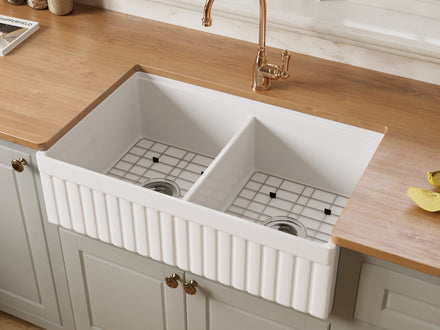
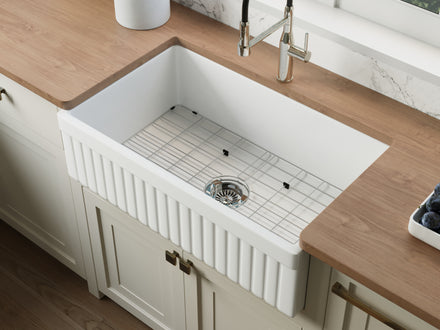
Here is the math for a 33-inch NOZLOO sink. The sink body weighs 100–115 lb, depending on the model. The NZ-103W3320 bowl measures 31″ × 18-1/16″ inside and 8¾″ deep. That box holds about 4,900 cubic inches, or about 2.8 cubic feet.
Water weight in a full bowl
Water weighs about 62.4 lb per cubic foot, according to the USGS Water Science School. So a bowl filled to the rim holds up to about 177 lb of water. Rounded corners trim that a little, and the bowl widens above the accessory ledges, so treat this as a ballpark. Add pots, a cast iron pan, or someone leaning on the apron, and the load climbs again.
- Empty sink: 100–115 lb
- Water to the rim: up to about 177 lb
- Total: roughly 275–290 lb before dishes
No bead of caulk or construction adhesive is meant to hang that load from a countertop. It needs a solid path down to the cabinet floor. The same logic applies to any heavy porcelain sink or cast iron bowl.


Which hold method fits your sink's weight?
Match the hold to the weight. Light sinks can hang from the counter. Heavy sinks must sit on something.
| Sink type (typical) | What holds it up | What seals it |
|---|---|---|
| Light stainless or small bar sink, roughly under 30 lb | Clips with anchors set in the stone | 100% silicone rated for kitchen and bath |
| Mid-weight composite or large steel bowl, roughly 30–60 lb | Clips plus the adhesive your fabricator specifies; many add a rail or brackets | Compatible silicone |
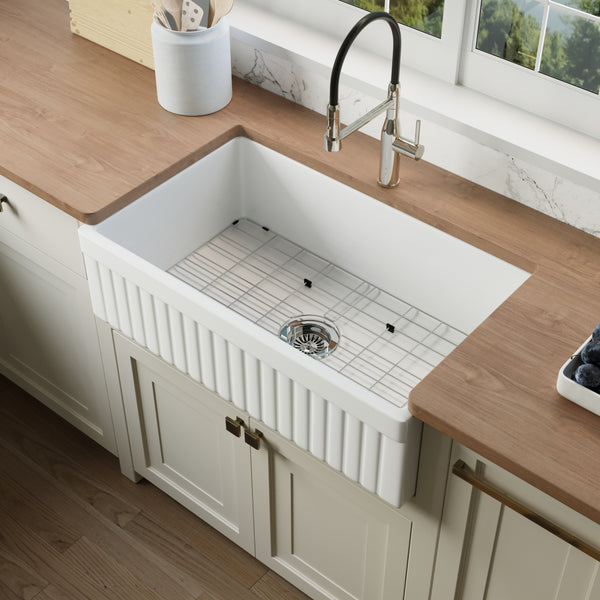
| Fireclay farmhouse sink, 100–115 lb (NOZLOO) | A level frame or rated brackets inside the cabinet | Compatible silicone between rim and counter |
The weight bands are a planning guide, not a rule from any code. Your sink's install sheet and your fabricator's specs come first. If the two disagree, ask before anything gets glued.

How do clips work, and when do they matter?
Light undermount sinks usually do; a fireclay farmhouse sink on a frame does not. Clips work by pulling the rim up against the stone. That only helps when the counter is meant to carry the sink.
Clips and anchors on a light sink
Clips and their anchors are mechanical fasteners. On a light sink under a granite countertop, the fabricator sets threaded anchors or studs in the underside of the stone. Clips hook over the sink flange, and a nut pulls them snug. The clips hold the rim tight while the silicone cures and keep holding after that.
Clips on a frame-supported fireclay sink
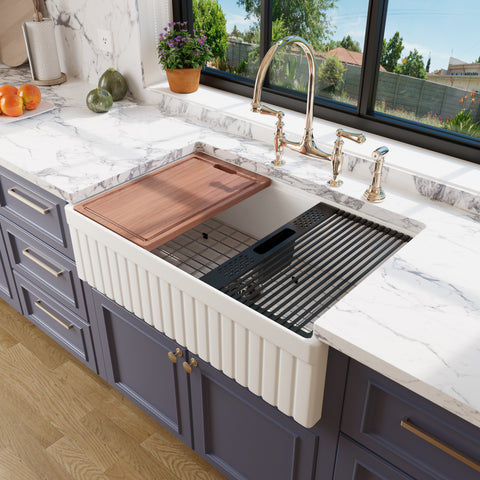
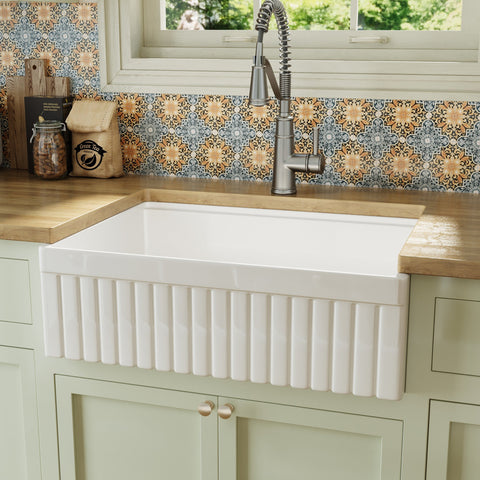
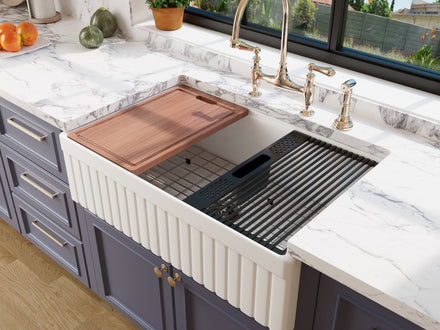
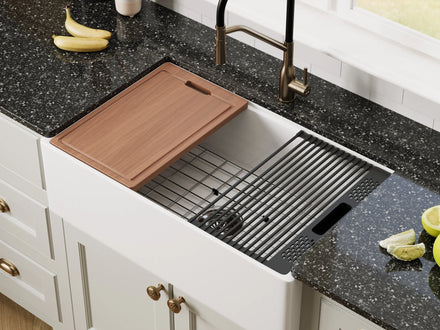
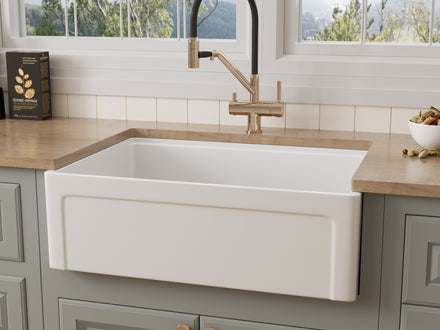
A NOZLOO sink is built another way. It installs undermount or flush only, never drop-in, and has no top rim to rest on the counter. The sink sits on its own support, and the counter rests on top of the rim.
Clips can steady the rim, but they add little. Never drill or screw into the fireclay itself to add one.

What is the best undermount sink adhesive for the seal?
For the sink-to-counter seal, most installers use a 100% silicone rated for kitchen and bath. It stays flexible, sheds water, and can be cut out later. The key is that the label approves both surfaces: the glazed sink and your countertop.
Use this short check before you buy a tube:
- Both substrates listed: glazed ceramic plus your counter, whether quartz, a granite countertop, marble, solid surface, or wood.
- Mold and mildew resistant for a joint that stays damp.
- Clear or white to match the rim. Many 100% silicones cannot be painted.
- Neutral-cure and labeled for natural stone on marble and many granites; vinegar-smell (acetoxy) silicones can stain or etch some stone.
- A cure time and temperature range that fit your schedule.
Why not epoxy or construction adhesive on the rim?
Epoxy, polyurethane, and MS polymer glues are strong but rigid or hard to remove. Fabricators often use them to set clip anchors in stone. Construction adhesive has the same drawbacks. We advise against using any of them to bond a fireclay rim.
If the cabinet settles or a repair is ever needed, a rigid bond can transfer stress into the stone or the glaze, and it makes removal slow. Keep the glue on the counter side; keep the sink on its frame.
Ventilate while the adhesive cures
Adhesives give off fumes as they cure. The EPA lists glues and adhesives among common sources of volatile organic compounds indoors, so open a window and run a fan while you work.
How do you support a heavy fireclay undermount sink?
Build a level frame, or use rated brackets, so the load runs straight down to the cabinet floor. Do not hang the sink from the cabinet's side walls with screws or other mechanical fasteners alone. Thin side panels are not made for that constant weight.
Build a 2x4 support frame
A 2x4 frame is the most common choice. Size it with one formula: frame height equals cabinet interior height minus sink height minus 1/8 inch. The small gap leaves room to shim and level. Our fireclay farmhouse sink install guide walks through it in Step 3, with photos of each stage.
- Reinforce a soft or thin cabinet floor with plywood first.
- Keep the frame dead level both ways before the sink goes on.
- Leave the drain zone open so you can reach the strainer and trap.
- Bracket kits are an option. Check the rated load and the cabinet width range they fit.
Working with a cabinet that is already installed? The farmhouse sink retrofit guide covers cutting the face and adding support without a new base.
In what order do you set and seal a fireclay undermount sink?
Sink first, counter second, seal last. That order lets the frame take the weight before any sealant goes on.
- Build and level the frame. Check it with a long level both ways.
- Set and shim the sink. Two people lift with hands under the bowl, not on the rim.
- Install the drain. Do it now, while you can still reach it.
- Template and set the counter. The fabricator measures the real sink, which can differ slightly from the listed size.
- Clean and dry the joint. Wipe with a cleaner both surfaces allow (isopropyl alcohol on a clean rag works for most counters; check your fabricator's care sheet); oil and dust weaken the bond.
- Run one steady bead of silicone. Push it into the joint, tool it once, and wipe the excess.
- Let it cure. Keep water and weight off for the time on the label.
The reveal you choose changes where the bead sits. Compare the options in our farmhouse sink reveal guide. For counter-specific notes on quartz, granite, laminate, and butcher block, see farmhouse sink countertop compatibility.
How long does undermount sink adhesive take to cure?
Plan on about a full day for silicone, and follow the label over any rule of thumb. A bead that feels dry on top can still be soft inside.
- Skin time: often minutes. You can touch it, but it is not ready.
- Full cure: many silicones list about 24 hours for a normal bead. Thick beads and cool rooms take longer.
- Epoxy for clip anchors: set by your fabricator; it may need support until it reaches full strength.
On a frame-supported fireclay sink, the cure wait protects the seal, not the hold. The sink is already sitting on its support. That is one more reason the frame matters: you are never waiting on glue to keep the sink in place.
How can you tell if a sink is hanging on caulk?
A seam that opens again and again is the main warning sign. Silicone stretches when a sink drops a little under load, then tears at the edge.
Warning signs to check under the sink
Check these under the sink with a flashlight:
- No frame, rail, or bracket under the bowl at all.
- A gap that grows when you set a full pot in the sink.
- Cabinet sides bowed out, or screws pulling out of the side walls.
- A wet cabinet floor or a dark, damp bead that keeps coming back.
Fix the support before you reseal
If the gap moves, fix the support before you reseal. A new bead over a moving joint will fail again.
Do not seal over mold or a damp joint either. The EPA's guide to mold and moisture says to fix the water source and dry the area first. Our recaulking guide covers the reseal itself, and the farmhouse sink replacement guide helps when the whole sink has to come out.
What does this mean if you are choosing a farmhouse sink?
Plan the support before the sink arrives. A fireclay sink is heavy because of its dense body, so the cabinet, frame, and counter schedule all start from that weight.
NOZLOO sinks have a 1-inch fireclay wall, fired with the glaze at about 2,200°F into one vitrified piece. The glazed surface is non-porous and resists everyday stains. That dense body is also why it needs a frame, not glue, to hold it. Each 33-inch model needs a 36-inch minimum cabinet; the 30-inch models need a 33-inch cabinet.
Not sure which mount suits your counter? Our undermount vs drop-in guide explains the trade-offs in plain terms.
Frequently asked questions
Do undermount sinks need clips?
Most light undermount sinks do, and a heavy fireclay farmhouse sink on a frame or brackets does not. Clips pull a light rim up tight to stone anchors; a fireclay sink rests on its own support, so clips are never what holds it. See how clips work, above, for the anchor and stud details.
Can silicone alone hold an undermount sink?
On a heavy sink, no. Silicone is a flexible seal. It keeps water out of the joint and lets the parts move a little without tearing. It is not built to carry a hanging load for years. On a 100 to 115 lb fireclay sink, the silicone bead should carry close to zero weight. The frame or brackets below do that job.
Should I use epoxy to glue a fireclay sink to the counter?
We advise against using epoxy as the support for a fireclay rim. A rigid glue line has no give, and it makes a later repair or replacement much harder. Let the frame carry the sink and seal the joint with a compatible silicone. If your fabricator sets clip anchors in the stone with epoxy, that is a separate job on the countertop side.
How long should silicone cure before I use the sink?
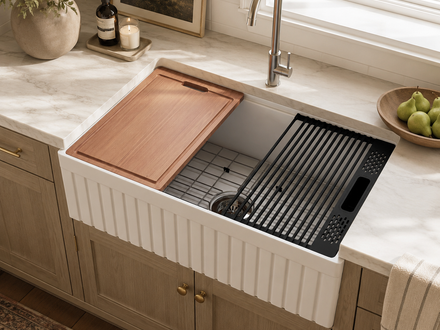
Follow the label on the tube you use. Our install guide plans about 24 hours before running water or loading the sink. Until the full cure time passes, keep the workstation accessories, cutting board, and heavy pots out of the bowl so nothing presses on or shifts the fresh bead.
Ready to plan around a sink that sits on a solid frame? Browse every model, with sizes and cabinet fits, in our fireclay farmhouse sink collection. Each listing shows the overall size, minimum cabinet, and the current price on the product page.