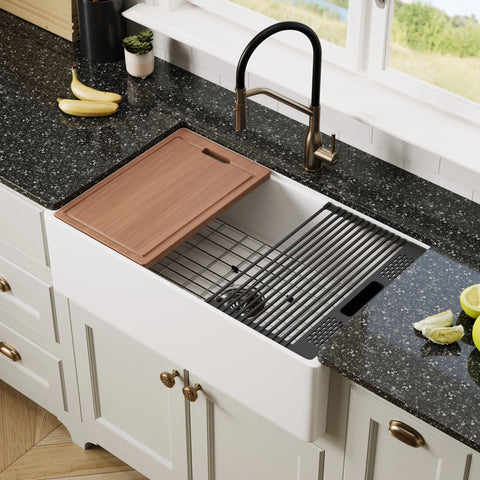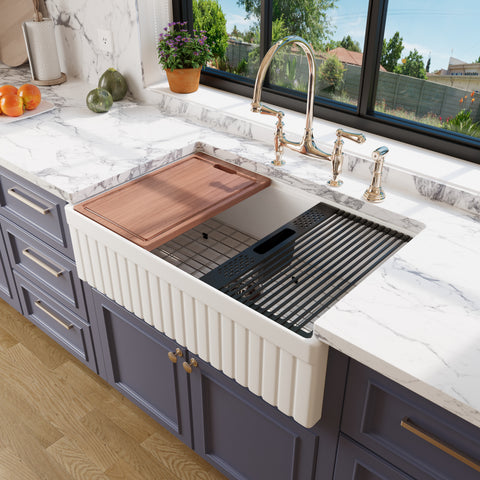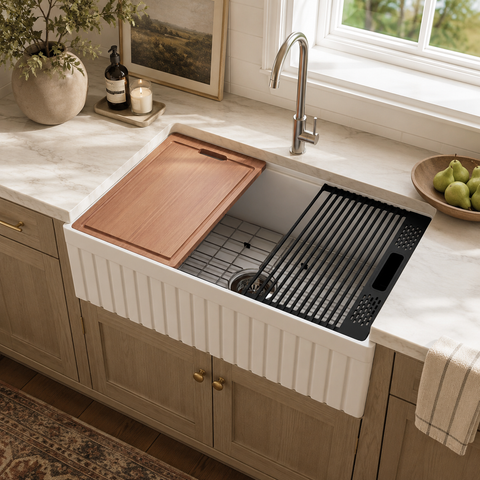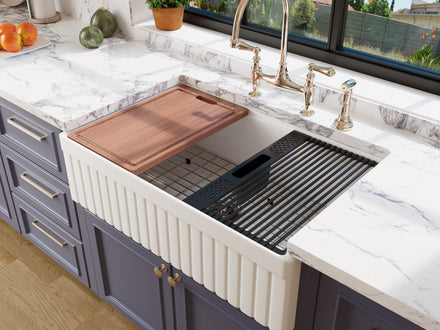
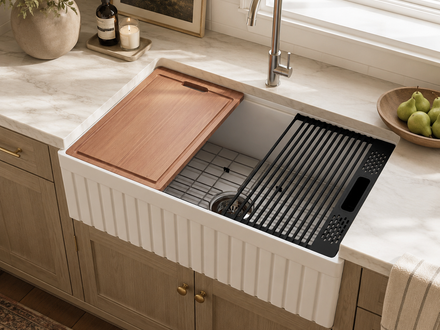

Stays bright.
Vitrified at 2,200°F into a glass-like surface. The smooth, non-porous glaze helps resist common food and beverage stains. Most everyday residue wipes away with mild soap, water and a soft sponge.
What is fireclay?
Fireclay is a dense clay-based ceramic fired at 2,200°F and finished with a vitrified glaze. During firing, the glaze bonds tightly to the fireclay body, creating a hard, smooth, non-porous surface designed for everyday kitchen use.
Used in European farmhouse kitchens for over 100 years.

What this material does, every day, for twenty years.
Vitrified at 2,200°F into a glass-like surface. The smooth, non-porous glaze helps resist common food and beverage stains. Most everyday residue wipes away with mild soap, water and a soft sponge.

Dense fireclay has a solid, substantial feel and produces less metallic ringing than a thin steel basin.

High-temperature firing creates a dense material designed to handle normal kitchen heat and sudden temperature changes. Proper cabinet support and installation remain essential.
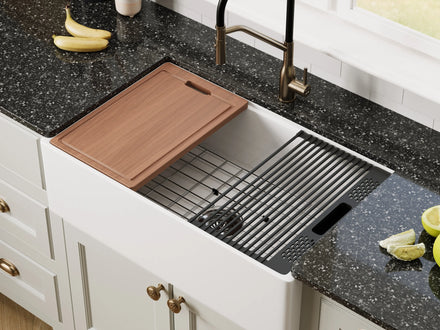
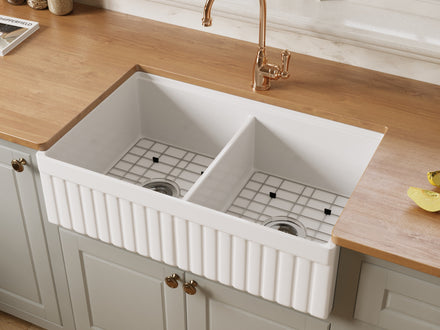
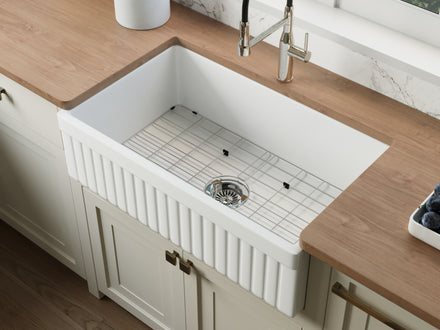
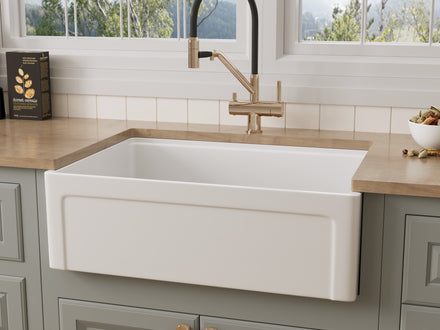
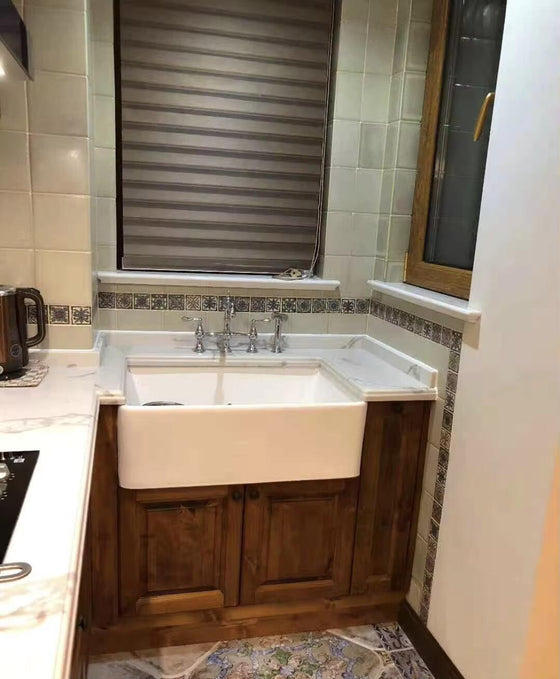
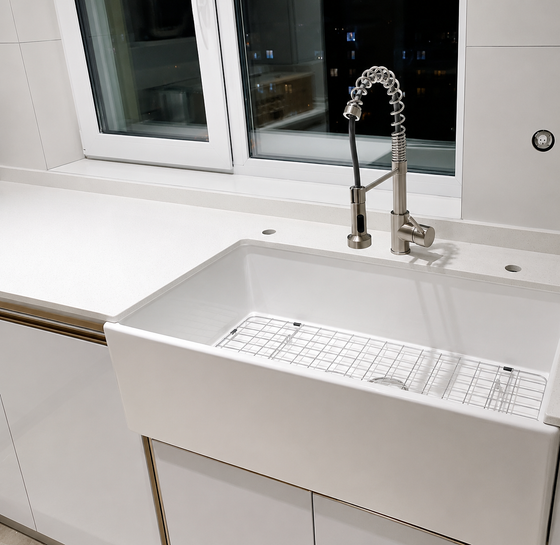
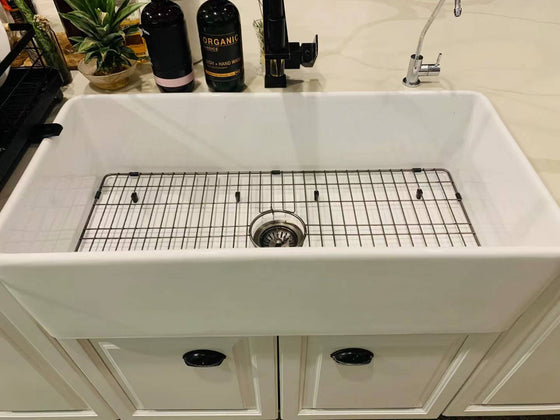
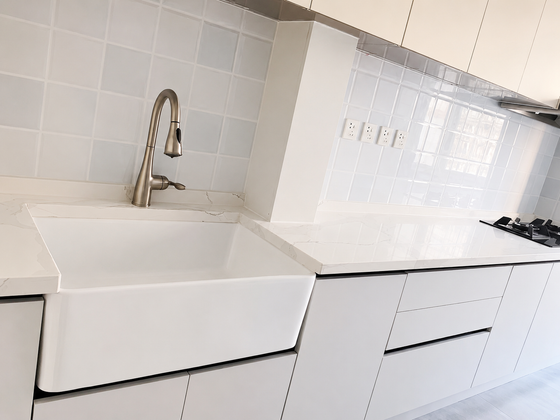
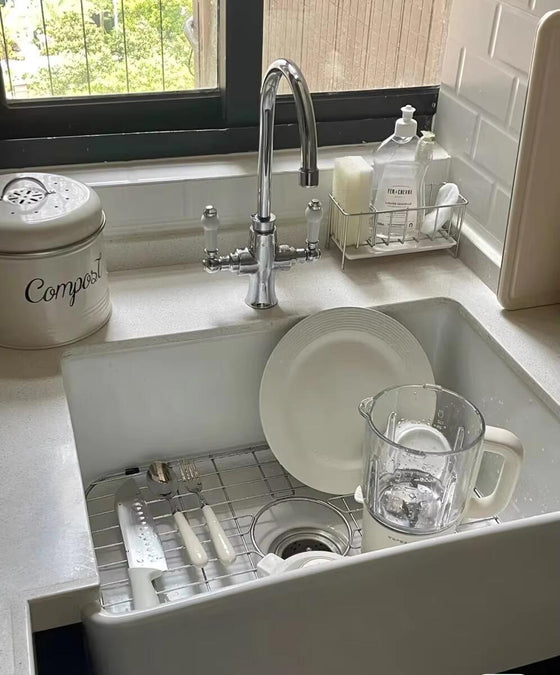
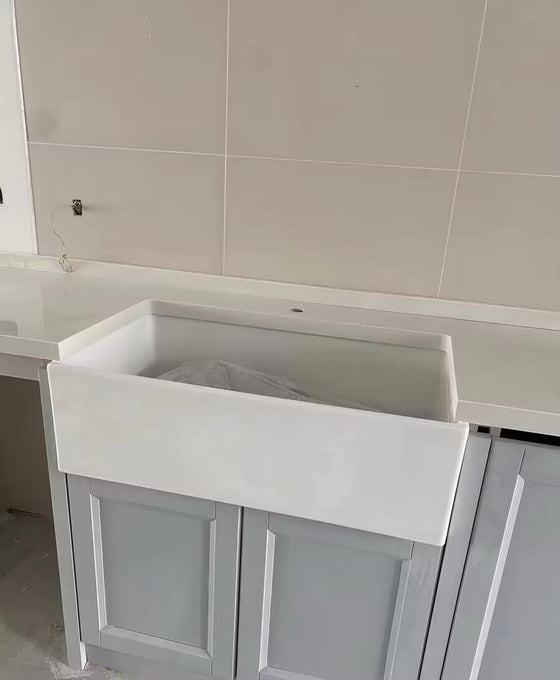
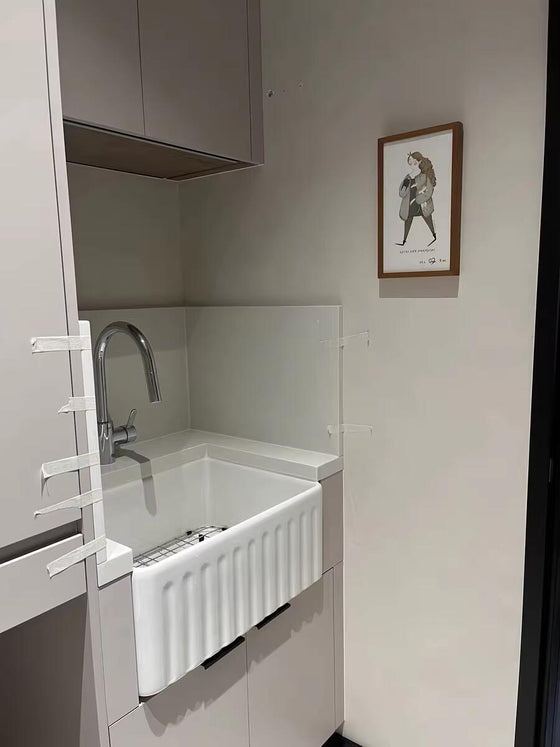
Three of our first customers, photographed at home — plus design previews across cabinet styles. Earlier aprons; the fireclay body underneath is identical to every sink we make today.
Fireclay vs. other sink materials.
A side-by-side look at how common kitchen sink materials hold up over years of daily use.
Based on typical material behavior in residential kitchens. Individual results vary by product quality, installation, and care.
Fireclay gives the best balance of durability, cleanability, and premium kitchen style.
Shop Fireclay SinksWhat fireclay asks of your kitchen.
A few real things to plan around before you order — knowing them upfront makes the install go smoothly.
100+ pounds for a 33" basin. Your sink-base cabinet needs reinforcement — a wood ledger or plywood shelf inside. About five minutes of extra install work, planned upfront.
Farmhouse style means opening the front of the cabinet to expose the apron. Most stock cabinets need a simple front-panel modification — we include the template, and a handyman finishes it in about 90 minutes.
Fireclay can chip if a heavy cast iron pan lands directly on the apron corner from above. In normal kitchen use this is rare, but it's worth being mindful when handling heavy cookware near the edge.
A basic stainless sink runs $200–$300. A real fireclay sink starts around $479. The added cost goes into material density and a longer expected lifespan.
See how fireclay is fired.
From wet clay to finished sink — 24 hours at 2,200°F, then a day to cool. Watch the full process in two minutes.

Filmed in our partner factory. Sound on — the kiln is louder than you'd expect.
Every NOZLOO sink ships free in the lower 48, with a limited lifetime warranty on the fireclay body.