How to Clean a Fireclay Sink Without Damaging the Finish
Daily care, stain removal, and what to avoid — keep fireclay white.

In this guide View sections +
In this guide
White fireclay sinks are not high-maintenance. Most daily messes come off with dish soap, warm water, and a soft cloth — no specialty cleaners required.
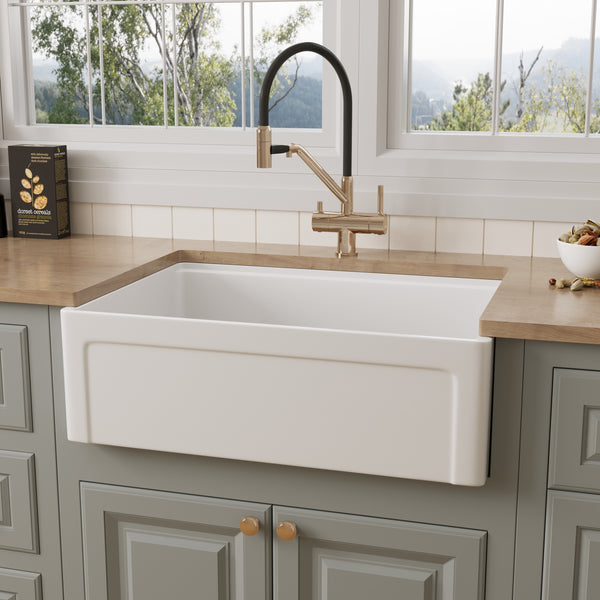
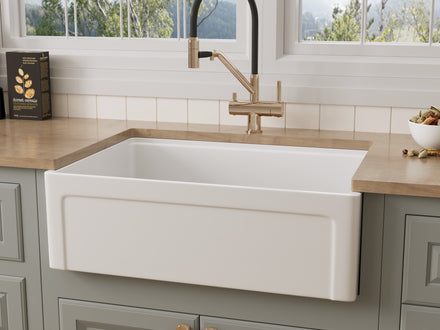
We installed a white fireclay farmhouse sink in our test kitchen six months ago, expecting it to show every coffee drip. It didn't. The glazed surface is non-porous, so liquids sit on top instead of soaking in. This guide covers how to clean fireclay sink surfaces the right way — daily care, stain removal, safe products, what to skip, and how to handle minor damage.
What Do You Clean a Fireclay Sink With?
For daily cleaning, you need three things: mild dish soap, warm water, and a soft cloth. After washing your other dishes, simply wash the basin, rinse thoroughly, and dry with a clean towel.
That drying step matters. Standing water causes water spots and mineral buildup. Thirty seconds of drying after each use prevents this entirely.
Compared with stainless steel, white fireclay shows residue more visibly — but the glazed surface doesn't absorb stains, so with proper care everything rinses right off.
What Is the Best Cleaner for a Fireclay Sink?
Plain dish soap handles daily cleaning. For stubborn stains — tea rings, coffee marks, or rust from cast iron cookware — make a baking soda paste with a small amount of water. Apply the mixture, let it sit 10–15 minutes, then scrub gently with a soft cloth and rinse clean.
One myth worth retiring: don't mix vinegar into the baking soda. The fizz looks like cleaning power, but it's an acid and a base canceling each other out — what's left behind cleans worse than either ingredient on its own. Use them separately instead:
- Baking soda paste for food stains, tea and coffee rings, and everyday scuffs.
- White vinegar diluted 1:1 with water for hard-water spots and limescale that drying didn't catch. Wipe it on, let it sit a few minutes, then rinse thoroughly — don't leave acidic cleaners standing on the glaze.
You don't need harsh chemicals. Fireclay is shaped by skilled artisans, fired at extremely high temperatures, and finished with a special glaze coating. That process results in a surface that's naturally stain resistant and scratch resistant. Most marks are surface-level and respond to gentle cleaners.
Can You Use Bar Keepers Friend on Fireclay?
Many manufacturers allow limited use of Bar Keepers Friend on glazed fireclay, but recommendations vary by brand. Test a small area first and follow your sink's care instructions.
Use the powder version, make a paste, apply to the stain, wait a few minutes, and rinse. For rust spots from cast iron pans or metal utensils, it works well. But it's a mild abrasive — save it for tough jobs, not everyday maintenance.
It's also the answer to the most common white-sink complaint: gray, pencil-like streaks left behind by aluminum pans and stainless utensils. Those marks aren't scratches in the glaze — they're tiny metal deposits sitting on top of it. Bar Keepers Friend lifts them right off, and a baking soda paste with a little extra patience does the same job.
Can You Use a Magic Eraser on a Fireclay Sink?
A Magic Eraser is a micro-abrasive. Occasional use on a tough stain probably won't cause visible damage, but we wouldn't make it a habit. A baking soda paste does the same job with less risk to the glaze.
Can You Use Clorox Wipes on a Fireclay Sink?
Disinfecting wipes may leave chemical residue that dulls the surface over time. They're not ideal for routine cleaning unless your manufacturer explicitly approves them. A soft cloth with dish soap is the safer alternative.
Can You Use Bleach in a Fireclay Sink?
Occasional diluted bleach (1:10 ratio) may be acceptable on some fireclay sinks, but manufacturer guidance varies. Never pour undiluted bleach into the sink, and don't leave bleach sitting on the surface. Also skip harsh drain cleaners — they can erode the glaze near the drain edge.
What Should You Never Use on a Fireclay Sink?
The glaze is hard, but a few products can scratch or dull it. Keep these out of the basin:
- Steel wool and metal scouring pads. They scratch the glaze and leave gray metal deposits behind.
- Harsh scouring powders and the abrasive side of a two-sided sponge. A good rule: if you wouldn't scrub glass with it, don't scrub fireclay with it.
- Undiluted bleach, or any bleach solution left sitting in the basin.
- Caustic drain cleaners. If you have to use one, pour it directly into the drain opening so it never pools on the fireclay surface.
- Disinfecting wipes as a daily routine. Residue builds up and dulls the gloss over time.
- A Magic Eraser habit. Fine as an occasional spot treatment; too abrasive for everyday use.
Everything else in this guide — dish soap, baking soda, diluted vinegar, careful Bar Keepers Friend — is fair game.

Are White Fireclay Sinks Hard to Keep Clean?
No — and this is the biggest fear people have before buying. The glaze is non-porous, so coffee, wine, and beet juice sit on top rather than absorbing in. Fireclay is stain resistant, not stain proof — neglected spills left for days can leave marks, but even those respond to baking soda.
Unlike enameled cast iron sinks, fireclay doesn't have a thin enamel layer over a metal core. The glaze and clay body fuse in the kiln, so the surface won't peel or flake. That durability keeps long-term maintenance costs low.
Worried about crazing or impact marks? We covered those in our guide to common fireclay sink problems and prevention.
Can You Place Hot Pans Directly on Fireclay?
Fireclay is extremely durable and handles hot pans better than most materials. The one heat scenario worth avoiding is thermal shock — setting a scorching-hot pan into a cold, water-filled basin. Sudden temperature swings are what manufacturers actually caution against, since repeated shocks can craze the glaze over time.
Beyond that, impact — not heat — is what causes chips. Heavy cookware dropped from height or sharp contact on the edge is the real risk, so we recommend using a protective grid.
Can You Fix a Chipped Fireclay Sink?
Minor chips can be patched with a fireclay sink repair kit — color-matched epoxy that fills chips and restores a smooth surface. It won't make damage invisible, but it stops chips from growing and keeps the area easy to clean.
Fireclay is chip resistant, but not indestructible. Most quality sinks come with a warranty. NOZLOO's Limited Lifetime Warranty covers defects in material and craftsmanship, so manufacturing issues are covered.
Do You Need a Fireclay Sink Grid?
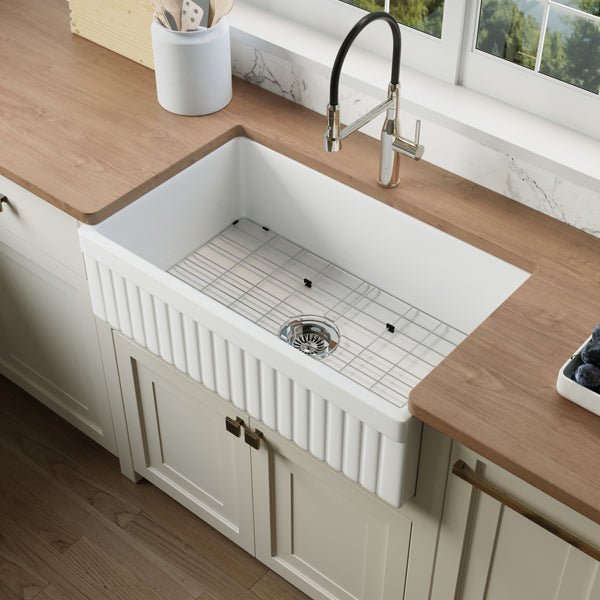
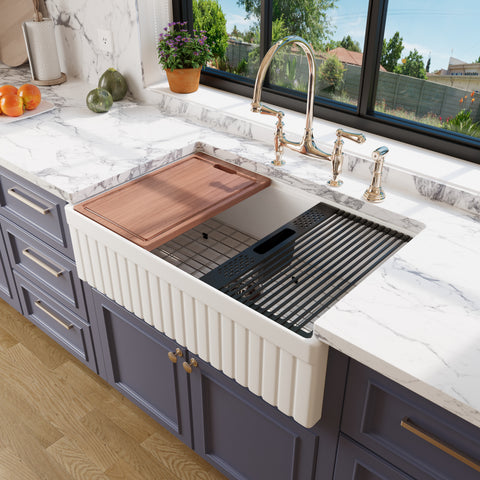
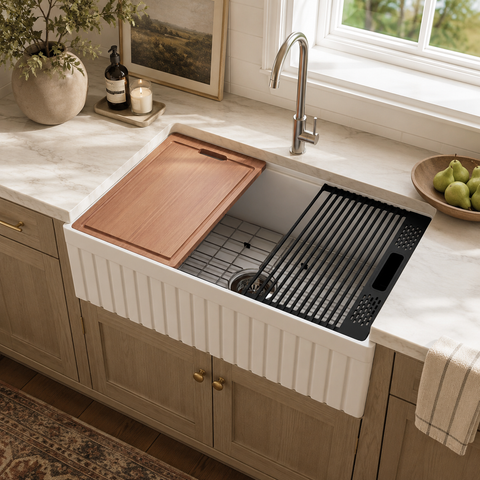
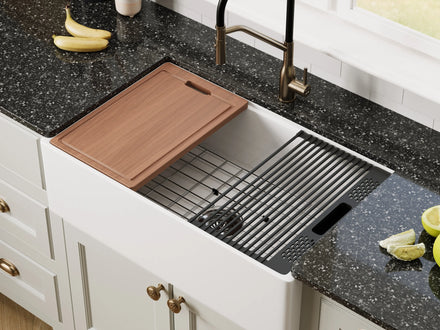
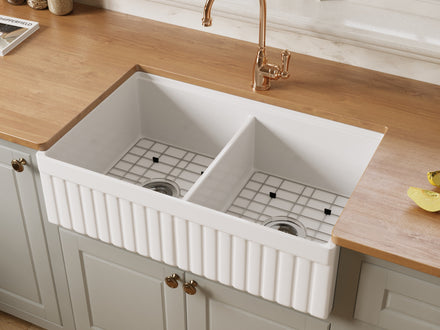
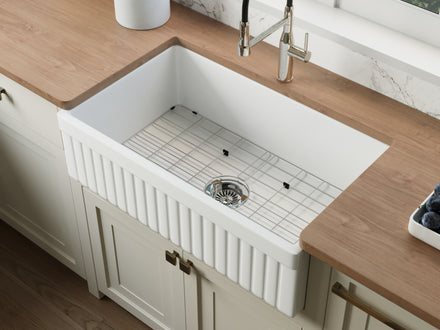
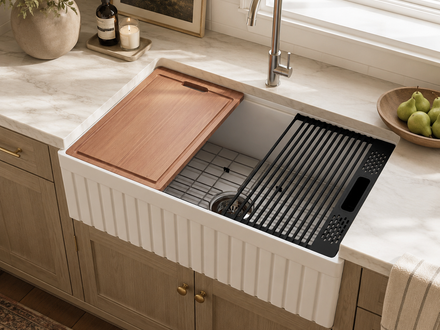
A fireclay sink grid isn't required, but it's the single most effective accessory for protecting the finish. It reduces surface marks from heavy cookware, prevents scratches when pots and other dishes slide around, keeps hot cookware off the basin floor, and improves drainage by keeping everything elevated. Low-cost insurance for the finish — and the beauty of your kitchen.
The surface is less prone to damage with a grid in place, especially if you tend to drop or slide cast iron into the basin.
What's Next
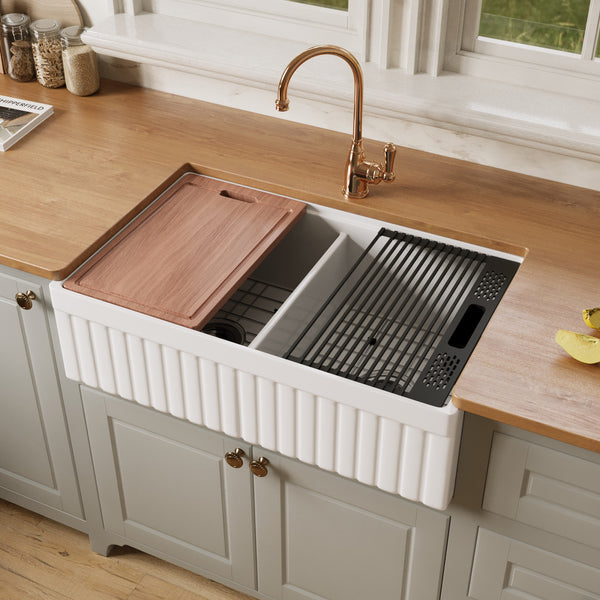
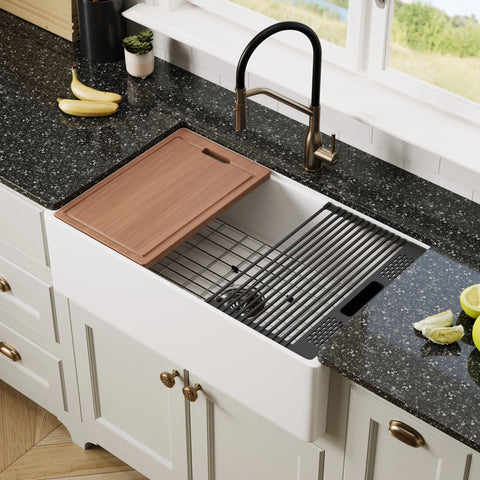
Still comparing options? Browse our fireclay farmhouse sink collection to compare sizes, styles, and included accessories like bottom grids. Every model is backed by a limited lifetime warranty.
Already own a fireclay sink? Start with a protective grid and baking soda — that combination handles 90% of maintenance with minimal effort.
Still comparing sinks? The glaze described here is the same one on every 33-inch fireclay farmhouse sink we make.