Pouring Boiling Water Down Sink Drains: Pipes vs Sink Safety
Boiling water is mainly a risk to plastic drain pipes and, now and then, to a cold glazed sink. Here is how to check your pipes and pour safely.

In this guide View sections +
Pouring boiling water down sink drains is usually fine once in a while, but it is not a good daily habit. The main risk is to plastic drain pipes, not the water itself. Most PVC drain pipe is commonly rated to about 140°F, and boiling water is about 212°F. The simple fix: turn the cold tap on first and keep it running while you pour boiling water down the drain.
There is a second, smaller risk: the sink bowl. A glazed ceramic or enameled sink can be stressed by a sudden, uneven temperature change. This guide covers both parts. You will learn how to identify your pipes, how each sink material reacts, a 4-step routine to pour boiling water safely, and what to check after a big pour.
When you pour boiling water into a kitchen sink, it touches two things on its way out: the bowl and the drain pipes. Each one has its own limit, and the safe habit protects both.
- The pipes. The tailpiece, P-trap and drain line under the sink are often plastic. Heat can soften plastic and loosen joints over time.
- The sink bowl. Glazed ceramic, fireclay and enameled cast iron do not like a sudden hot spot on a cold surface. This is called thermal shock.
- The clog, if there is one. Hot water that cannot drain sits in the trap. That is the worst case for plastic pipe.
Here is the good news. One habit handles all three. Whenever you pour boiling water, run cold water into the stream so the mix is closer to hot tap temperature before it reaches the trap.

Can pouring boiling water down the sink damage PVC pipes?
Yes, PVC pipes and other plastic drain pipes can be damaged, mostly by repeated or trapped heat. A single pour with the cold tap running is low risk. Pouring boiling pasta water straight into a slow drain every day is not.
Here is why. Most home drains under the sink use PVC or ABS plastic.
PVC drain pipe is commonly rated for about 140°F. Boiling water is about 212°F at sea level. That gap is why plumbers warn against it.
The damage is rarely sudden. It tends to show up as one of these:
- Loose slip joints. The trap is held together with plastic nuts and washers. Heat can soften the washers, and a drip starts weeks later.
- A sagging pipe. A long run of warm plastic can droop between supports. The low spot then collects food and grease.
- Softened pipe joints. Solvent-welded pipe joints in the wall can weaken if hot water sits against them often.
Metal pipes are a different story. Cast iron, copper and chrome-plated brass handle boiling water far better. But many homes mix metal and plastic, so check before you assume.
How to tell what pipes you have in 60 seconds
Open the cabinet under the sink and use a flashlight. Look at the trap and the pipe going into the wall.
| What you see | Likely material | Boiling water risk |
|---|---|---|
| White or cream plastic, often printed "PVC" or "DWV" | PVC | Higher. Always mix in cold water. |
| Black plastic, often printed "ABS" | ABS | Higher. Treat it like PVC. |
| Shiny or dull metal trap that a magnet does not grab | Chrome-plated brass | Lower, but the wall line may be plastic. |
| Thin shiny metal trap, magnet sticks | Chrome-plated steel | Lower for heat, but the wall line may be plastic. |
| Heavy dark pipe in an older home, magnet sticks | Cast iron or galvanized steel | Lower for heat. Old pipe can have other issues. |
The printing on plastic pipe tells you the type and the standard it meets. The International Plumbing Code lists the drain pipe materials allowed in homes in its chapter on sanitary drainage. If you want the full layout of what sits under a farmhouse sink, see our farmhouse sink plumbing rough-in guide.
How hot is "too hot" for the drain?
Hot tap water is fine. Boiling water is the problem, and the fix is to bring it down toward tap temperature before it reaches the trap.
A few reference points help:
- Hot tap water: a water heater is commonly recommended to be set at 120°F. The University of Florida extension calls 120°F the best setting for efficiency and function.
- Common PVC rating: about 140°F.
- Boiling water: about 212°F at sea level. It boils a bit cooler at altitude, around 202°F near 5,000 feet. That is still well above the PVC rating.
So how much cold water do you need when you pour boiling water? There is no exact ratio, because pots and faucets vary. A practical rule: start the cold tap at full flow before you tip the pot, and pour slowly enough that the cold stream is never overwhelmed. If you hear the trap gurgle or see water rising in the bowl, slow down.
Another easy option is to let the pot sit for a few minutes. Water cools fast once it is off the burner, and a short wait costs you nothing.
Can boiling water crack a kitchen sink? It depends on the material
Boiling water rarely cracks a sink, but glazed and enameled sinks are the ones to be careful with. The risk is not heat by itself. It is a sudden, uneven change in temperature.
Think of a cold kitchen sink on a winter morning. A full pot hits one spot on the floor of the bowl. That spot heats and expands right away, while the material around it stays cool. The difference creates stress.
Most of the time nothing happens. Now and then, it can start fine lines in the glaze or a crack in the body.

| Sink material | How it reacts to boiling water | Best habit |
|---|---|---|
| Fireclay (glazed ceramic) | Dense ceramic. Heats slowly and unevenly, so a sudden hot spot on a cold bowl can cause stress. | Warm the bowl or run cold water first. Pour toward the drain. |
| Enameled cast iron or steel | A glass enamel layer over metal. The two layers expand at different rates. | Same as fireclay. Avoid very hot and then very cold in a row. |
| Vitreous china (most bathroom sinks and toilets) | Glazed ceramic, often thinner. Same thermal shock idea. | Do not pour boiling water into bathroom sinks or toilets. |
| Stainless steel | Metal spreads heat fast, so hot spots fade quickly. The bowl itself is rarely the issue. | Still protect the pipes below. |
| Composite (mineral and resin) | Heat limits depend on the resin. Some makers set a maximum temperature. | Read your sink's care sheet before you pour. |
For a deeper look at how these materials age, see our comparison of fireclay vs cast iron vs porcelain and our fireclay vs stainless steel guide.
Can you pour boiling water into a fireclay farmhouse sink?
A fireclay sink is made for everyday kitchen use, including hot water. Treat a full pot of boiling water with a little care, though, especially when the bowl is cold.
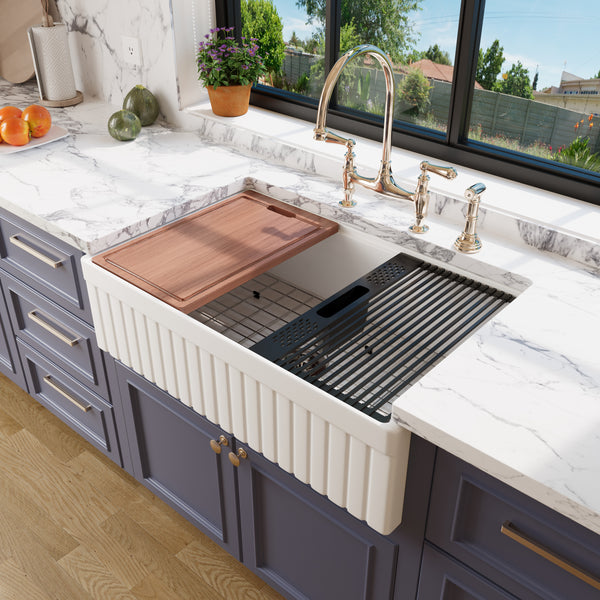
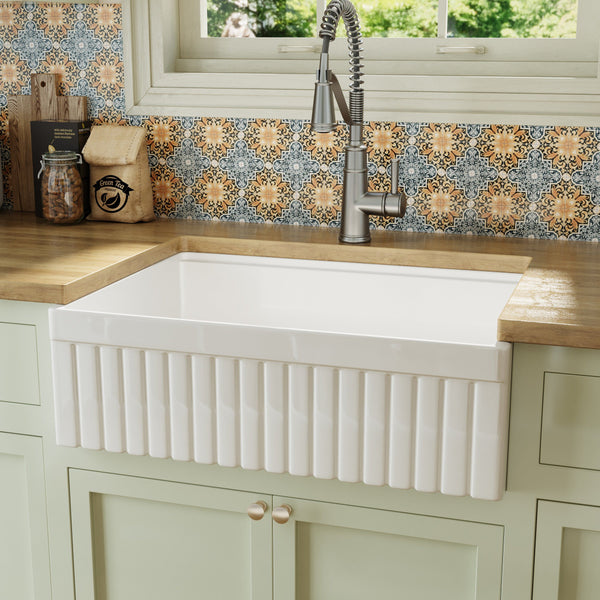
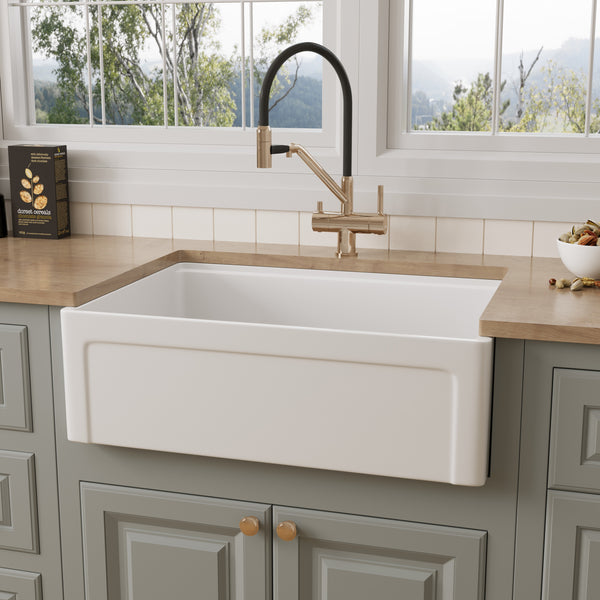
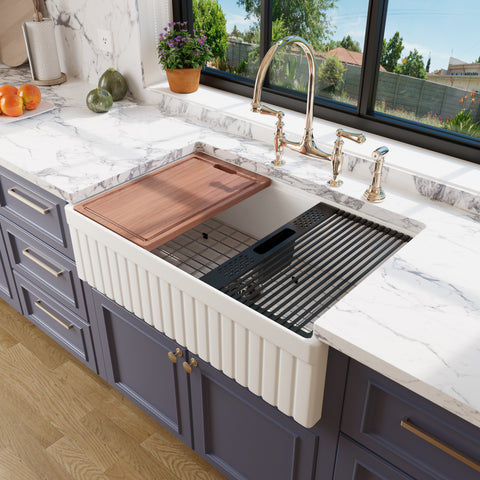
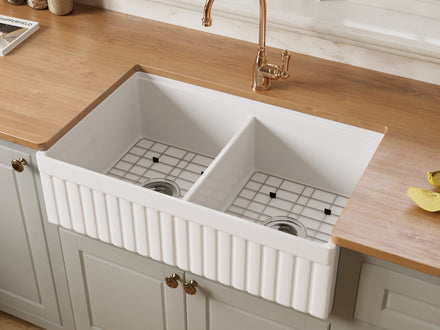
Here is what a NOZLOO sink is made of. The body is a 1-inch (22–25 mm) fireclay wall. The glaze and the body are fired together at about 2,200°F until they fuse into one dense piece with a non-porous surface. That firing is why the glaze resists everyday stains and is easy to clean.
It is easy to read "2,200°F" and think boiling water cannot matter. That is not quite right.
In the kiln, the whole sink heats and cools slowly and evenly. At home, boiling water hits one small area of a cool sink in a second. That is a very different kind of stress. The kiln number tells you about the material, not about thermal shock.
So we say it plainly. NOZLOO sinks carry a Limited Lifetime Warranty on the sink body for the original purchaser in residential use. Damage from thermal shock is not covered. The 4-step routine below is the simple way to avoid it.

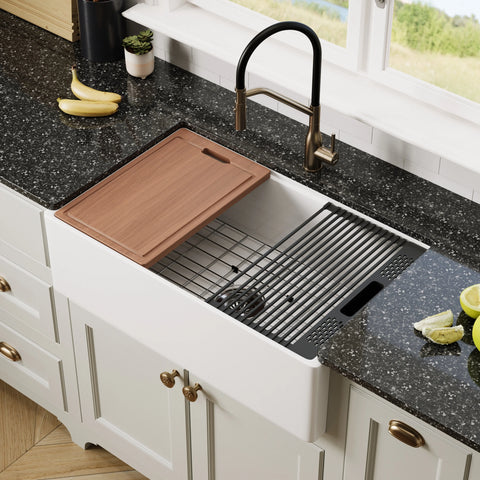
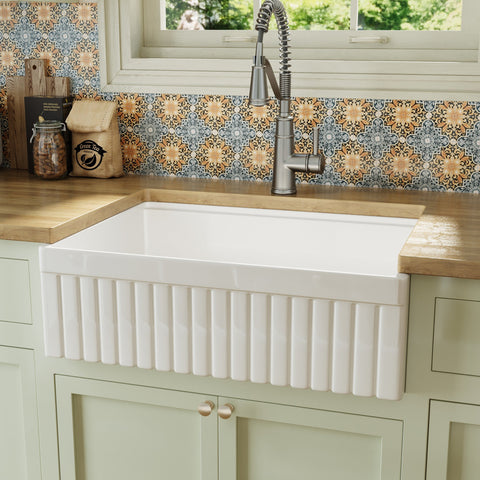
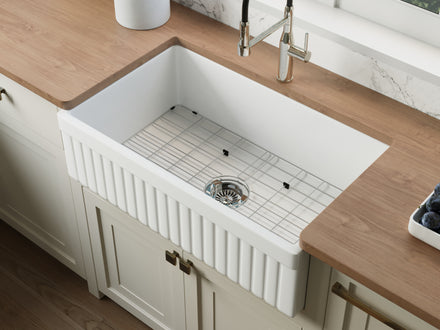
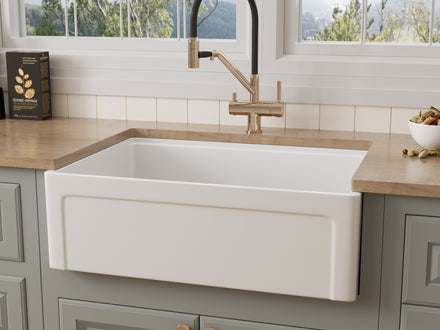
The drawing above shows the 33" smooth apron model. The bowl is 9 inches deep at the drain, so there is room for a big pot and a colander. That depth also means a pot can sit low in the bowl. Rest it on the bottom grid, not on bare glaze.

How to pour boiling water down a kitchen sink safely: 4 steps
Run the cold tap before and during the pour, and aim the hot water at the drain. That one habit protects the pipes and the sink at the same time.
- Turn on the cold tap first. Let it run for a few seconds so the bowl is wet and a cool stream is already going down the drain. If the sink is very cold, run the hot tap for 30 seconds first to warm the bowl, then switch to cold before you pour.
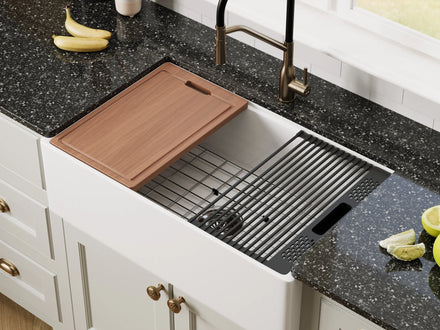
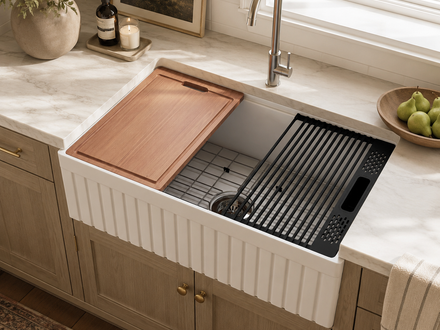
- Set the colander on the grid. Put the colander or strainer on the bottom grid, close to the drain. Keep the hot pot off the bare floor of the bowl.
- Pour slowly toward the drain. Aim the stream into the cold water, not at the sink wall or apron. A slow pour lets the cold water keep up.
- Keep the cold tap on for 10 to 20 seconds after. This sends cool water down the drain so hot water does not sit in the trap.
Two habits to skip when pouring boiling water:
- Do not pour boiling water into a cold, dry sink and then blast it with cold. Hot, then cold, in a row is the hardest change for a glazed bowl. Mixing cold into the stream while you pour is fine; the problem is soaking a hot spot with cold water after the fact.
- Do not set a hot pot right out of the oven or off a burner on the glaze. Use the grid, a trivet or the counter.
Want to keep the glaze looking new while you are at it? Our fireclay cleaning guide covers what to use and what to avoid.
Should you use boiling water to unclog a drain?
Only for a light clog of soft grease or soap scum, and never when water is already standing in the sink. For most clogs, it either does nothing or makes things worse.
Here is the problem. Boiling water melts grease, but it does not carry it far. The fat moves a few feet down the pipe, cools and hardens again. Now the clog is deeper and harder to reach.
And if the kitchen sink drains slowly, the hot water just pools in the trap. That is exactly where plastic pipe and slip joints are weakest.
Try this order instead:
- Hot tap water and dish soap. A good squirt of soap, then a few minutes of hot tap water. This breaks up light grease at a temperature the pipes can handle.
- A cup plunger. Fill the bowl with a few inches of water. If you have a double bowl, seal the other drain with a wet rag first.
- Clean the trap. Put a bucket under it, loosen the slip nuts by hand and clear it. Hand-tighten when you put it back. Our sink drain guide shows the parts.
- Call a plumber if the clog is past the trap or keeps coming back.
What about baking soda and vinegar? The mix fizzes, but it is not a sure fix for a solid clog. If you try baking soda, rinse with hot tap water, not a kettle.
One more safety point. Never mix boiling water with chemical drain cleaner. It can splash or spray back out of the drain.
Grease is worth keeping out of the drain in the first place. Clogs do not stop at your trap. The EPA lists blockages among the common causes of sanitary sewer overflows. Let fat cool in the pan, wipe it out with a paper towel and put it in the trash.
Garbage disposals, double bowls and toilets
The same rule applies everywhere: avoid pouring boiling water down the drain straight from the pot, and always add cold. A few places need a little more care.
- Garbage disposal. Disposals have rubber splash guards and plastic parts, and makers advise running cold water while grinding. Drain pasta water with the disposal off and the cold tap on. For fit and mounting, see using a garbage disposal with a fireclay sink.
- Double bowl sinks. Pour into the bowl without the disposal if you have one. Run cold water in the same bowl you pour into, since each bowl has its own drain.
- Toilets. Skip boiling water here. The bowl is glazed ceramic, and the wax ring and pipes below do not need the heat.
- Bathroom sinks. These are often thin vitreous china with small plastic drains. Use hot tap water instead.
What to check after a big pour
If you have poured a lot of boiling water, spend two minutes checking. Small problems are easy to fix early.
- The paper towel test. Wrap a dry paper towel around each of the trap's pipe joints. Run the tap for a minute. Any wet spot means a joint needs a hand-tighten or a new washer.
- Look for a sag or bend. A pipe that now droops or looks out of line may have softened. Have it replaced before it leaks.
- Check the glaze in good light. Look for new fine lines near where the water hit. Fine lines in the glaze are called crazing. Our guide to fireclay sink problems explains what they mean.
- Take photos. If you see a new line or crack, photograph it dry and wet. Then contact NOZLOO. Customer service replies within a few hours.
A quick decision guide
Use this table when you are standing at the stove with a hot pot.
| Situation | What to do |
|---|---|
| Draining pasta or potatoes, sink drains well | Cold tap on first, pour slowly toward the drain, flush for 10 to 20 seconds. |
| Sink is cold (winter, exterior wall) | Run hot tap water for 30 seconds to warm the bowl, switch to cold, then pour. Or let the pot cool for a few minutes. |
| Sink drains slowly or water is standing | Do not pour. Set the pot aside and clear the clog first. |
| Plastic pipes (PVC or ABS) under the sink | Always mix in cold water. Never pour boiling water as a drain cleaner. |
| Greasy water (bacon, roast pan) | Let it cool and solidify. Wipe it out and trash it. |
| Bathroom sink or toilet | Use hot tap water instead. |
Frequently asked questions
Is it OK to pour boiling water down the sink?
Now and then, with the cold tap running, it is usually fine for metal pipes and a warm sink. Pouring boiling water down sink drains every day is not a good habit for plastic pipes. Most PVC drain pipe is commonly rated to about 140°F, and boiling water is about 212°F at sea level. Mix in cold water so the stream reaches the trap closer to hot tap temperature.
Can boiling water damage PVC pipes?
Yes, mainly over time. One quick pour with cold water running rarely does harm. The risk grows when hot water sits in the trap, when you pour often, or when the drain is slow. Heat can soften the plastic, loosen slip-joint washers and let a section sag. Look for drips at the trap joints after a big pour.
Does boiling water unclog a drain?
Only light clogs made of soft grease or soap scum. It does not dissolve hair, food chunks or mineral scale. Melted grease can also move deeper and harden again further down the pipe. If the sink already drains slowly, skip boiling water. Use hot tap water with dish soap, then a plunger, then clean the trap.
Can boiling water crack a sink?
It can, in rare cases. The risk is thermal shock: a sudden, uneven temperature change in a glazed ceramic or enameled sink. It is highest when a cold, dry sink takes a full pot in one spot. Run the cold tap first and pour toward the drain. NOZLOO's warranty does not cover thermal shock, so the habit matters.
Planning a new kitchen sink? Browse NOZLOO's fireclay farmhouse sinks in 30" and 33" sizes. Each one has a deep bowl, a bottom grid to keep pots off the glaze, and care notes on the care and maintenance page.