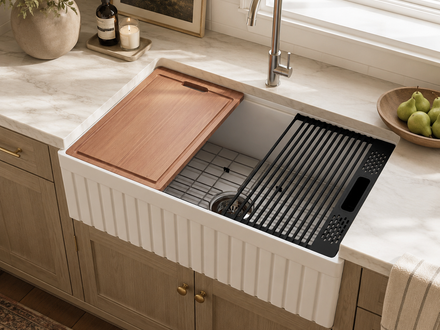
Fireclay vs Cast Iron vs Porcelain Sink: Which Material Wins?

Quick answer: For an apron-front kitchen, fireclay is a solid glazed ceramic body with no metal substrate; enameled cast iron uses a heavy iron core under porcelain enamel; “porcelain sink” is ambiguous until the seller identifies the body beneath the white surface. Choose only after confirming construction, weight, cabinet support, and the failure mode you are willing to manage.
First, What Does “Porcelain Sink” Mean?
Porcelain may describe the body, as with vitreous china, or the enamel applied over steel or cast iron. That means “cast iron vs porcelain” can overlap: many cast-iron sinks are porcelain-enameled. Ask whether the product is vitreous china, porcelain enamel over steel, or porcelain enamel over cast iron before comparing durability or price.
Fireclay vs Cast Iron vs Porcelain: 60-Second Decision Matrix
Choose fireclay
For a farmhouse look, a glazed ceramic body with no rusting substrate, and a cabinet plan that supports a heavy sink.
Main risk: hard impact or poor support.Choose enameled cast iron
For maximum heft, a deep enamel finish, and a cabinet that can support the greatest weight.
Main risk: chipped enamel exposing iron.Choose porcelain only after identifying it
Vitreous china suits many bathrooms; porcelain-enameled steel can be lighter and lower-cost; porcelain-enameled cast iron belongs in the cast-iron column.
Main risk: buying by finish name alone.Leaning fireclay? Confirm cabinet size before comparing apron and workstation styles.
Check cabinet fit →How the Failure Modes Differ
These materials do not fail in the same way. A severe impact can chip a fireclay edge or glaze. Enameled cast iron usually keeps its iron structure, but a deep enamel chip can expose metal and create a rust-management problem. A porcelain-enameled steel sink may dent as well as chip. Vitreous china has no metal substrate, but it remains a rigid glazed ceramic. The useful comparison is therefore not “which one never chips?” It is “what is underneath the finish, what happens after damage, and how difficult is replacement?”
Installation changes the risk profile. Fireclay and cast iron both demand strong, level support. Lighter enameled steel is easier to lift but may feel and sound different in daily use. A bathroom-oriented vitreous china basin should not be treated as a direct substitute for a large farmhouse kitchen sink simply because both are glossy white.
This taxonomy also keeps pricing honest: a lightweight enameled-steel sink, a vitreous-china bathroom basin, and a large enameled-cast-iron farmhouse sink can all be marketed with the word “porcelain,” yet they are not equivalent purchases.
Fireclay Sink vs Cast Iron: Head-to-Head
Quick answer: In a fireclay sink vs cast iron comparison, both give you the classic glossy farmhouse look, but they fail differently and age differently. Fireclay is solid ceramic through its full 1-inch wall, so a deep chip shows clay tone and cannot rust. Enameled cast iron is a glass coating over an iron core — the enamel is hard, but a chip exposes dark metal that can rust if left unsealed.
| Fireclay | Enameled Cast Iron | |
|---|---|---|
| Construction | Ceramic body and glaze fused in one firing; solid through the wall | Glass enamel layer bonded over an iron casting |
| What a chip looks like | Clay-tone mark; no rust, often repairable with a ceramic kit | Dark iron shows through; can rust if not resealed promptly |
| Weight (33" farmhouse) | Roughly 100–115 lbs | Commonly 115–145 lbs — plan extra cabinet reinforcement |
| Hot cookware | Glazed ceramic handles hot pans; avoid extreme thermal shock, as with any ceramic surface | Enamel also tolerates heat; sudden temperature swings can craze the coating over time |
| Refinishing | Not needed for surface wear; glaze is the body | Professional re-enameling is possible but often costs a meaningful share of a new sink |
| Look over time | Gloss holds; hand-finished surface with slight artisanal variation | Excellent gloss when new; wear shows first around the drain |
When cast iron vs fireclay actually favors cast iron: if you want a specific enamel color range or are matching an existing enameled suite, cast iron offers factory color depth that white-focused fireclay lines do not try to match.
When fireclay wins: single-material construction (nothing to delaminate), no rust pathway at chips, and a lighter body that standard 36-inch cabinets with basic reinforcement handle comfortably. That is why most of the farmhouse-style sinks specified in recent U.S. kitchen remodels are fireclay rather than enameled cast iron.
What's the difference between fireclay, cast iron, and porcelain sinks?
Fireclay is a clay-based ceramic body shaped, glazed, and high-fired so the glaze bonds to the body. It has no metal substrate, but the glazed edge can still chip under a severe impact.
Enameled cast iron is an iron casting covered with porcelain enamel. The iron supplies mass and strength; the enamel supplies the visible finish. A chip that reaches the iron can introduce rust risk.
Porcelain is not a complete construction description. Vitreous china is a ceramic body common in bathroom fixtures; porcelain enamel can also cover steel or cast iron. Compare the substrate, not just the glossy surface.
Which sink material is most durable for everyday kitchen use?
This is where the fireclay vs cast iron sink debate gets interesting, because durability means different things depending on what you're worried about.
Impact Resistance
Let's be upfront: if you drop a heavy object — a cast iron skillet, a glass jar, a ceramic plate — into any of these sinks, something might chip. No sink material is indestructible.
Impact comparisons depend on the porcelain product’s substrate and the exact sink construction. Fireclay and vitreous china can both chip; enameled steel can dent or chip; enameled cast iron can retain its structure while a deep enamel chip exposes metal. No glazed sink is indestructible.
Enameled cast iron sinks are heavy and feel substantial — and the iron core itself is very strong. Cast iron won't crack from a dropped pot the way a thinner material might. The vulnerability is specifically in the enamel coating: one chip from a sharp or heavy object and you've exposed the metal beneath, which can lead to rust over time (more on that below). The iron structure underneath, though, is extremely resilient.
Heat Resistance
Fireclay is made through high-temperature firing and is suitable for normal kitchen heat, but that does not make deliberate thermal shock harmless. Follow the manufacturer’s care guidance and avoid moving a very cold glazed basin through an extreme temperature change.
Cast iron sinks also handle heat well — the iron core is naturally heat-tolerant, which is one of its genuine strengths. The concern is more about the enamel coating: rapid temperature changes can stress the glaze over time, potentially leading to hairline cracks. In practice, this is a gradual issue rather than a sudden failure.
Porcelain sinks are the most vulnerable here. They're fired at lower temperatures during manufacturing, and the material can crack or craze when exposed to extreme temperatures — pouring boiling pasta water into a cold porcelain sink is a common way to find that out the hard way.
Scratches
All three materials will show surface marks under heavy use — that's unavoidable. But there's a meaningful difference in degree.
Fireclay's glazed surface is hard and smooth, and minor scratches from dishes and utensils tend to stay superficial. The glaze is fused to the clay body, so there's no separate layer to wear through.
Cast iron's porcelain enamel finish can scratch, and deeper scratches expose the metal underneath. Dark-colored enameled cast iron sinks show scratches more visibly than white ones.
Porcelain sinks scratch too, and because the material is generally less dense, scratches can feel more pronounced over time. The finish may also dull faster in a busy kitchen.
If Fireclay Is Your Front-Runner: Choose the Right Layout
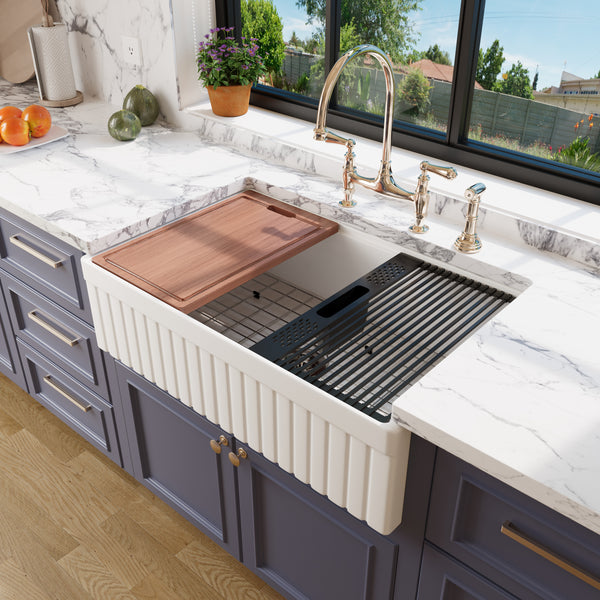
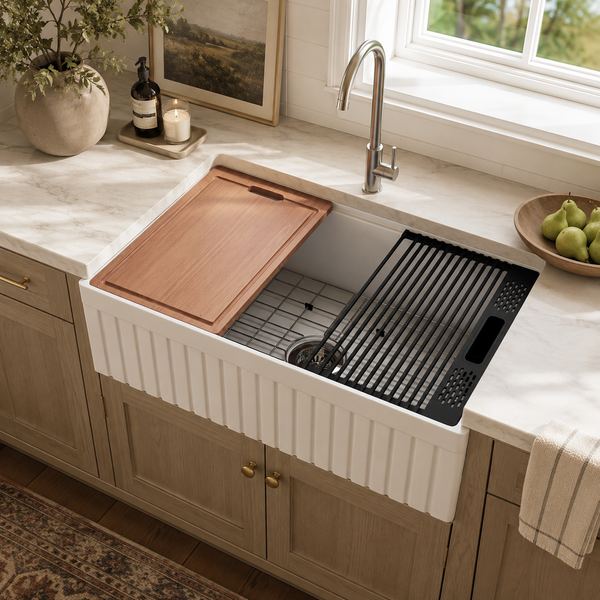
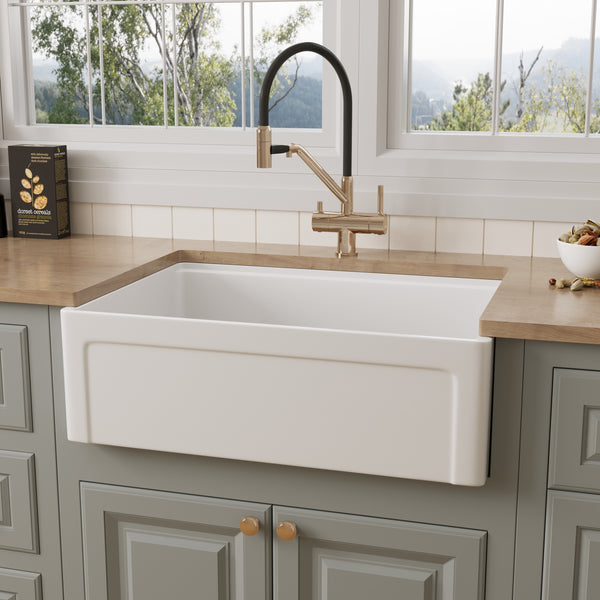
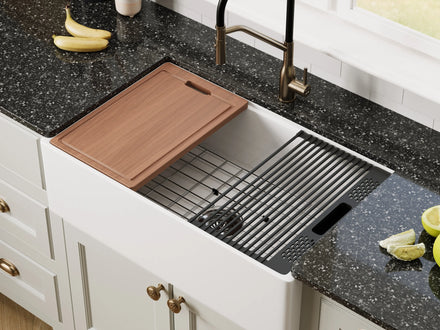
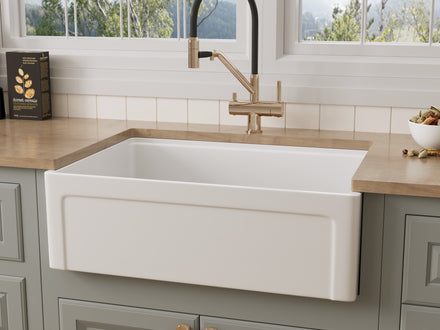
The classic model is the lower-complexity choice; the workstation adds over-sink prep accessories. Current price and availability below load directly from each product handle.


These two cards compare a classic open basin with a workstation single bowl. If the project needs 30 inches or separate wash-and-rinse bowls, use the full collection rather than forcing one of these examples into the plan.
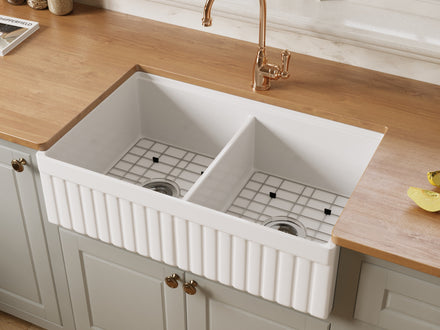
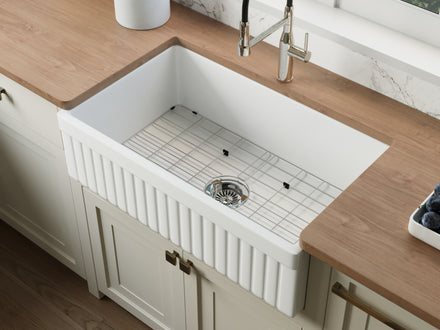
You can compare those layouts in our 33-inch fireclay farmhouse sinks: a single bowl, a 50/50 double bowl, and a lower-priced standard model.
Which sink material resists stains best and is easiest to clean?
If you cook regularly — and especially if you cook with turmeric, beets, coffee, or red wine — stain resistance matters.
Fireclay
Fireclay is a non-porous material, which means stains sit on the surface rather than soaking in. Coffee, wine, tomato sauce — wipe them off and they're gone. For tougher stains, a paste of baking soda and water is usually enough. Daily cleaning is simple: mild soap and a soft cloth. That's the whole routine.
This is one of the reasons fireclay sinks are extremely durable in practice — not just structurally, but cosmetically. The surface doesn't yellow, doesn't absorb odors, and doesn't require sealing.
Enameled Cast Iron
Cast iron sinks are fairly stain resistant when the enamel coating is intact. But here's the catch: if the enamel chips, even a small chip exposes the raw iron. And once iron is exposed to water, it rusts. One chip can lead to a rust stain that spreads beneath the enamel surface over time.
Cleaning is similar — mild soap and a non-abrasive sponge. But you need to be more careful about what cleaners you use, since harsh chemicals can dull or damage the enamel.
Porcelain
Cleaning behavior varies with the porcelain construction and glaze condition. A sound glazed surface is generally easy to clean; chips, worn enamel, hard-water residue, and the manufacturer’s care rules matter more than the word “porcelain” alone.
Hard water deposits are also more visible on porcelain, and the finish can yellow over the years — something you rarely see with fireclay.
Do cast iron sinks chip and rust?
This topic deserves its own section because it's the most common concern buyers raise about enameled cast iron — and it's worth addressing honestly rather than overstating.
An enameled cast iron sink looks great on day one. The porcelain enamel coating is thick, smooth, and has a deep glossy finish. The concern is what happens if that enamel gets damaged — whether from a dropped pan, a sharp or heavy object, or gradual wear. A chip in the enamel can expose the metal beneath the coating.
And iron, when exposed to moisture, can rust.
If rust does develop at a chip site, it can gradually spread under the surrounding enamel, causing discoloration. Repairing enamel chips is possible with touch-up kits, and many homeowners manage chips successfully for years — but it's fair to say the repair won't be invisible, and it does require ongoing attention.
That said, plenty of cast iron sinks last decades with proper care. The enamel on a quality cast iron sink is thick and reasonably durable — this isn't a fragile surface. The point isn't that cast iron will inevitably fail, but rather that it has a specific vulnerability that fireclay doesn't share.
Fireclay's structure is different: there's no metal core and no separate coating. The glaze and the body are fused into one piece during kiln firing, so there's no hidden layer that can corrode. That structural simplicity is a genuine advantage — but it doesn't mean cast iron is a bad choice. It means the two materials age differently, and it's worth knowing how before you commit.
What's the difference between a fireclay and a porcelain sink?
The comparison only works after defining porcelain. Fireclay is a specific glazed clay body used widely for farmhouse kitchen sinks. “Porcelain sink” may mean vitreous china or porcelain enamel over another substrate.
For a primary farmhouse kitchen, compare fireclay with the exact alternative: enameled cast iron, enameled steel, or another ceramic body. Check weight, body material, glaze care, installation support, and what a chip would expose. A glossy white photograph cannot answer those questions.
For more terminology, see our fireclay vs ceramic guide.
How do granite composite and stainless steel sinks compare?
Granite composite and stainless steel are useful alternatives, but they are not porcelain constructions. Stainless steel is lighter and will usually dent or scratch rather than chip like a glazed surface. Composite performance depends on the manufacturer’s resin, care, and heat guidance. Keep them as separate alternatives instead of mixing them into the three-material taxonomy.
How do fireclay, cast iron, porcelain, granite composite, and stainless steel sinks compare side by side?
The three-material decision matrix near the top covers the categories named in this guide. If weight and installation simplicity matter more than an apron-front ceramic look, add stainless steel or a clearly specified composite sink to the shortlist, then follow that manufacturer’s care and heat guidance.
Cost, Weight, and Cabinet Support Before You Buy
| Construction | Weight / support | Installation question | Cost driver |
|---|---|---|---|
| Fireclay | Heavy; dedicated level support | Does the cabinet fit the exact apron and body? | Size, firing, glaze, accessories, distribution |
| Enameled cast iron | Often the heaviest; reinforced support | Can the cabinet and crew handle the mass? | Casting, enamel, brand, finish |
| Vitreous china / enameled steel | Varies; steel is generally lighter | What is the actual substrate and mount? | Body material, enamel, size, brand |
Use manufacturer dimensions and weight for the exact model. Do not plan a countertop cutout from a category average.
Five Questions to Answer Before Ordering
- What is the substrate beneath the visible glaze?
- What does the exact sink weigh, and what support does the manufacturer require?
- What would a chip expose: more ceramic, steel, or cast iron?
- Which heat, cleaning, impact, installation, and labor exclusions appear in the warranty?
- Can the sink be inspected before the cabinet and countertop become difficult to change?
These questions are more reliable than broad claims such as “porcelain is cheaper” or “fireclay is indestructible.” Construction and model-specific instructions determine the real trade-off.
Which kitchen sink material should I choose?
Choose fireclay when you want a farmhouse ceramic body with no rusting metal substrate and are prepared to support it correctly. Choose enameled cast iron when heft and a deep enamel finish matter and the cabinet can carry the weight. Choose a porcelain-labeled sink only after the seller identifies whether it is vitreous china, enameled steel, or enameled cast iron.
Which sink material is the best overall choice?
There is no universal winner. For a heavily used farmhouse kitchen, fireclay offers a clear construction story and no metal substrate to rust, provided the cabinet support and impact precautions are right. Cast iron remains a strong, heavy alternative; a porcelain-labeled sink must be identified by its substrate before comparison.
Ready to compare fireclay layouts? See 30″ and 33″, classic, workstation, single-bowl, and double-bowl models.
Compare all fireclay models →Technical framing checked against the International Enamellers Institute description of vitreous enamel and NOZLOO’s current warranty and care guidance. Always follow the exact sink manufacturer’s instructions.
Frequently Asked Questions
Is fireclay better than cast iron for a farmhouse sink?
Fireclay avoids a metal substrate and therefore has no rust risk beneath a chip. Cast iron offers exceptional heft and a deep enamel finish. Both are heavy, both need proper support, and both glazed surfaces can chip.
Is a porcelain sink the same as a cast iron sink?
Not necessarily. Porcelain may mean vitreous china, or it may describe enamel applied over steel or cast iron. Many cast-iron sinks are porcelain-enameled, so confirm the substrate.
Can fireclay handle hot pans?
Fireclay is intended for normal kitchen heat, but follow the manufacturer’s care instructions and avoid deliberate extreme thermal shock. High firing temperature is not permission to abuse a glazed sink.
Which material needs the least cabinet support?
Porcelain-enameled steel and stainless steel are generally lighter than fireclay or enameled cast iron, but use the exact model weight. Large farmhouse sinks still need the support specified by the manufacturer.
Related guides: fireclay vs porcelain in detail