Single vs Double Bowl Farmhouse Sink: Which Layout Fits Your Kitchen Habits?

In this guide View sections +
A single vs double bowl farmhouse sink decision should start with daily workflow, not just appearance. A single bowl sink works best when you want one open basin for large cookware, baking sheets, and flexible cleanup. A double bowl sink works better when you hand-wash often, soak items separately, or want one side open while the other side holds dirty dishes.
The simplest way to decide: choose a single sink if your kitchen sink is mainly a large cleanup zone; choose a double sink if you need two separate work zones.
Quick Answer: Single Bowl vs Double Bowl Farmhouse Sink
| Kitchen habit | Better layout | Why it matters |
|---|---|---|
| You wash sheet pans, roasting pans, or large pots | Single bowl | One basin gives more room for oversized cookware |
| You hand-wash dishes in stages | Double bowl | Two basins let you wash, rinse, or soak separately |
| You use the dishwasher for most dishes | Single bowl | The sink mainly handles prep tools and large cookware |
| You want one side free during cleanup | Double bowl | One side can hold dirty dishes while the other stays usable |
| You have a smaller sink | Single bowl | A divider can make each half feel tight |
| You want fewer corners to clean | Single bowl | No center divider means fewer edges to wipe around |
| You like organized task zones | Double bowl | A divided layout separates food preparation, soaking, and rinsing |
Choose a Single Bowl Apron Sink If You Wash Large Cookware
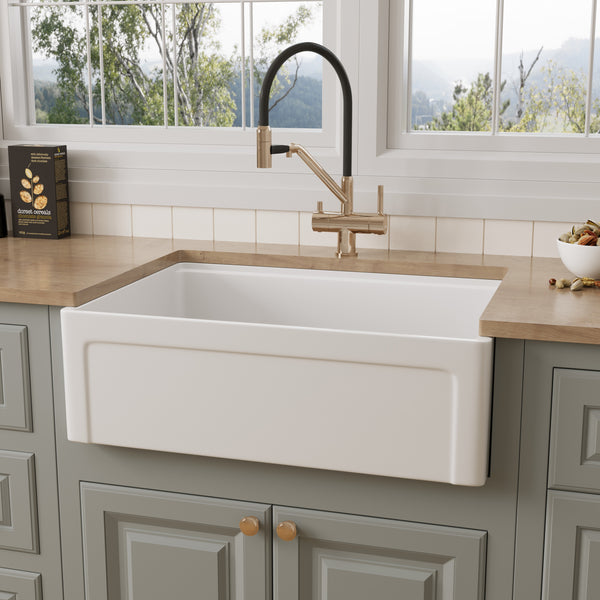
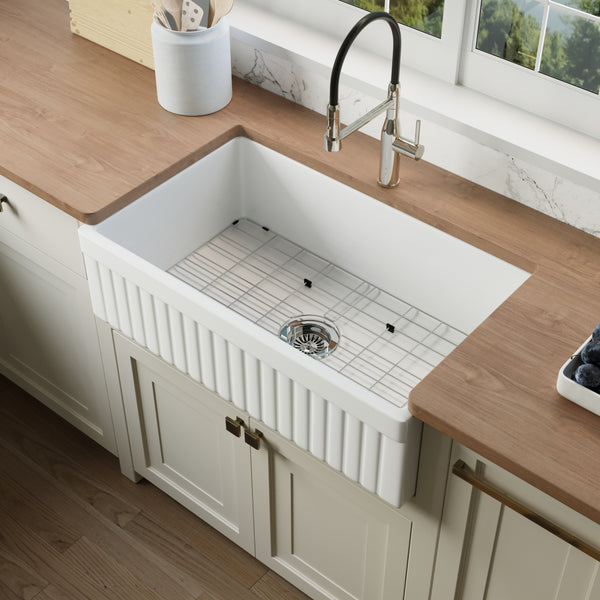
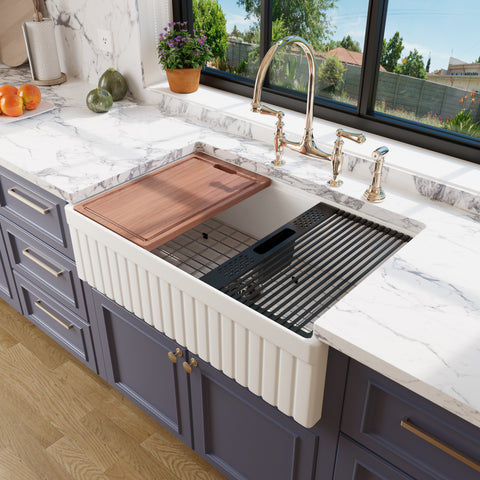
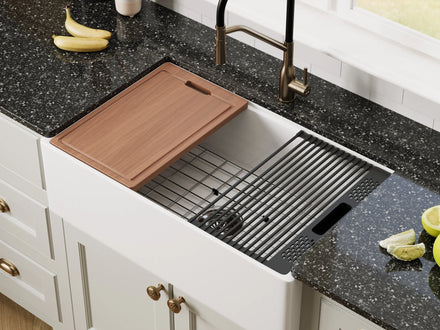
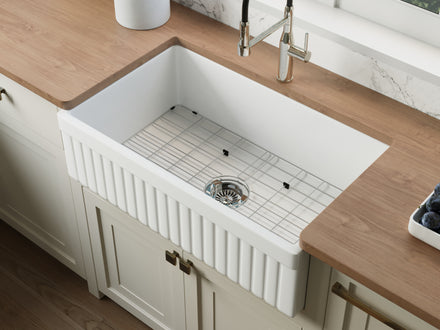
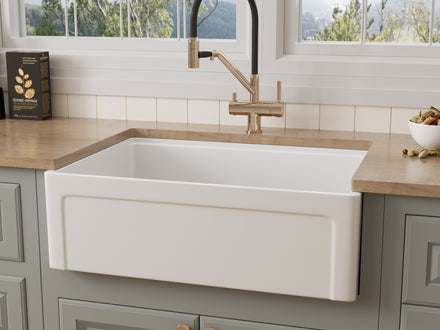
A single bowl apron sink gives you one uninterrupted basin. That matters if you regularly clean pans, stockpots, roasting trays, Dutch ovens, or baking sheets. Instead of angling cookware into half of a double sink, you get more usable floor area inside the bowl.
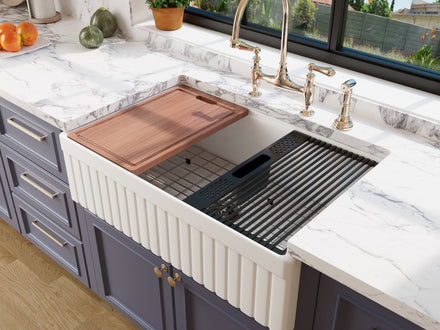
This is the main benefit of a single sink layout: ample space. It helps with large cutting boards, workstation sink accessories, produce baskets, and bulky items that do not fit neatly in a dishwasher.
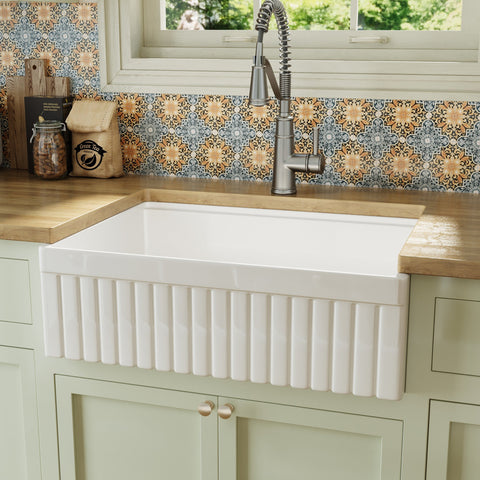
A single bowl kitchen sink also fits a cleaner apron front look. For kitchens with a minimalist aesthetic, the open basin often feels calmer than a divided double bowl kitchen sink.
The tradeoff is organization. With one basin, dirty dishes, cookware, and prep tools share the same space. If your routine depends on soaking on one side and rinsing on the other side, a single bowl can feel less controlled during busy cleanup.
Depth also changes how this layout feels. A deep single bowl can hold large pots and pans, but it may require more reach during long cleanup sessions. For a separate breakdown of depth, comfort, and capacity, read Nozloo’s farmhouse sink depth guide.
Choose a Double Bowl Apron Sink If You Hand-Wash in Stages
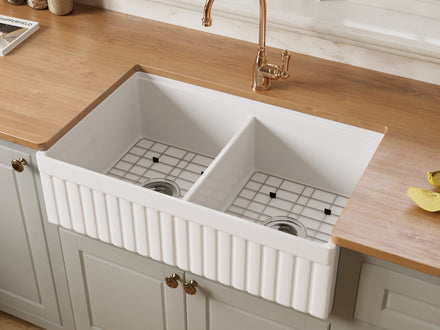
A double bowl apron sink supports a more traditional wash-and-rinse routine. One side can hold soapy water while the other side stays open for rinsing, draining, or quick food preparation.
A divided layout can help if you hand-wash knives, delicate glasses, baby bottles, or daily dishes. It can also help when the sink fills up before the dishwasher is loaded.
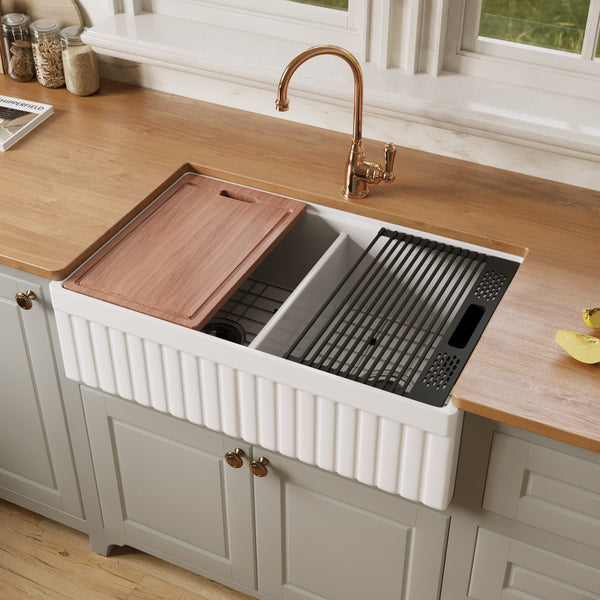
The tradeoff is size. A double bowl sink divides the same overall dimensions into two basins. That makes each half smaller, which can be frustrating when washing wide pans or large baking sheets — unless the divider is a low divide. On the NOZLOO 33" double bowl the center divider sits 2" (50 mm) below the rim, so a sheet pan or roasting pan lays flat across both bowls and can soak with the sink filled above the divider.
In real remodel conversations, the surprise is usually not that a double bowl is less useful. The surprise is that each side can feel smaller than expected once a roasting pan, cutting board, or stockpot is inside.
Dishwasher Habits Change the Answer
If your household uses the dishwasher for most plates, bowls, and everyday dishes, a single bowl sink often makes more sense. The kitchen sink becomes a place for rinsing produce, cleaning larger cookware, and handling items that do not fit well in the dishwasher.
For dishwasher-first homes, a divided wash station may be less important because ENERGY STAR notes that certified dishwashers can use less water and energy than many hand-washing routines.
If you hand-wash often, a double bowl kitchen sink may still feel more efficient. One side can soak while the other remains available. This matters most for households that cook daily, wash delicate items by hand, or let dirty dishes collect before cleanup starts.
The key question is simple: does your sink usually handle oversized cookware, or does it function as a full hand-washing station?
What About Garbage Disposal Use?
A garbage disposal should influence the layout, but it should not decide everything.
With a single bowl sink, scraps, rinsing, and cleanup happen in one open basin. This feels simple because the drain is part of the main work area.
With a double sink, one side can be used for disposal while the other side stays cleaner for soaking or rinsing. The tradeoff is plumbing. A double bowl kitchen sink usually needs two drain openings and more connection planning than one basin, especially when installing a deeper farmhouse sink.
For installation-specific details, see Nozloo’s guide: Can You Use a Garbage Disposal with a Fireclay Sink?.
Food Preparation: One Open Basin or Two Work Zones?
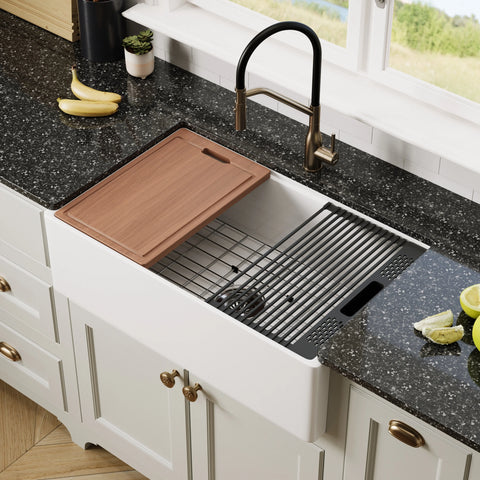
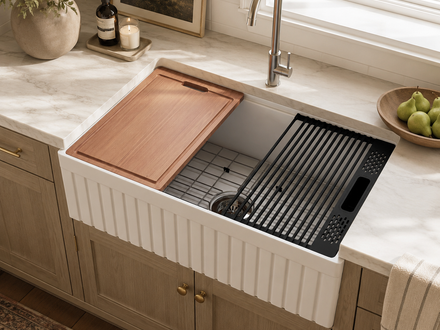
For food preparation, a single bowl workstation sink can be useful when counter space is limited. A roll-up rack, cutting boards, or other accessories can turn the basin into extra prep space without taking over the surrounding counter.
A double bowl layout creates built-in separation. You can rinse produce on one side while the other side holds dishes, or soak cookware while keeping half the sink open. This can improve efficiency for organized cooks who like clear task zones.
Bowl layout can support cleaner prep habits, but it does not replace food-safety basics: the USDA recommends using separate cutting boards for raw meat, poultry, and seafood versus fresh produce or bread to reduce cross-contamination.


Which Layout Fits Your Kitchen Best?
Use these scenarios as a quick guide:
- Frequent baker: choose a single bowl — or a low-divide double bowl, where sheet pans lay flat across both basins.
- Heavy hand-washer: choose double bowl for soaking, washing, and rinsing.
- Dishwasher-first house: choose single sink for more open cookware space.
- Family with dishes piling up: choose double sink if one side needs to stay usable.
- Small kitchen remodel: choose single bowl if a divider would make the basin feel cramped.
- Organized cook: choose double bowl for separate work zones.
- Minimalist kitchen: choose single bowl for a cleaner visual line.
- Traditional cleanup routine: choose double bowl if you prefer a familiar wash-and-rinse setup.
A double sink does not usually mean two faucets. Most double bowl kitchen sinks still use one faucet, so the divider changes the basin workflow, not the faucet count.
Common Mistakes When Choosing Bowl Layout
1. Choosing a double bowl only because it feels familiar
Many homeowners grew up with a double bowl kitchen sink, but farmhouse sinks are often deeper and wider than the old sink they replace. Check how your largest pans fit before assuming a divided layout is better.
2. Choosing a single bowl only for looks
A single bowl sink can look cleaner, but it may feel less organized if you hand-wash dishes every day.
3. Ignoring the dishwasher
If the dishwasher handles most dishes, open basin space may matter more than two basins. If you wash by hand daily, the double bowl benefits may matter more.
4. Forgetting the countertop and faucet setup
A good faucet, enough countertop space, and clear counter workflow can make either layout easier to use. Poor faucet placement can make even a larger sink feel awkward.
5. Treating material as the main answer
Stainless steel, fireclay, granite composite, and other materials affect sound, finish, weight, and how you maintain the sink. But the single bowl vs double bowl decision is mainly about layout. If you are also comparing sink materials, read Nozloo’s fireclay vs stainless steel sink guide.
Final Recommendation
Choose a single bowl farmhouse sink if your priority is more space, large cookware, sheet pans, easy cleaning, and a clean apron front look.
Choose a double bowl farmhouse sink if your priority is separation, hand-washing, soaking, rinsing, or keeping one side available while the other side holds dirty dishes.
Choose the layout first, then compare materials, dimensions, accessories, and different styles. The best farmhouse sinks are not chosen by trend alone; they are chosen by how well they match the way your kitchen works after dinner.
FAQs
Is a single bowl farmhouse sink better than a double bowl?
A single bowl is better if you often wash large cookware, baking sheets, or oversized cutting boards. A double bowl is better if your cleanup routine depends on soaking, washing, and rinsing in separate areas. A low-divide double bowl, like the NOZLOO 33-inch (divider 2 inches below the rim), covers both: separate zones below the divider, and sheet pans flat across the top.
What is the real difference in a one bowl vs two bowl sink?
A one bowl vs two bowl sink comparison comes down to open space versus separation. One bowl gives you more uninterrupted room for cookware and prep tools. Two bowls divide the sink into separate zones for soaking, rinsing, or holding dishes.
Is a single bowl apron sink good for a busy kitchen?
Yes, a single bowl apron sink can work well in a busy kitchen if most dishes go into the dishwasher and the sink is mainly used for cookware, prep, and rinsing. It is especially useful when you need more room for large pots, pans, and baking sheets.
Is a double bowl apron sink good for large pans?
It can work, but it depends on the inside dimensions of each basin. In a smaller sink, a double bowl may make each half too tight for wide pans or baking sheets. A low-divide design solves most of this: with the divider 2 inches below the rim, wide pans span both bowls instead of having to fit inside one.
Which layout is better if I use a dishwasher every day?
A single sink is often better for dishwasher-first households because the sink is mainly used for prep, rinsing, and cookware. If you still hand-wash many dishes, a double bowl may feel more practical.
Does a garbage disposal work better with a single or double bowl sink?
Both layouts can work. A single bowl keeps disposal use in one open basin, while a double bowl can dedicate one side to scraps and rinsing. The better choice depends on drain placement, cabinet space, and plumbing.
Is a single sink or double sink better for resale?
Neither layout is always better for resale. A single bowl often appeals to buyers who want a modern, open kitchen sink. A double bowl may appeal to buyers who prefer a traditional divided wash area.
What is a divided farmhouse sink?
A divided farmhouse sink is a double bowl apron-front sink. A center divider splits the basin into two bowls. The divider can run full height or stop below the rim, which is called a low divide. The NOZLOO 33-inch double bowl farmhouse sink uses a low divide set 2 inches below the rim.
Is a 50/50 or a 60/40 double bowl sink better?
Neither is better for everyone. A 50/50 sink has two equal bowls, which suits kitchens where both sides do the same jobs. A 60/40 sink gives one side more width for pots and leaves a smaller side for rinsing or a disposal. The NOZLOO 33-inch double bowl is a 50/50 layout.
Are double bowl kitchen sinks still in style?
Yes. Bowl layout is a workflow choice more than a style statement. A single bowl suits large cookware, and a double bowl suits washing by hand in stages. A double bowl that fits the way you clean up is still a sound choice.