Porcelain vs Stainless Steel Sink: Which Fits Your Kitchen?
Compare porcelain-labelled and stainless steel kitchen sinks by construction, chips, dents, care, sound, support, and style—then see when fireclay fits.

In this guide View sections +
Reviewed: August 22, 2026 · Material labels, plumbing-fixture standards, surface behavior, and NZ-103W3320 product dimensions checked against the sources listed below.
Quick answer: Stainless steel is usually the more forgiving choice for heavy, fast-paced use because it cannot chip like a glassy enamel or ceramic surface; it may instead collect fine scratches, water spots, or a dent. A “porcelain” sink can give you a quieter-feeling, glossy white or colored surface, but that label does not identify the construction. It may mean porcelain enamel over cast iron, porcelain enamel over steel, or a ceramic body such as vitreous china. Confirm the substrate before comparing weight, impact damage, support, care, or repair.
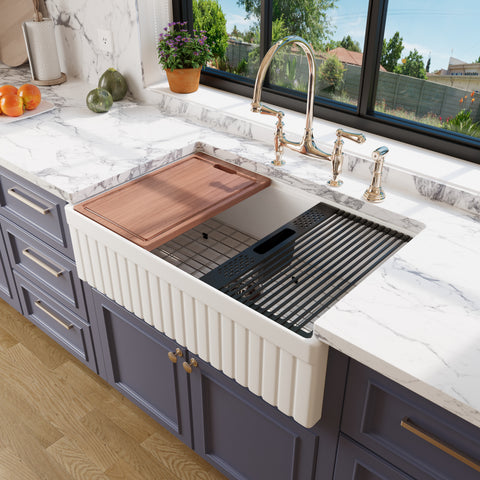
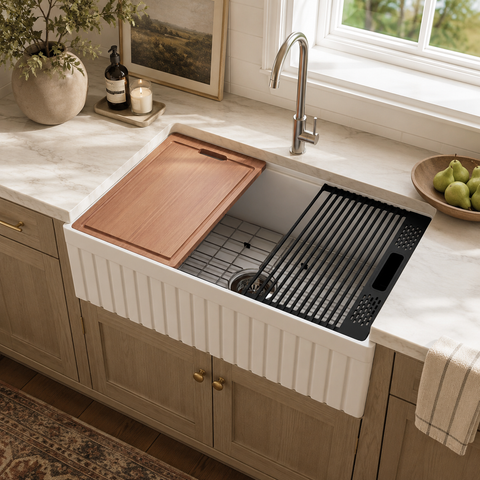
If you want a white farmhouse sink, there is a third category to keep separate: fireclay is a fired ceramic body with a glaze, not stainless steel and not automatically porcelain enamel. The right answer starts with construction, then moves to the wear pattern you are willing to live with.
Porcelain vs Stainless Steel at a Glance
| Decision point | Porcelain-labelled sink | Stainless steel sink |
|---|---|---|
| First fact to verify | Substrate: cast iron, steel, or ceramic body | Alloy, actual thickness, finish, and sound treatment |
| Typical visible wear | Metal transfer, stains or dulling; a severe impact can chip a glaze or body | Fine scratches, water spots, fingerprints, or a dent |
| Impact behavior | Hard surface; damage depends on coating and substrate | More impact-tolerant; deforms rather than chipping |
| Sound | Heavy constructions often feel quieter, but substrate matters | Pads, coating, bowl shape, mounting, and cabinet contact matter |
| Weight and support | Ranges widely; enameled cast iron is especially heavy | Usually lighter, but still needs the specified mount and support |
| Installed cost | Depends on substrate, freight, mount, support, and countertop work | Depends on model, finish, sound treatment, mount, and replacement work |
| Best fit | You want a glossy white or colored surface and accept model-specific care | You prioritize impact tolerance, broad availability, and lower weight |
This is a shortlist, not a model specification. Mounting, bowl layout, drain position, countertop, and cabinet fit remain separate decisions. Use our kitchen sink materials guide if your shortlist is wider.
First, What Does “Porcelain Sink” Mean?
Search results often use “porcelain,” “ceramic,” “enameled,” and even “fireclay” as if they were interchangeable. They are not. The Porcelain Enamel Institute describes porcelain enamel as glass bonded to metal at high temperature. ASME maintains one plumbing-fixture standard for enameled cast iron and enameled steel fixtures and another for vitreous and non-vitreous china fixtures. That separation is a useful warning: a white glossy surface does not tell you what is underneath.
| Construction named in the specification | What it means for the buyer |
|---|---|
| Porcelain enamel over cast iron | Glassy enamel over a very heavy iron body; a chip can expose a rust-prone substrate |
| Porcelain enamel over formed steel | Glassy enamel over a lighter metal body; impact can affect both coating and sheet |
| Vitreous or non-vitreous china | A ceramic fixture category, not an enamel-over-metal construction |
| Fireclay | A fired clay body with a glaze; evaluate it by its own material and installation specification |

Ask for the exact material, weight, applicable standard or listing, care guide, and installation instructions. Do not infer the body from color, gloss, price, or the word “farmhouse.” Our fireclay vs porcelain guide explains the naming issue in detail.
Chips, Dents, Scratches, and Dropped Cookware
Durability is not one score. Stainless steel and glazed surfaces fail differently. A stainless bowl does not have a brittle coating to chip, so a dropped pan is more likely to leave no structural mark or to create a local dent. Fine use scratches are normal on many stainless finishes and may blend into a patina. That does not make every gauge, alloy, finish, or fabrication equal.
Porcelain enamel and ceramic glazes are hard, glass-like surfaces. They can resist routine abrasion, but a sharp heavy impact at a rim or basin can chip the surface. On an enamel-over-metal sink, a chip may expose cast iron or steel; on a ceramic-body fixture, a deep chip or crack has a different repair decision. Gray lines from cookware can also be metal transfer rather than a cut through the glaze, so diagnose the mark before reaching for an abrasive cleaner.

Cleaning, Water Spots, and Everyday Appearance
A practical shared starting point is mild dish soap, warm water, a soft non-scratch cloth or sponge, a thorough rinse, and drying when spots matter. The product care guide wins.
Stainless steel often shows water droplets and fingerprints, especially on reflective finishes. It also has a directional finish that can be changed by random scrubbing. The worldstainless cleaning library separates routine dirt, limescale, burnt food, and unsuitable methods instead of treating every mark alike. Avoid assuming one abrasive, acid, chlorine product, or polishing direction is safe for every sink.
A glossy white sink may make food residue or gray metal transfer easier to notice, while darker enamel can show mineral haze differently. Bleach, acids, abrasives, and soak times are manufacturer-specific. “Porcelain” does not give you permission to use any cleaner, because enamel-over-metal and ceramic-body care instructions can differ.

Sound, Weight, Support, and Replacement
“Porcelain is quieter” is incomplete. Enameled cast iron has substantial mass, while enameled steel and ceramic bodies differ. Stainless sound also depends on pads, coating, bowl geometry, mounting, faucet stream, cabinet, and a disposal.
Weight changes installation risk. A heavy cast-iron or ceramic fixture may need cabinet and countertop planning that a lighter stainless sink does not. An apron-front model also changes the cabinet face, while a drop-in or undermount model changes the cutout and reveal. Compare the exact sink weight, minimum cabinet, support method, cutout, drain position, and faucet clearance before purchase. Our standard kitchen sink size guide explains those measurements, and the farmhouse sink cabinet guide covers independent support for heavier apron-front fixtures.
Compare installed cost, not an internet average. Include delivery, support changes, countertop fabrication, removal, plumbing or disposal work, and future cutout compatibility. Either material can be inexpensive or premium.

Which Sink Should You Choose?
| Choose this direction | When it matches your priorities |
|---|---|
| Stainless steel | You want lower weight, broad price and configuration choice, impact tolerance, and can accept fine scratches or water spots |
| Verified porcelain enamel over cast iron or steel | You want a glossy color or traditional look and have confirmed the substrate, weight, support, chip consequence, and care rules |
| Verified ceramic-body sink | You want that specific form and finish and have checked the model's material, impact behavior, standard, and installation |
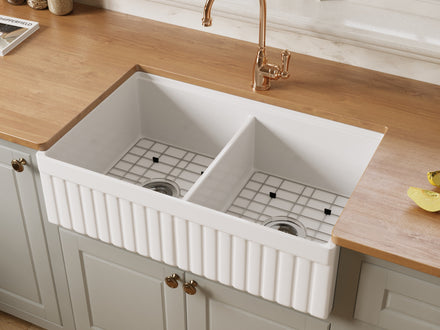
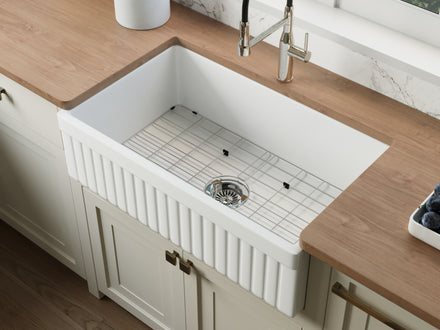
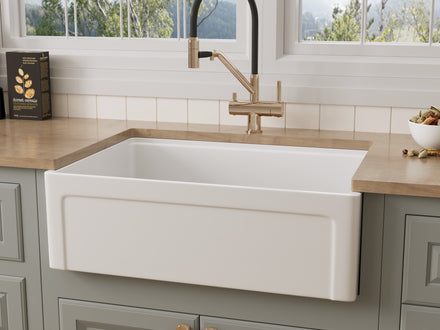
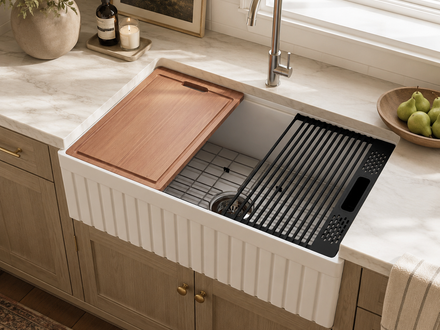
| Fireclay farmhouse sink | You want a glazed ceramic body and exposed apron without a metal substrate, and can plan for weight, independent support, dimensional variation, and chip risk |
Fireclay is a different tradeoff, not an automatic winner. It can fit when you want a substantial white apron-front sink and prefer a glazed ceramic body over metal or enamel-over-metal. It is much heavier than many stainless sinks, can chip from a severe impact, and needs independent support. If your decision is fireclay versus metal, read our fireclay vs stainless steel comparison.

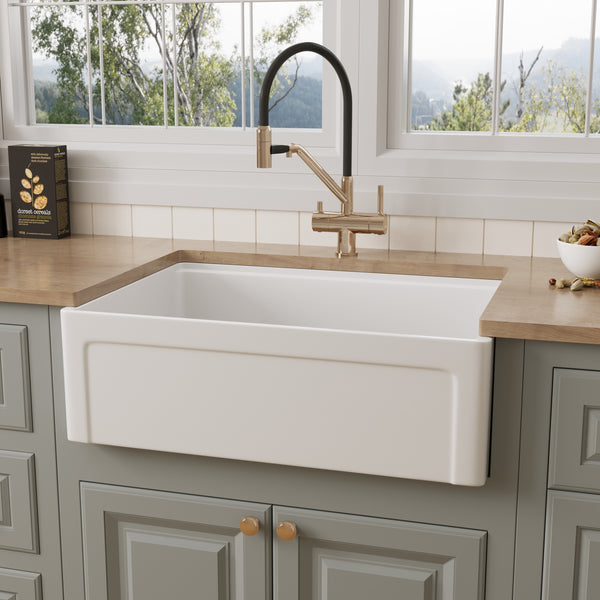
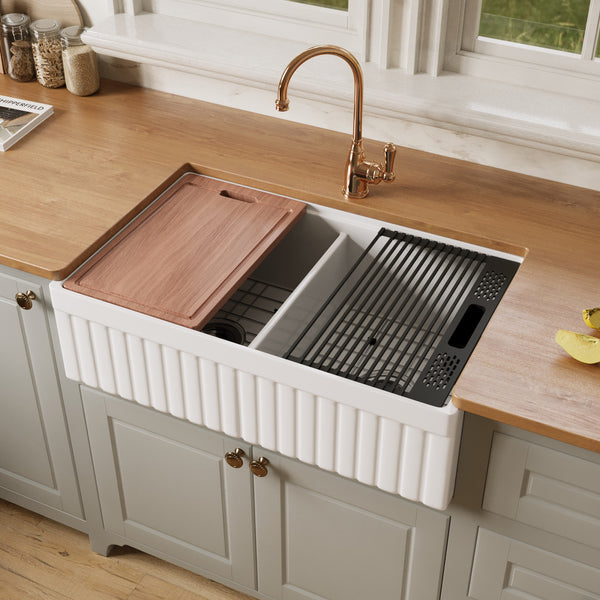
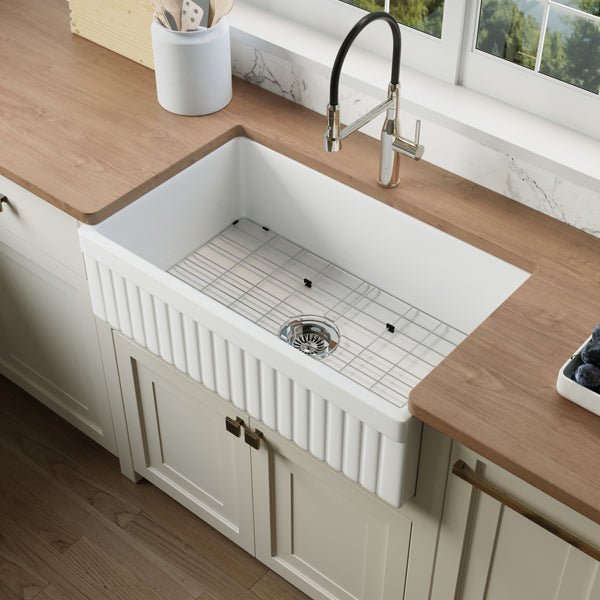
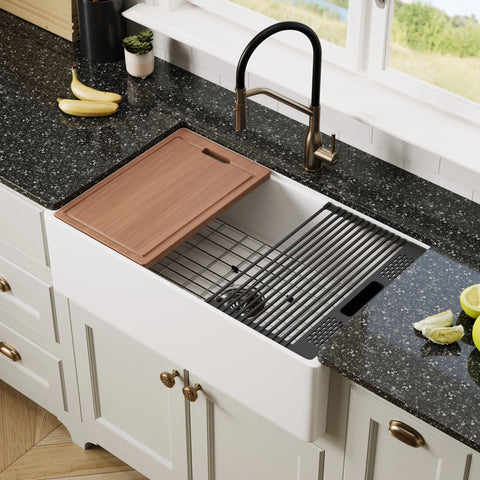
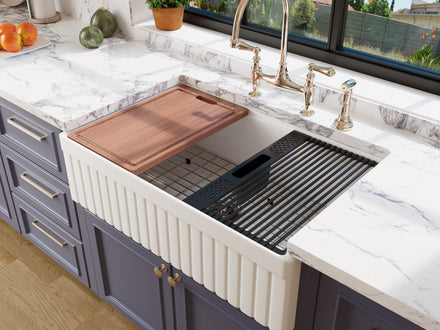
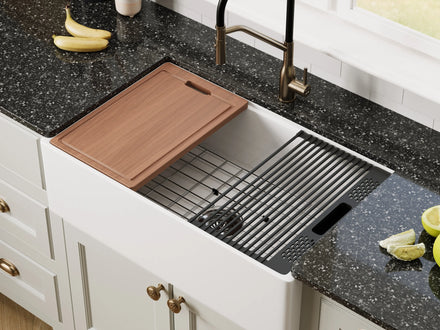
For the NZ-103W3320, the 9-inch interior depth is measured vertically from the rim to the lowest point at the centered drain, not along a side wall. Its reversible fluted apron replaces the upper cabinet face; it does not sit inside a drawer. Fireclay is hand-finished, so use the delivered sink for final cabinet support and countertop work.
How We Checked This Guide
NOZLOO reviewed the live Google US results, video slots, and People Also Ask questions on August 22, 2026. We checked recurring claims against public ASME standard scopes, the Porcelain Enamel Institute's definition, worldstainless care guidance, and NZ-103W3320 measurements. We do not treat “porcelain” as one construction or assign universal care, lifespan, or price claims to a label.
Frequently Asked Questions
Is a porcelain sink better than a stainless steel sink?
Not universally. Stainless is usually lighter and more forgiving of dropped cookware, but it develops fine scratches and spots. A porcelain-labelled sink offers a glossy surface and different sound and style, but you must identify whether it is enamel over cast iron, enamel over steel, or a ceramic body before judging weight, chips, care, and support.
Do porcelain sinks scratch easily?
A hard glaze may resist routine abrasion, but abrasive cleaners, trapped grit, and metal cookware can leave marks. Some gray lines are metal transfer rather than deep scratches. A severe impact can chip a coating or ceramic body, which is a different issue from a surface mark.
What are the disadvantages of a stainless steel sink?
Common tradeoffs are visible water spots, fingerprints, fine scratches, possible dents, and more transmitted sound when the bowl lacks effective pads, coating, or installation isolation. Finish, alloy, thickness, bowl design, and care all affect what the owner notices.
Can you pour boiling water into a porcelain sink?
Do not use the word “porcelain” as permission for thermal shock. The substrate, glaze, drain parts, temperature change, and manufacturer instructions matter. Let extreme-temperature cookware or liquid cool when practical, avoid sudden hot-to-cold changes, and follow the exact model's care guide.
Will bleach ruin a porcelain sink?
The label alone cannot answer that. Concentration, contact time, finish, substrate, and the maker's instructions matter. Use the approved cleaner and dilution for the exact sink and rinse thoroughly. For chemical safety, Poison Control warns not to mix bleach with ammonia or acids.
Is fireclay the same as a porcelain sink?
No. Fireclay is a fired clay body with a bonded glaze. Porcelain enamel is glass fused to a metal substrate, while vitreous or non-vitreous china is a separate ceramic-fixture category. Check the product specification instead of treating white glossy sinks as identical.