Backsplash Behind a Kitchen Sink: Do You Need One?
Decide whether you need a backsplash behind a kitchen sink, how much wall to protect, and which tile, slab, paint, or panel detail will be easiest to live with.

In this guide View sections +
Reviewed: August 22, 2026 · Moisture, joint, material-care, and product claims checked against current primary guidance.
Quick answer: Not every kitchen sink needs the same backsplash, but its wall and counter joint must tolerate normal splashing. Use a wipeable backsplash when water regularly reaches the wall or collects at the rear edge. Set coverage from the real splash zone—not a supposed universal height.
A kitchen sink backsplash is the vertical wall finish behind the counter. It is not the apron facing the room. It also differs from a countertop upstand or high-back sink; either may protect the lowest wall band, but not everything above it.
This guide is about wall protection, cleanability, and the counter-to-wall joint. It does not set the countertop cutout or carry the sink’s weight.
Do You Need a Backsplash Behind a Kitchen Sink?
For a busy sink wall, a backsplash is a practical upgrade. It is easier to wipe than ordinary drywall and limits repeated wetting. It is especially useful with a pull-down spray, shallow bowl, poorly aimed faucet, or frequent large-pan washing.
Paint may be enough when the stream lands well inside a deep bowl and splashing is rare. The coating still needs to be washable, and the counter joint still needs an appropriate seal.
| What happens in normal use? | Practical coverage | What to verify |
|---|---|---|
| Only occasional fine droplets | Washable paint may be workable | Washable coating and sealed joint |
| Water reaches the lowest wall band | Short counter return or targeted panel | Wall above stays dry in use |
| Spray reaches above a short return | Finish to cabinet, shelf, or sill | Edges, outlets, and penetrations |
| The sink sits below a window | Protect the zone to and around the sill | Faucet, sash, trim, and condensation |

How High Should a Kitchen Sink Backsplash Be?
There is no honest one-number answer. A short counter return and a finish running to the upper cabinets are both common, but neither is a universal U.S. sink rule. Local requirements still control.
In an existing kitchen, tape absorbent painter’s paper to the clean, dry wall for several normal washing sessions. Mark the widest splash, add a practical margin, and remove wet paper promptly. For a new kitchen, assess the bowl, faucet reach, spray pattern, rear counter depth, nearby edges, and large-pan washing.
A tall faucet is not automatically splashy; stream landing point and force matter more. Our farmhouse sink faucet guide explains reach, height, and splash control.
Which Backsplash Material Is Best Behind a Sink?
| Material | Why it works | Main maintenance issue | Best fit |
|---|---|---|---|
| Glazed ceramic or porcelain tile | Durable, wipeable, many layouts | Grout needs cleaning | Most styles and budgets |
| Slab stone, engineered surface, or solid surface | Few joints; continuous look | Material-specific care | Low-joint installations |
| Washable kitchen-rated paint | Easy color change | Less wetting protection | Low-splash sinks |
| Tempered glass, stainless, or approved decorative panel | Wipeable with little grout | Edge and seam detailing | Highly washable zones |
Judge the complete assembly: tile has joints, slab has perimeter seams, paint relies on sound drywall, and panels need compatible edges. The U.S. EPA’s moisture-control guidance favors non-absorptive, stable materials where wetting is likely.
Natural-stone care depends on composition and finish. The Natural Stone Institute recommends neutral cleaner or mild dish detergent and warns that acids can etch calcareous stone. Ask the supplier about treatment and cleaners.

Protect the Counter-to-Wall Joint
The lowest joint catches runoff where counter and wall can move differently. The Tile Council of North America says caulk should be used where backing surfaces change because they move independently.
Use a flexible sealant compatible with both materials; do not automatically fill the change of plane with rigid grout. Resolve edges, outlets, penetrations, corners, and window transitions. Replace failed sealant rather than covering a split bead.
How Should a Backsplash End at a Sink Window?
End the backsplash at a planned sill or trim return, protect exposed edges, and seal the backsplash-to-counter and backsplash-to-window transitions with compatible materials.
For sill height, faucet–sash clearance, window operation, condensation, and flashing, use our window over a kitchen sink guide. This page stays focused on the wall finish and its joints.

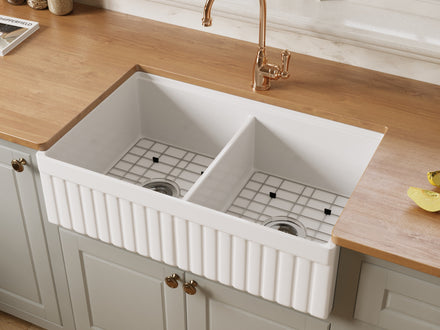
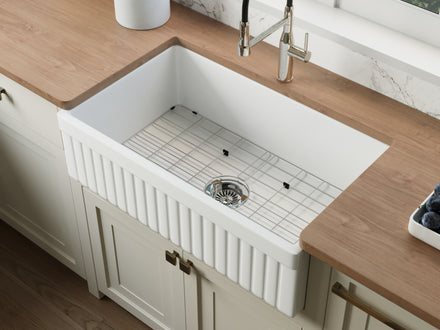
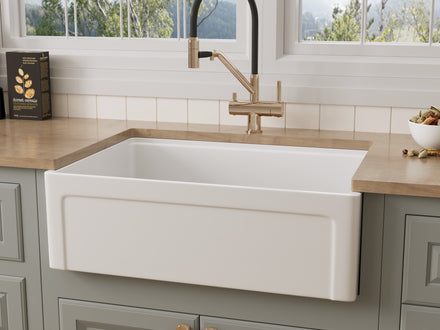
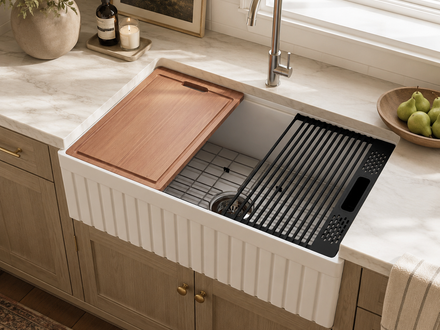
Pairing a Backsplash With a White Fireclay Sink
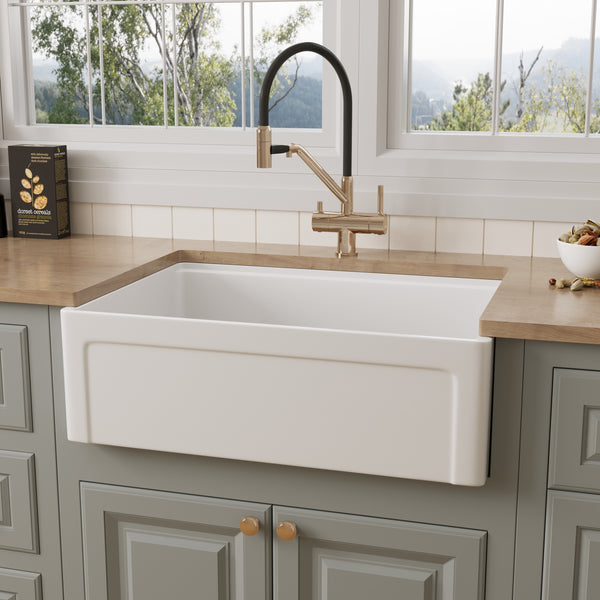
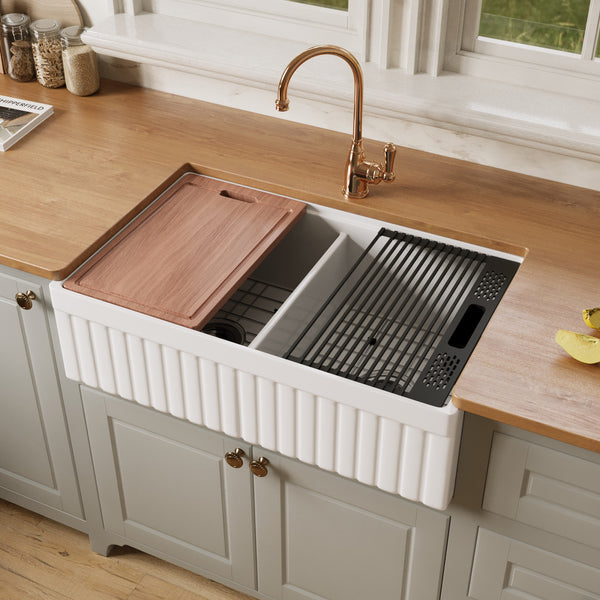
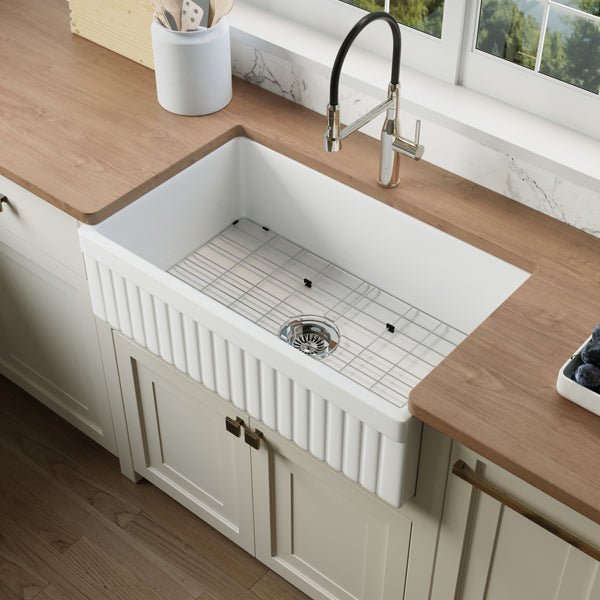
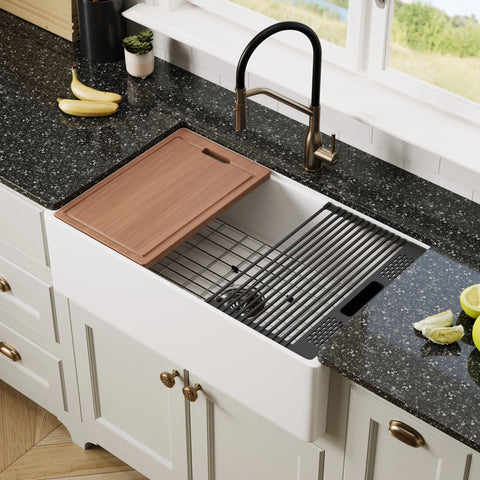
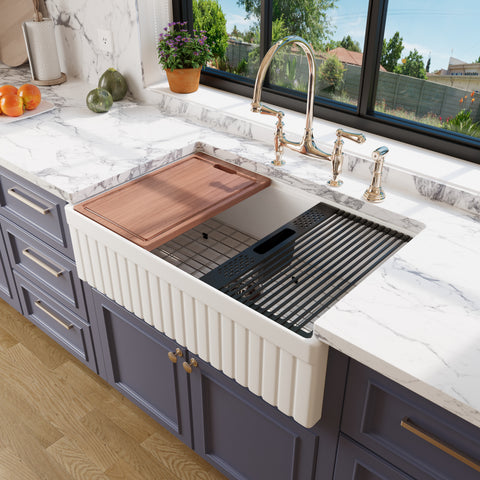
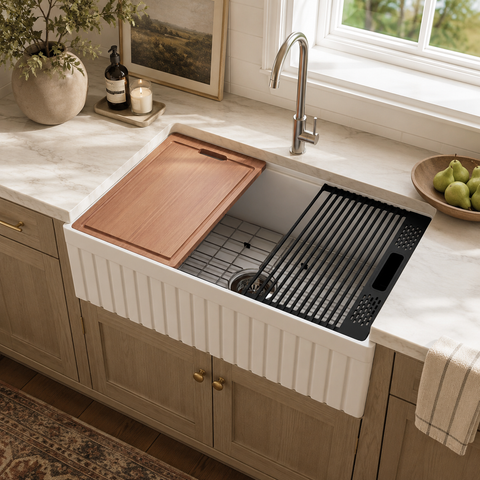
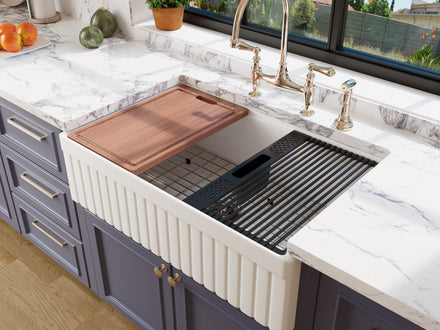
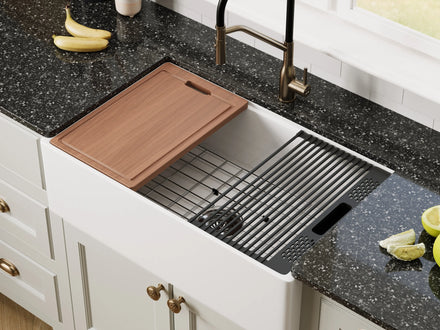
Start a farmhouse sink backsplash plan with undertone and maintenance. Warm white tile softens a bright basin; a quiet slab keeps the apron focal; muted green, blue, or charcoal adds contrast. White-on-white gains interest from scale or texture, though light grout shows residue sooner.
Depth and faucet aim help contain splashing but do not replace wall protection. The NOZLOO NZ-103W3320 is 33″ × 20″ × 10″ overall; its 31″ × 17¾″ inner bowl has a 9-inch bowl depth measured vertically at the center drain—not at the side wall. It needs a 36-inch minimum cabinet.

Cleaning and Maintenance Plan
- Wipe standing water from joints, sills, and ledges.
- Use cleaners approved for the specific tile, grout, slab, panel, or paint.
- Touch up coating damage before moisture reaches the substrate.
- Inspect flexible joints, trim, outlets, and panel edges for gaps or swelling.
Clean sink and wall as separate materials. Our fireclay sink cleaning guide covers the glazed basin, not stone, grout, paint, or metal.
Before You Approve the Backsplash
- Set the exact sink and faucet.
- Map the splash zone.
- Choose coverage and endpoints.
- Confirm cleaning and sealing requirements.
- Specify flexible joints, outlets, and window edges.
- Assign each detail to the correct trade.
For support, sink setting, and work order, use the fireclay farmhouse sink installation guide. Coordinate the backsplash without confusing the two scopes.
How We Checked This Guide
NOZLOO reviewed current U.S. results and related questions for kitchen-sink backsplash terms, then checked EPA moisture guidance, TCNA joint guidance, Natural Stone Institute care advice, and NZ-103W3320 specifications. We do not present a common cabinet gap or short upstand as a universal code height.
Frequently Asked Questions
Do you need a backsplash behind a kitchen sink?
Not in every low-splash kitchen. A wipeable backsplash is the safer choice when droplets regularly reach drywall or trim; the wall and counter joint must tolerate normal exposure.
How high should a backsplash be behind a kitchen sink?
Cover the actual splash zone with a margin. Faucet, bowl, rear deck, window, and user habits matter; a short return or cabinet gap is not a universal rule.
What is the best material for a kitchen sink backsplash?
Glazed tile is versatile; slab and approved panels reduce joints; washable paint suits genuinely low-splash walls. The face, seams, edges, and care method must all work.
Can you have painted drywall behind a kitchen sink?
Yes, when splashing is limited, the wall is sound, the coating is washable, and the counter joint is sealed. Peeling, swelling, or staining signals failure.
Should you grout or caulk between a countertop and backsplash?
For tile, the counter-to-wall transition is a change of plane. Use the compatible flexible sealant specified for the installation, not automatically rigid grout.
What should go behind a sink under a window?
Use a cleanable finish at the splash zone, protect sill and trim edges, and seal compatible perimeter joints. Check window mechanics and condensation in the dedicated sink-window guide.
Bottom Line
A good backsplash is a complete moisture detail. Map the splash path, choose a cleanable surface, protect the counter joint, resolve every edge, then select the color and pattern.