Fireclay vs Porcelain Sink: Are They the Same?

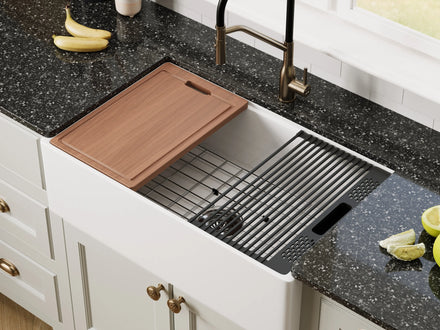
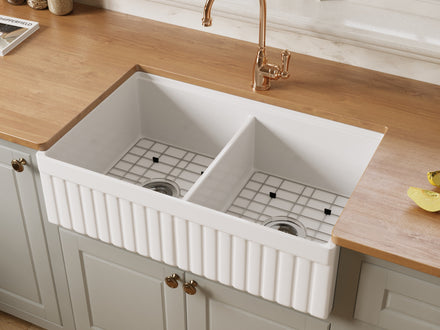
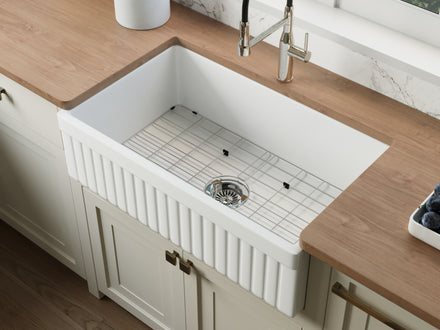
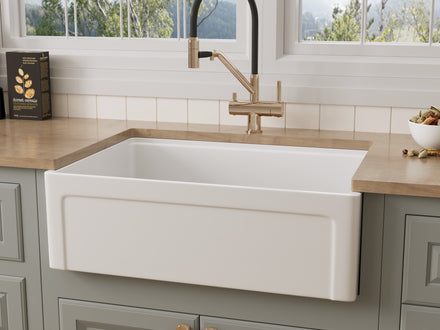
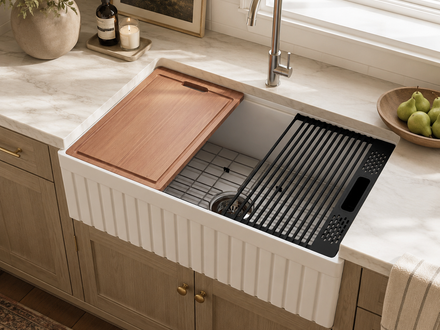
Put a fireclay sink and a porcelain sink side by side in product photos, and most people cannot tell them apart. Both read as white, glossy, smooth, and ceramic. That is why the fireclay vs porcelain sink question comes up so often, including in our own customer emails.
What the photos do not show is that the two names can describe very different constructions. Fireclay is a solid ceramic sink material. “Porcelain” may mean a true porcelain body, vitreous china, or, in many kitchen listings, porcelain enamel baked onto cast iron or steel. If the sink is headed for a working kitchen, where tomato sauce, sheet pans, hot water, metal marks, and daily cleaning are normal, that difference matters more than the color.
This guide explains what each term means, how the materials behave day to day, which numbers to check before buying, and when porcelain still makes sense.
Quick Answer: Is Fireclay the Same as Porcelain?
No. A fireclay sink is a solid ceramic body made from clay and glaze, then fired together at high heat. In many sink listings, “porcelain” refers to a different construction: porcelain enamel over cast iron or steel, vitreous china, or another porcelain-style ceramic.
For farmhouse kitchen sinks, fireclay is usually the more direct fit because the category is built around a heavy, glazed ceramic body. Porcelain is not a bad material, but you need to know which type of porcelain construction you are comparing before judging durability, installation, or price.
Why Fireclay and Porcelain Sinks Get Confused
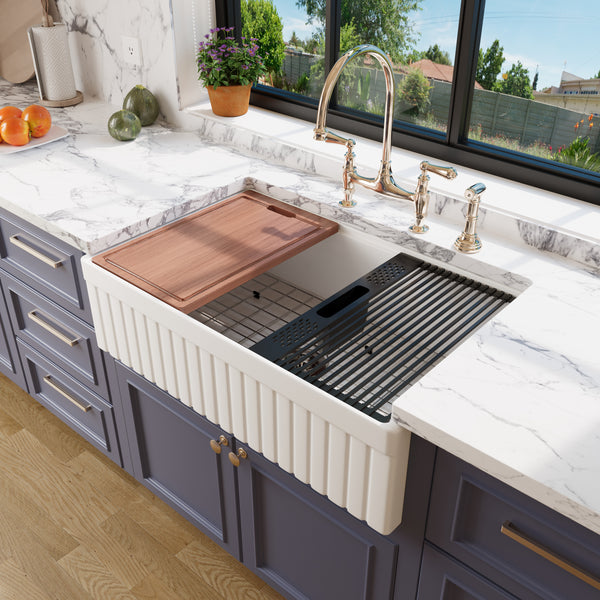
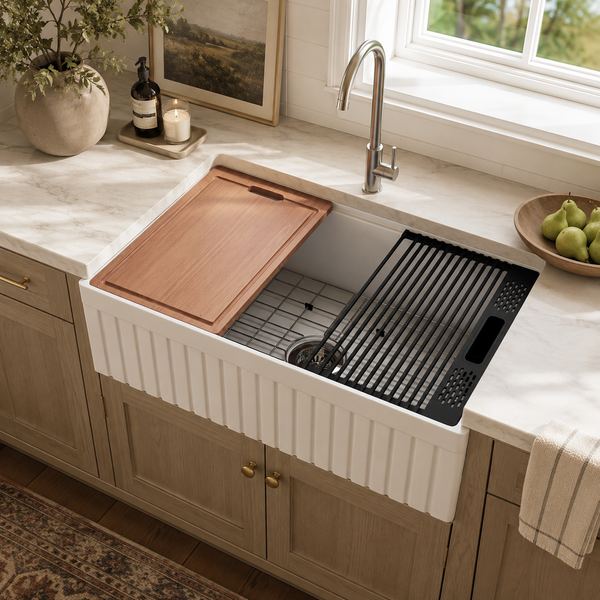
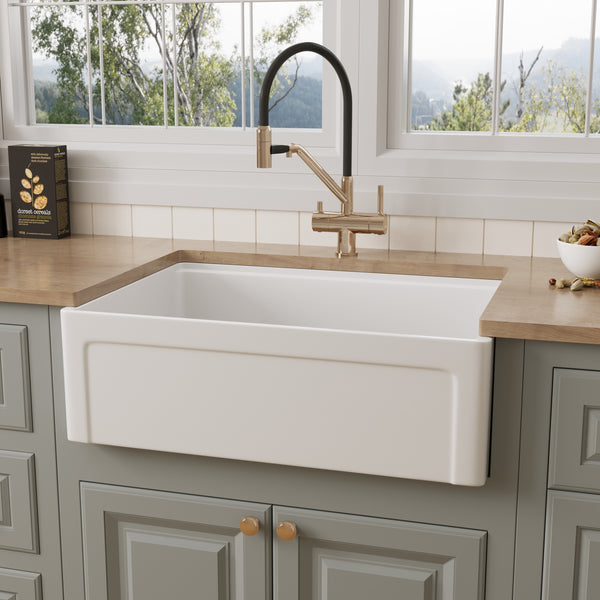
The confusion starts with the surface. A white glazed finish can look similar in a photo whether it is fused to a solid clay body or applied over metal. Product listings also use words like “ceramic,” “porcelain,” and “white farmhouse sink” loosely, which makes the material harder to identify.
The same white basin in search results could be:
-
Solid fireclay.
-
Porcelain enamel over steel.
-
Porcelain enamel over cast iron.
-
Vitreous china.
-
Another glazed ceramic body.
They may photograph the same. They do not chip, weigh, clean, or install the same way. That is why construction matters more than the product photo.
What Is a Fireclay Sink?
A fireclay sink starts as a clay body, gets coated in glaze, and is fired so the glaze fuses to the clay. The material is the sink body itself; there is no separate metal shell underneath doing the structural work.
At Nozloo, we kiln-fire our fireclay sinks at 2,200°F. That high firing temperature helps densify the clay and harden the glazed surface, which is why fireclay is treated as its own kitchen sink category rather than ordinary glazed ceramic. High firing does not make the sink bulletproof. Heavy impact, poor cabinet support, exposed-edge abuse, or long-term abrasive cleaning can still chip or dull the surface.
For the full material breakdown, see our guide to what a fireclay sink is made of.
What Is a Porcelain Sink?
“Porcelain sink” is a slippery term because shoppers, retailers, and manufacturers do not always use it the same way.
Porcelain itself is a ceramic material. The Victoria and Albert Museum describes traditional porcelain as a fine white ceramic made from kaolin and petuntse, fired around 1,250–1,400°C until it forms a hard, glassy white body. That definition matters because many kitchen sinks described as “porcelain” are not solid porcelain throughout.
In sink listings, the word often points to porcelain enamel instead. The International Enamellers Institute describes porcelain enamel as an inorganic, glass-like coating used on metals for protective, functional, and decorative purposes. A porcelain enamel sink can have a porcelain-like surface while the structure underneath is steel or cast iron.
That is the core of the porcelain vs fireclay sink comparison: fireclay usually names the body; porcelain often names the surface.
Fireclay vs Porcelain Sink: Key Differences
|
Feature |
Fireclay Sink |
Porcelain Sink |
Why It Matters |
|---|---|---|---|
|
Material identity |
Ceramic clay body with fused glaze |
May mean porcelain enamel, vitreous china, or porcelain ceramic |
“Porcelain” needs clarification before comparison |
|
Structure |
Solid ceramic body |
May be coated metal or ceramic body |
Surface and body are not always the same material |
|
Kitchen fit |
Strong fit for farmhouse and apron-front kitchens |
Depends on construction |
Kitchen use is heavier than bathroom use |
|
Weight |
A 33-inch fireclay farmhouse sink often weighs about 100–115 lb |
Steel enamel is usually lighter; cast iron enamel can be very heavy |
Cabinet support and installation planning matter |
|
Price context |
Genuine fireclay often starts around $450–$700 from DTC brands; designer lines can run higher |
Coated steel farmhouse sinks often sit around $150–$300 |
Similar photos can hide very different products |
|
Chip behavior |
Hard impact can chip the glaze or ceramic edge |
Enamel chips can expose steel or cast iron underneath |
Exposed metal adds rust risk and repair urgency |
|
Pot marks |
White glaze can show gray metal transfer from pans |
Porcelain-style surfaces can show similar scuffs |
Many “scratches” are removable metal transfer |
|
Heat |
Built for normal kitchen use; care instructions still apply |
Enamel is engineered for heat and thermal-shock resistance, but sink care still depends on the manufacturer |
Avoid extreme hot-cold abuse on any glazed sink |
|
Color range |
Mostly white, biscuit, and neutral tones |
Enamel over cast iron can come in a wider color range |
A color-driven design plan may affect the material choice |
|
Cleaning |
Mild soap, soft sponge, non-abrasive cleaner |
Mild cleaner, soft sponge, cautious stain treatment |
Harsh scrubbers can dull glossy finishes |
|
Best use |
Farmhouse kitchen sink, apron-front sink, daily cooking kitchen |
Bathroom sink, smaller basin, vintage sink, or known enamel-over-metal design |
The right choice depends on room and construction |
Which Is Better, Porcelain or Fireclay Sink?
For a farmhouse kitchen sink, fireclay is the clearer recommendation: solid ceramic body, apron-front format, and enough weight for the scale of daily kitchen use.
Porcelain can still be the right choice in plenty of situations. A bathroom basin, powder room sink, vintage renovation, or known enamel-over-cast-iron design can all make sense. The problem is not porcelain itself. The problem is buying a “porcelain sink” without knowing whether the word describes the body, the coating, or just the look.
A useful buying rule:
-
Want a white farmhouse kitchen sink with a solid ceramic body? Choose fireclay.
-
Shopping for lighter use, a smaller basin, or a known enamel-over-metal construction you are comfortable maintaining? Porcelain can work.
-
Comparing two glossy white sinks with no construction details? Keep looking before you buy.
For kitchen-focused models, browse our fireclay farmhouse sinks.

Is Fireclay More Durable Than Porcelain?
For heavy kitchen use, fireclay has the stronger case against porcelain enamel over steel because a solid ceramic body does not depend on a thin enamel coating over a light metal shell. That construction difference matters when the sink handles heavy cookware, sheet pans, and repeated daily cleanup.
Porcelain enamel over cast iron is a closer comparison. Cast iron gives the sink weight and strength, while enamel provides the glossy surface. The coating is still the vulnerable layer: if enamel chips, the metal underneath can show. For the full three-way comparison, see our guide to fireclay, cast iron, and porcelain sinks.
Fireclay can chip too. A dropped skillet, unprotected apron corner during installation, sagging cabinet base, or daily scouring pad can eventually leave damage. Material matters, but so do manufacturing quality, installation, and care. More on the fireclay side is covered in our guide to why fireclay is known for durability.
Real Kitchen Issues: Pot Marks, Chips, and Temperature Changes
Most complaints about white sinks are not dramatic cracks. They are usually smaller issues: gray streaks from pans, a shadow around the drain, a dull patch from over-scrubbing, or a chip on an exposed corner.
Gray Metal Marks Are Common on White Sinks
Those gray lines are usually metal transfer, not deep scratches. The pan is leaving material on the glaze, not necessarily cutting into the sink. Most “my sink is scratched” photos customers send us turn out to be metal transfer, and many marks can be removed with baking soda and a soft sponge.
A bottom grid helps prevent much of this contact. What you should not do is attack the marks with steel wool or an abrasive pad. That is how a glossy finish can become dull.
Chips Should Be Judged by What Is Underneath
Chip fireclay and you are looking at more ceramic. Chip porcelain enamel and you may be looking at bare steel or cast iron. Neither situation is automatically impossible to repair, but exposed metal should be handled sooner because rust can become part of the problem.
Thermal Shock: Do Not Test It on Purpose
Porcelain enamel is engineered to handle temperature changes; the International Enamellers Institute lists resistance to cold, heat, and thermal shock among general vitreous enamel properties. That still does not mean a sink should be abused on purpose.
Follow the manufacturer’s care instructions. Treat heat resistance as a safety margin, not a reason to repeatedly pour boiling water into one spot and then blast the same area with cold tap water.
Cleaning Differences: Bleach, Vinegar, and Baking Soda
The cleaning rules for fireclay and porcelain-style sinks are similar: be gentle, avoid harsh abrasion, and rinse cleaners away.
Southern Living’s porcelain sink cleaning guidance recommends soft sponges, warns against abrasive scrubbers and harsh chemicals that can damage glaze, and points to baking soda as a gentler option when soap is not enough.
Day to day, use:
-
Mild dish soap and warm water for routine cleaning.
-
Baking soda and a soft sponge for stains or metal marks.
-
A thorough rinse after any cleaner.
-
A quick towel-dry to reduce water spots.
-
No steel wool, harsh scouring pads, or aggressive scrubbing.
Bleach should not be routine care. If your manufacturer allows it, use it occasionally, dilute it, and rinse thoroughly. Vinegar should also be brief, diluted, and rinsed away instead of left sitting on the glaze.
For fireclay-specific routines and stain treatment, follow our fireclay sink care guide.
Cost, Weight, and Installation: The Numbers Buyers Actually Need
This is where the difference between porcelain and fireclay sinks becomes easier to see.
A genuine 33-inch fireclay farmhouse sink often weighs around 100–115 lb. Many budget “farmhouse” sinks weigh much less. One real market example: two apron-front sinks can look nearly identical online, while one costs around $189 and weighs about 35 lb, and the other costs around $579 and weighs over 100 lb. A gap that wide is not just branding; it usually means two different material categories are wearing the same white finish.
Weight drives installation. The question we often hear before delivery is whether one person can manage the sink. Realistically, plan for two people and have the cabinet support ready first. A fireclay farmhouse sink is usually set before the countertop goes on. A lighter coated sink is easier to lift into place, but the tradeoff may be thinner construction or an enamel layer over metal.
As a benchmark, Nozloo’s fireclay lineup starts at $479 for 33-inch farmhouse models, with 30-inch models from $549, each kiln-fired at 2,200°F. Current models and pricing are listed in the fireclay farmhouse sink collection, and broader category pricing is covered in our farmhouse sink price guide.
When a Porcelain Sink Still Makes Sense
Porcelain makes sense when the situation fits.
A porcelain sink can be a practical choice for:
-
Bathrooms and powder rooms, where vitreous china is common.
-
Smaller traditional basins.
-
Vintage renovations where enameled cast iron is part of the design.
-
Color-driven kitchens, since enameled cast iron can offer more color options than fireclay.
-
Lower-impact spaces where heavy cookware is not part of daily use.
-
Buyers who know exactly which construction they are getting and how to care for it.
Porcelain is not the wrong choice by default. It just needs a sharper question attached: porcelain what? Enamel over steel, enamel over cast iron, vitreous china, and solid porcelain ceramic are different purchases.
Fireclay vs Porcelain vs Ceramic: Quick Clarification
Ceramic is the broad category. Porcelain is one ceramic material. Fireclay is another ceramic material, but in sink terms it refers to a specific high-fired clay-and-glaze construction used mostly for farmhouse kitchen sinks.
The terms overlap without being interchangeable. A sink can look ceramic without being fireclay, and a sink can be called porcelain because of its coating rather than its body.
For a deeper material distinction, see our guide to fireclay vs ceramic sink differences.
Final Verdict: Fireclay vs Porcelain Sink
The fireclay vs porcelain sink decision is about construction, not color.
For a farmhouse kitchen sink, fireclay is the better-defined choice: solid ceramic body, fused glaze, real weight, and apron-front format. Porcelain still belongs in bathrooms, smaller basins, and the right enamel-over-cast-iron projects.
Before buying, check five things: the body material, the coating if there is one, the weight, the support it needs, and the care instructions. If a product page shows only a glossy white photo and no construction details, keep comparing before you buy.
FAQs
How much more does a fireclay sink cost than a porcelain sink?
It depends on which porcelain construction you are comparing. Coated-steel farmhouse sinks often run around $150–$300, while genuine fireclay commonly starts around $450–$700 from direct-to-consumer brands and can climb higher from designer brands. The price gap usually reflects material, weight, and firing, not just the color white.
Do fireclay sinks chip easily?
No. Normal rinsing and everyday cleaning should not chip fireclay. Hard impact can. The risky moments are dropped heavy cookware, exposed apron corners during installation, weak support, and years of abrasive scrubbing.
Can you repair a chipped porcelain or fireclay sink?
Often, yes, if the chip is small. A manufacturer-approved repair kit or professional refinishing can help, depending on the material. What matters is what the chip exposed: ceramic can often be monitored, while bare steel or cast iron should be addressed sooner because rust can compound the damage.
How long does a fireclay sink last?
A well-made fireclay sink can last for decades when it is properly supported, cleaned gently, and protected from hard impact. Nozloo fireclay sinks carry a limited lifetime warranty, but actual performance still depends on installation and daily care. For a full breakdown of what affects longevity, see our fireclay sink lifespan guide.
Can a fireclay sink be undermounted?
Yes. Many fireclay farmhouse sinks install undermount or flush with the countertop, depending on the sink design and countertop plan. Because fireclay is heavy, the cabinet should be reinforced and the sink set before the countertop is installed.
Is fireclay more durable than porcelain?
For farmhouse kitchen use, fireclay is generally more durable than porcelain enamel over steel because it is a solid ceramic body rather than a coated shell. Porcelain enamel over cast iron is a stronger comparison, but a chip there can expose bare metal. Either way, installation and gentle cleaning matter as much as the material label.
Does vinegar damage porcelain sinks?
Vinegar can damage or dull some glazed surfaces if it sits too long. Use it diluted and briefly for hard-water spot treatment, then rinse well. Treat vinegar as an occasional spot cleaner, not a daily cleaner.
Does baking soda clean porcelain sinks?
Yes. Baking soda can clean porcelain sinks when used with water and a soft sponge. The finish-dulling problem is usually hard pressure or abrasive pads, not baking soda itself.