How to Wash Dishes in a Farmhouse Sink: 3-Stage Method

Reviewed: August 22, 2026 · Workflow, water-use guidance, food-safety scope, accessory use, and NZ-103W3320 dimensions checked against the sources and product measurements below.
Quick answer: Wash in a small dishpan with the tap off, then remove it. Rinse each item in the open bowl and move it to a counter rack—or to an approved fitted rack that leaves a measured rinse path. Air-dry, work from delicate to greasy items, and lower cookware instead of dropping it.
A single bowl works when its zones are temporary. Grid and rack steps apply only to manufacturer-approved accessories that fit securely; otherwise use a stable counter rack. Remove accessories when cookware needs the full basin.
Use Wash, Rinse, and Dry Stages
| Stage | Where it goes | What belongs there |
|---|---|---|
| Wash | Clean dishpan in the bowl, or a small open area for direct washing | Only the current batch; keep sharp knives separate and visible |
| Rinse | Open bowl after the dishpan is lifted out; keep a clear path to the center drain | One item at a time, moving from soap to clean water |
| Dry | Clean counter rack, or approved fitted rack installed only after the pan is removed | Place each rinsed item with space for drainage and airflow |
These are stages, not three simultaneous compartments. Remove the dishpan before installing a fitted rack. Use that rack during rinsing only if it leaves a measured, unobstructed rinse path; otherwise use a counter rack. Before filling a dishpan, confirm that its base sits level and stable on the grid or basin.
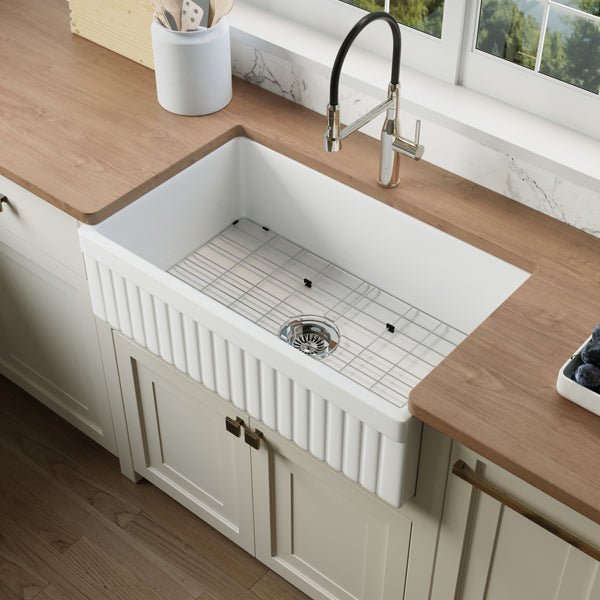
If approved, use a clean, fitted bottom grid with protective feet and correct drain alignment. It raises cookware but is not armor: impact can still chip fireclay.

Dishpan or No Dishpan?
The EPA WaterSense recommends plugging the sink or using a wash basin for handwashing dishes. A dishpan contains wash water inside a wide bowl; savings vary by load and behavior.
| Method | Best for | Tradeoff |
|---|---|---|
| Clean dishpan | A batch of plates, bowls, cups, and flatware | Takes bowl space and must be emptied, rinsed, and dried afterward |
| Direct wash | A few mugs, knives, or one pan | Requires discipline to keep the tap off between rinse steps |
| Full plugged bowl | Large-volume soaking only when the item and sink care allow it | Usually unnecessary for a small load in a large single bowl |

Wash in an Order That Protects Dishes
- Scrape first. Remove food before items enter the wash zone. Presoak only what needs it.
- Separate hazards. Keep knives flat and visible outside the suds; wash them one at a time. Keep glass away from heavy cookware.
- Start light. Wash glasses and cups, then flatware, plates, and bowls. Do oily pans and baked-on cookware last so the wash water stays useful longer.
- Rinse into the open zone. Use the faucet only as needed, directing spray toward the center—not the apron, counter seam, or clean drying area.
- Move directly to dry. Use a counter rack, or an approved fitted rack installed after pan removal and confirmed to leave a clear rinse path. Do not build a wet stack in the basin.
The U.S. Food and Drug Administration's safe food handling guidance advises cleaning food-prep surfaces and preventing cross-contamination from raw-food contact. Clear ready-to-eat items first; then separately handle utensils and boards that touched raw meat, poultry, seafood, or eggs. Replace contaminated wash water and follow applicable cleaning and sanitizing instructions.

Handle Glass, Knives, and Heavy Pots Differently
| Item | Safer handling in a fireclay bowl | Avoid |
|---|---|---|
| Glassware | Wash first, one or two at a time; place inverted or securely angled so water drains, only where the rack is designed to hold them | Letting glasses rattle against pans, grid edges, or each other |
| Knives | Keep visible, hold by the handle, wash individually, and move to a secure dry position | Leaving blades hidden in a dishpan or under plates |
| Cast iron or heavy pots | Lower with two hands onto the grid; wash alone when practical | Dropping, sliding, or striking the rim and apron corners |
| Large sheet pans | Remove the dishpan/rack and use the full bowl; support the pan while turning | Jamming it between the faucet, countertop edge, and basin wall |

Dry Dishes Without Losing the Counter
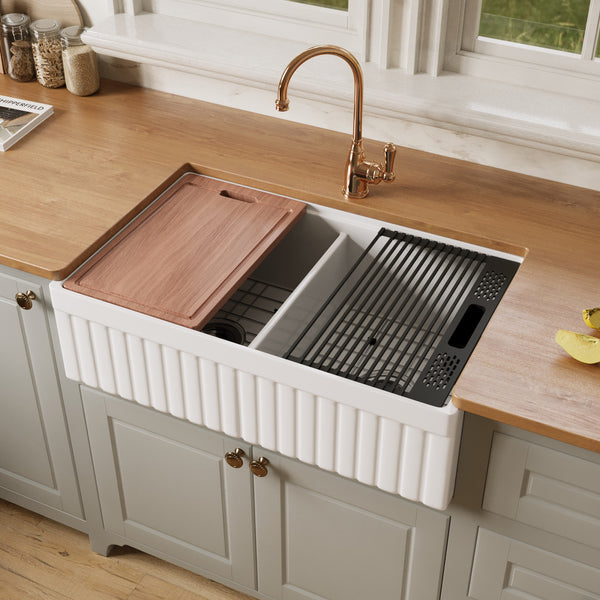
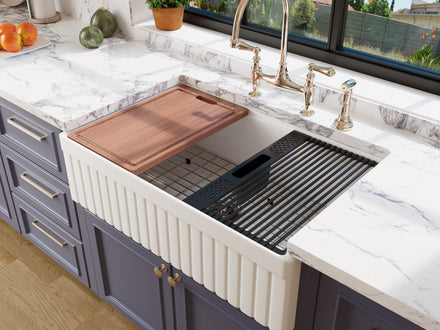
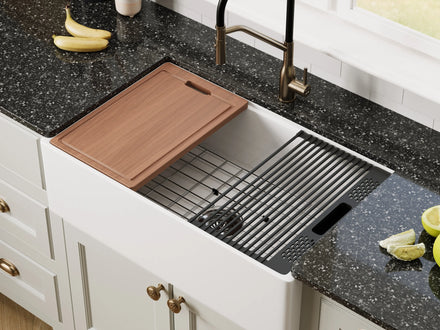
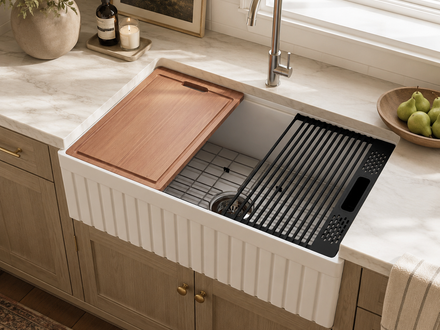
Place an approved fitted rack securely on workstation ledges and follow its load and heat instructions. Otherwise, use a properly sized approved over-sink rack or a stable counter rack.
For full accessory fit and maintenance, use the farmhouse sink accessories guide. If you are deciding whether ledges are worth having, the workstation vs regular sink guide owns that comparison.
Reset the Sink After the Last Dish
This routine is for glazed fireclay. Follow the sink maker’s care instructions for other materials.
- Empty, rinse, and dry the dishpan and rack before storing them.
- Lift the bottom grid, remove trapped debris, and rinse beneath it.
- Wash the fireclay with mild dish soap, warm water, and a soft cloth or non-abrasive sponge.
- Rinse the bowl and wipe the rim, apron, and nearby counter drips; dry the basin with a clean towel if desired.
That is the daily reset, not a stain-removal guide. For approved tools, hard-water spots, and what to avoid, follow How to Clean a Fireclay Sink.
NZ-103W3320: A Three-Stage Example
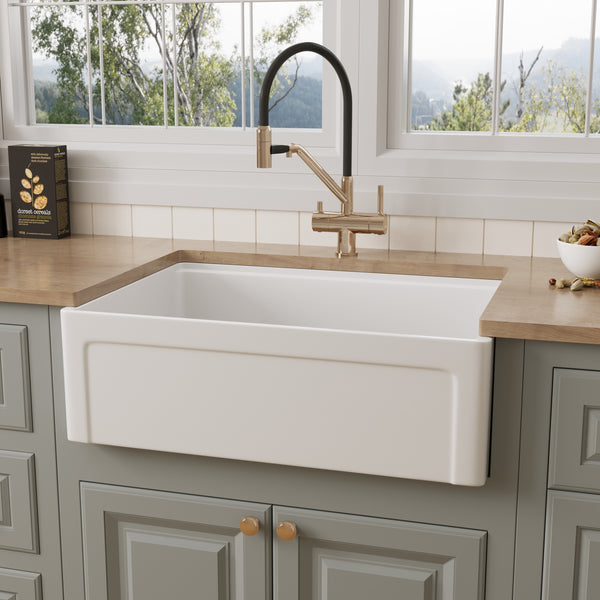
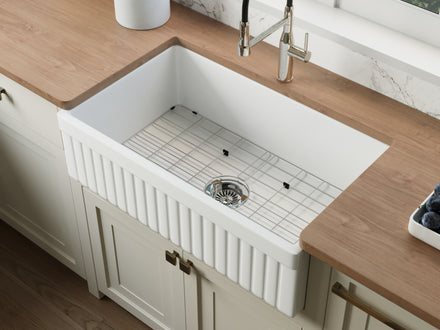
The NOZLOO NZ-103W3320 is 33″ × 20″ × 10″ overall with a 31″ × 17¾″ interior. Its 9-inch interior depth is measured vertically from the rim to the lowest point at the centered drain, not at a side wall. It has a centered 3.5-inch drain, requires a 36-inch minimum cabinet, and weighs about 105 pounds.
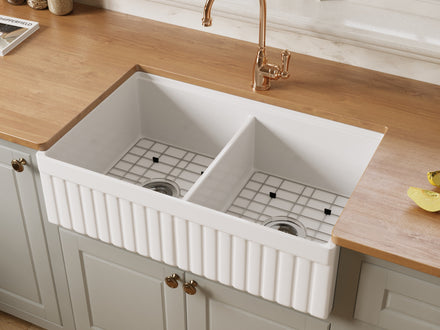
The fitted bottom grid can remain in the bowl. Wash a batch in a stable compact dishpan, then lift it out. If the approved fitted rack leaves a measured open rinse path, install it now and move each rinsed item onto it; otherwise use a counter rack. Remove the rack when cookware needs the full bowl. If you are still selecting the layout, compare this workflow in the single vs double bowl farmhouse sink guide.

How We Checked This Guide
NOZLOO reviewed live Google US results and related questions on August 22, 2026. EPA WaterSense and FDA sources support the basin, cleaning, and separation guidance; NZ-103W3320 dimensions use owner-approved data. This source-reviewed layout is not a fit or load test of every accessory combination. Product instructions control.
Frequently Asked Questions
How do you use a farmhouse sink for handwashing?
Wash in a dishpan or directly, then remove the pan. Rinse into the open bowl and move each item to a counter rack, or to an approved fitted rack that leaves a measured rinse path. Remove accessories for oversized pans.
Do you need a dishpan in a single-bowl farmhouse sink?
No. A dishpan contains wash water for a batch without filling the whole bowl. For a few pieces, wash directly and keep the tap off between rinse steps.
How do you dry dishes in a farmhouse sink?
Use a manufacturer-approved fitted roll-up rack on workstation ledges, an over-sink rack approved for the sink, or a clean counter rack. Space items so they drain and air can circulate, and keep clean dishes away from the wash splash zone.
What is the drawback of a farmhouse sink for handwashing?
A large single bowl has no permanent second compartment, so washing and rinsing need temporary stages. Its hard surface also demands controlled handling of glass and heavy cookware.
What is the best way to clean a farmhouse sink after dishes?
It depends on the material. For glazed fireclay, remove debris, lift and rinse beneath an approved grid, wash with mild dish soap, warm water, and a soft cloth, then rinse. Wipe the apron and counter drips. Follow the maker’s care instructions for other materials, and use the dedicated NOZLOO fireclay care guide for stains or mineral buildup.