Farmhouse Sink Accessories: How Workstation Add-Ons Make a Fireclay Sink More Useful

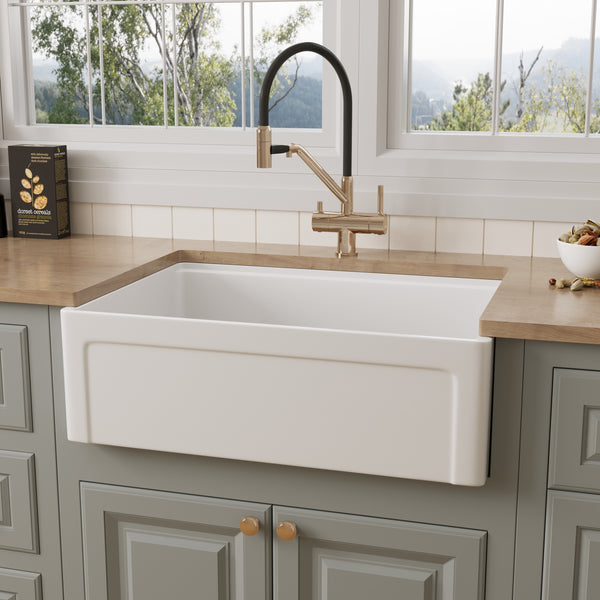
A farmhouse sink can change the look of a kitchen, but the right farmhouse sink accessories change how the sink works every day. A deep fireclay basin is useful for washing dishes, rinsing pans, and handling large cookware, but a workstation setup can make the sink more practical for cooking, cleaning, drying, and daily prep.
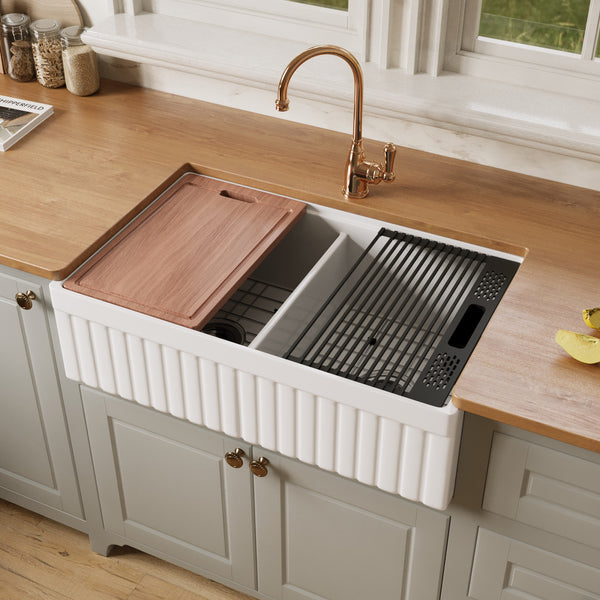
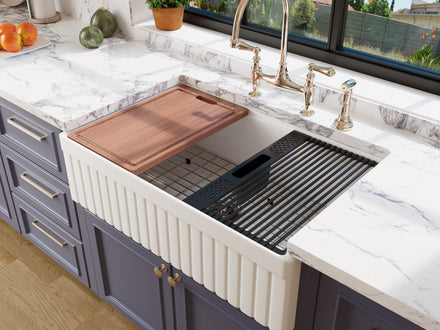
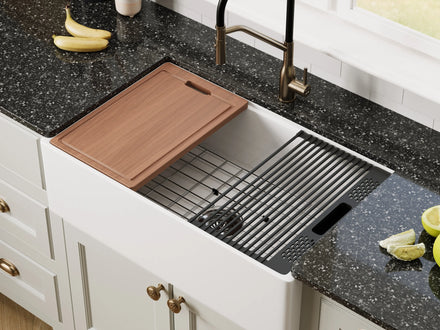
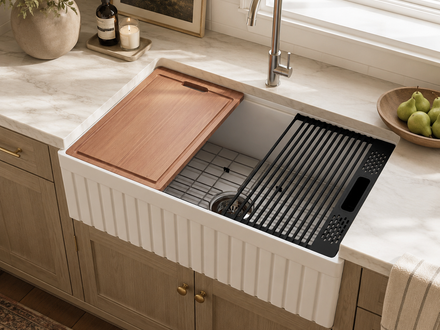
Nozloo’s Fireclay Workstation Sink comes with a 4-piece workstation kit: a sapele wood cutting board, a roll-up drying rack, a stainless steel bottom grid, and a basket strainer drain kit. These accessories are not random add-ons. They are designed to help the sink function as a more organized work area. The cutting board creates a prep surface over the sink, the drying rack adds temporary drying space, the bottom grid helps protect the fireclay basin, and the drain kit completes the setup for everyday water flow. For a closer look at what comes with each model, review the NOZLOO farmhouse sink accessories included with select workstation and standard sinks.
The goal is not to collect every sink accessory available. The goal is to use the right pieces in the right way, so the sink supports daily kitchen tasks without making the countertop feel crowded.
Why Farmhouse Sink Accessories Matter
A farmhouse sink is usually larger and deeper than a standard kitchen sink. That extra size is helpful when you need to wash large pots, rinse baking trays, or stack dishes after a meal. But a large basin can also create daily problems if it is not used with the right accessories.
Heavy pans can hit the bottom of the sink. Plates can sit in standing water. Food scraps can collect near the drain. Wet items can take over the countertop. Sponges and dish soap can clutter the area around the faucet. Over time, these small problems affect how convenient the sink feels.
Farmhouse sink accessories solve these problems in practical ways. A sink grid raises cookware and dishes off the basin floor. A drying rack gives clean dishes a temporary place to dry. A cutting board adds food prep space over the sink. A drain kit supports normal drainage and helps complete the installation.
For a workstation sink, accessories matter even more because they are made to work with the basin instead of sitting separately around it.
Quick Guide to Nozloo’s 4-Piece Workstation Kit
|
Included Accessory |
Best For |
Why It Helps |
|---|---|---|
|
Cutting board |
Food prep |
Creates a prep surface over the sink |
|
Drying rack |
Drying and rinsing |
Adds temporary space for dishes, cups, or rinsed produce |
|
Bottom grid / sink grid |
Dishes, pots, and pans |
Helps protect the sink bottom and improves drainage |
|
Drain kit |
Everyday sink use |
Supports water flow and completes the sink setup |
Each accessory has a clear purpose. The cutting board supports prep work, the drying rack helps manage wet dishes, the bottom grid adds protection, and the drain kit handles drainage. Together, they make the sink more useful without requiring extra countertop accessories.
The kit ships with the workstation models in our 33-inch fireclay farmhouse sink collection. The $479 standard model does not include it.
The Benefits of Using a Sink Grid in Your Farmhouse Sink

One of the most useful accessories in the kit is the bottom grid, often called a sink grid. A sink grid sits at the bottom of the basin and raises dishes, pots, and pans slightly above the sink surface. This creates a protective layer between the fireclay basin and the items placed inside it.
The benefits of using a sink grid in your farmhouse sink are clear during daily cooking and cleanup. When you place heavy cookware into the sink, the grid helps reduce direct impact on the bottom surface. When you rinse dishes, water can move underneath instead of pooling around plates and bowls. When utensils or pans shift during washing, the grid helps reduce direct contact with the basin.
A sink grid also helps with drainage. Since dishes are lifted slightly, water can flow toward the drain more easily. This keeps plates, cups, and utensils from sitting flat in leftover water.
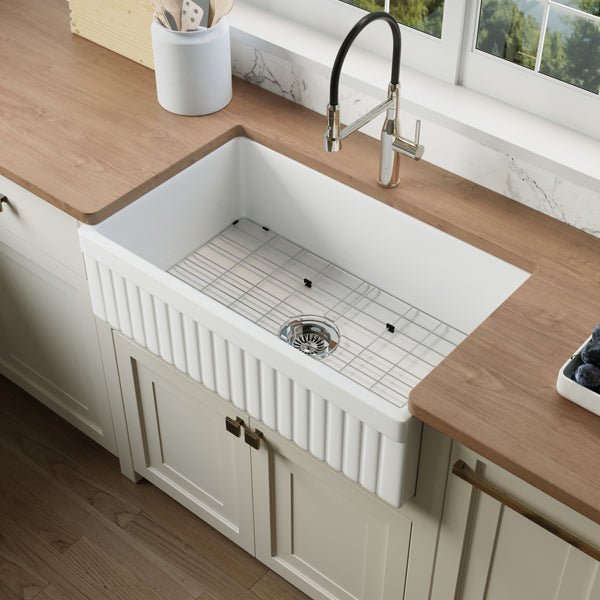
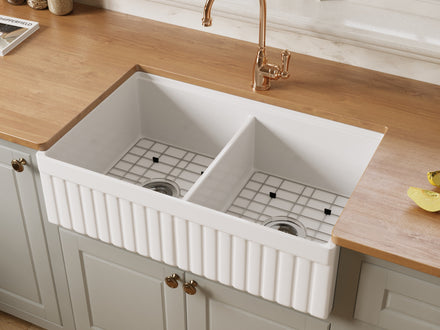
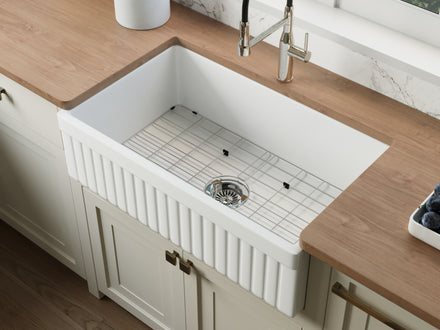
Fit is important. A grid that is too small may slide around. A grid that is too large may tilt or sit unevenly. The best sink grid should match the sink’s interior dimensions, drain position, and corner shape. The stainless steel grid in Nozloo’s kit is sized to each basin — the frame follows the bowl’s corners, the opening lines up with the drain, and soft protective feet keep the metal frame off the fireclay surface. The double bowl model simply includes two. Check the feet now and then; they do the quiet work of protecting the glaze.
A sink grid still needs regular cleaning. Food particles, soap residue, and mineral buildup can collect around the wires and feet. Remove the grid, scrub it with warm water and mild dish soap, rinse it well, and let it dry before placing it back in the sink.
Sink Grid vs. Sink Grate: What Is the Difference?
The terms sink grid and sink grate are often used in similar ways. In most kitchen sink accessory descriptions, both refer to a raised rack that sits inside the basin and supports dishes, pans, and utensils.
A sink grate may have a heavier or more open frame, while a sink grid usually refers to a fitted bottom rack. However, the name matters less than the function. The accessory should fit the basin, allow water to drain, and help protect the sink surface.
When using a sink grate or grid, pay attention to the drain opening. The opening should line up with the drain so water and food scraps can move properly. If the opening is in the wrong place, drainage may be blocked or cleanup may become harder.
Material quality also matters. Stainless steel is commonly used for sink grids and grates because it is strong, clean-looking, and suitable for wet kitchen use. A quality stainless steel grid should feel stable, resist bending under normal daily use, and have smooth edges or welds. Protective feet or silicone contact points are also important because they help prevent direct metal contact with the sink surface.
A good grid should be easy to lift out. If it is difficult to remove, you may avoid cleaning underneath it. That can lead to residue, odor, and buildup over time.
Sink Protector, Grid, or Mat: Which One Protects a Fireclay Sink?
A farmhouse sink protector, sold as a kitchen sink protector, means one of three things. It is a silicone or rubber mat, a stainless steel bottom grid, or an edge strip for the front rim. Each guards a different part of the sink, so pick by what you drop or set down most.
The glaze fuses to the fireclay body at about 2,200°F, so the surface is hard. The real threats are a dropped cast iron pan and gray streaks from utensils and rough bowl bottoms. Both happen on the basin floor, so start your checks there.
- Basin floor. Lift the grid and run a finger under every foot; one missing pad puts steel on glaze. The grid and grate section above covers fit and drain alignment.
- Under the mat. A soft mat cushions a dropped pan, but its flat underside holds water against the glaze. If you use one, lift it out each night so both the mat and basin dry. A dark film underneath usually means mildew is starting, and colored rubber can tint white glaze.
- Front edge. An edge protector clips over the top of the apron. It helps when wet plates and mugs land on that rim, but does nothing for the basin floor. Press along its length, because a loose strip or a hard-backed sponge caddy traps grit that scuffs the rim.
| Protector | What it protects | Downside | Best for |
|---|---|---|---|
| Silicone or rubber mat | Basin floor from drops | Traps water; colored rubber can tint glaze | A stopgap you lift out to dry |
| Stainless steel bottom grid | Basin floor from drops and streaks | Fails silently if a foot pad drops off | Daily use |
| Edge protector or caddy | Apron top edge from dishes | Traps grit if loose | Dishes set on the rim |
Gray streaks are usually metal transfer, not scratches; the fireclay cleaning guide shows how to lift them. Chips and other marks get their own section in fireclay sink problems.
How the Cutting Board Improves Food Prep

The cutting board is one of the most practical farmhouse sink accessories because it turns part of the sink into a prep station. Instead of using only the countertop, you can prepare ingredients directly over the basin. Nozloo’s board is cut from sapele — a dense hardwood with a warm reddish-brown tone — and sized for the integrated ledge on the workstation models, so it slides from prep position to out of the way without being lifted out.
This is especially useful in a smaller kitchen where countertop space is limited. You can rinse vegetables, place them on the cutting board, trim them, and move scraps directly toward a bowl, compost bin, or disposal area. This keeps food prep closer to the water source and helps reduce mess on the counter.
The cutting board also makes the sink feel more flexible. When you need extra prep space, it can sit over the sink. When you need the full basin for washing pots or dishes, it can be removed and stored.
A cutting board should be cleaned after each use, especially after contact with food. Wash it, dry it, and stand it upright when possible. If the board is wood or bamboo, do not leave it soaking in water. Long exposure to moisture can shorten its life and affect its surface.
How the Drying Rack Adds Flexible Space

A drying rack is useful because it gives clean dishes, cups, utensils, or rinsed produce a temporary place to sit. Instead of placing a bulky rack on the countertop, the drying rack can work over the sink and let water drip directly into the basin.
This is a big deal in kitchens where counter space is limited. A removable drying rack creates function when needed and disappears when it is not in use. You can use it after washing a few plates, rinsing fruit, or cleaning small cookware.
The roll-up rack in Nozloo’s kit is built from 304 stainless steel rods wrapped in a food-grade, BPA-free silicone coating, with non-slip silicone ends that hold it steady and keep it from marking the sink. The silicone surface is heat-resistant and safe for direct food contact, so it is as comfortable holding a hot pot as it is drying rinsed berries. When you are done, it rolls up into a slim bundle that slips into a drawer, and a removable utensil pocket keeps forks and spoons from slipping through the rods.
The drying rack should also be cleaned regularly. Soap residue, minerals, and food particles can collect around the edges. A quick rinse after use and occasional scrub can help keep the rack more hygienic.
Why the Drain Kit Matters

The drain kit is not as visually noticeable as the cutting board or drying rack, but it is still an important part of the workstation setup. A sink is only useful if water drains properly and the drain area is easy to manage.
In Nozloo’s kit this is a stainless steel basket strainer: the basket catches food scraps before they reach the pipes, then lifts out for a quick empty into the bin. It fits the sink’s standard 3.5-inch drain opening, which also means the sink is ready for a garbage disposal if your kitchen uses one. When paired with the bottom grid, dishes and cookware stay raised while water moves toward the drain.
A drain area should be kept clean. Food scraps, sauce, coffee grounds, and soap residue can collect around the drain if they are not rinsed away. After washing dishes or food, rinse the basin and clear visible debris. This small habit helps prevent buildup and keeps the sink cleaner between deeper cleanings.
If you use a garbage disposal with the sink, the drain setup and disposal compatibility should be checked before installation. The sink, drain kit, and disposal should work together correctly rather than being treated as separate pieces.
Farmhouse Sink With Drainboard: When It Makes Sense
A farmhouse sink with drainboard includes a built-in surface beside the basin where water can run back toward the sink. This can be useful for people who hand-wash dishes often or need a dedicated place for drying plates, cups, and cookware.
The main benefit is water control. Instead of placing a separate drying rack directly on the countertop, a drainboard gives wet dishes a defined place to sit. Water can move back toward the sink instead of collecting on the counter.
However, a farmhouse sink with drainboard is not the best option for every kitchen. A built-in drainboard takes up horizontal countertop space. If the kitchen has limited counter area, a removable drying rack may be more flexible. You can use it when needed and store it away when the counter needs to stay open.
For many homeowners, a workstation sink offers a practical middle ground. The drying rack provides some of the same daily convenience as a drainboard, but without permanently taking over counter space.
How Workstation Accessories Improve Kitchen Workflow
A fireclay workstation sink helps reduce unnecessary movement during cooking and cleanup. Instead of moving constantly between the counter, sink, and drying area, several tasks can happen around the basin.
A simple workflow might look like this: rinse produce in the sink, prepare it on the cutting board, set washed items on the drying rack, and keep dishes raised on the bottom grid while water drains below. After cooking, large pans can be washed in the deep basin without taking over the entire countertop.
This does not mean every accessory should stay in place all the time. The advantage of a workstation setup is flexibility. Use the cutting board during food prep, then remove it when washing large cookware. Use the drying rack when dishes need to dry, then store it when the full sink opening is needed. Keep the bottom grid in place for daily protection.
A good workstation setup should make the kitchen feel more efficient, not more crowded.

Choosing the Right Materials for Sink Accessories
The best sink accessories are not only about appearance. Materials affect durability, maintenance, and daily comfort.
Stainless steel is a common choice for a sink grid, sink grate, drying rack, and drain components because it has a clean look, strong support, and works well around water. A stainless steel grid can support dishes, pots, and pans while helping protect the fireclay basin from direct contact.
Silicone is often used on rack edges, protective feet, and contact points. It can add grip, reduce noise, and help prevent metal from touching the sink surface directly. If a grid has rubber feet or silicone parts, check them occasionally and replace them if they become loose or worn.
Wood or bamboo is often used for workstation cutting boards. Nozloo chose sapele, a dense hardwood that adds warmth and complements farmhouse style. Like any wood board, it should not stay wet for long periods. After food prep, wash the board, dry it, and stand it upright when possible.
Material choice should match the way the sink is used. For heavy cookware, strength matters. For rinsing and drying, flexibility matters. For food prep, cleaning and drying habits matter.
How to Use Workstation Accessories Without Crowding the Sink
A workstation sink is useful because accessories can be placed over or inside the sink as needed. But if too many pieces are used at once, the sink can feel crowded.
Start with the bottom grid because it usually stays in the basin during daily use. It provides protection and support without taking away much usable space. Then use the other accessories only when they are needed.
Use the cutting board during food prep, then remove it before washing large pots. Use the drying rack for clean dishes, cups, or rinsed produce, then store it when you need the full basin. Keep the drain area clear so water and food particles can move properly.
This is the practical advantage of a workstation setup. The accessories create extra function, but they do not all need to be in place at the same time.
How to Choose Accessories That Fit Your Sink
Before buying or replacing any accessory, measure the sink carefully. Farmhouse sinks can look similar from the outside, but interior dimensions can vary.
Check the inside width, front-to-back depth, and basin shape. Look at the drain position. Some sinks have a center drain, while others have an offset drain. A sink grid or grate should match that layout.
Corner shape also matters. Some farmhouse sinks have tighter corners, while others have softer rounded corners. If the grid does not match the corner shape, it may leave awkward gaps or fail to lay flat.
If the sink has workstation ledges, accessories should be designed to sit securely on those ledges. A cutting board or drying rack that does not fit properly can slide during use. That can be frustrating and unsafe, especially when handling knives, wet dishes, or heavy cookware.
Compatibility is one of the most common accessory mistakes. Do not assume all farmhouse sink accessories are universal. Fit matters.
What Farmhouse Sink Accessory Should You Use First?
If you are deciding which accessory matters most, start with the sink grid. It is usually the most useful first accessory because it supports dishes, pots, and pans while helping protect the sink bottom during daily use.
After that, the best accessory depends on your routine. If you cook often, the cutting board can make food prep easier. If you hand-wash dishes, the drying rack can help keep wet items off the countertop. If you are setting up the sink after installation, the drain kit is essential because it supports everyday water flow.
The right collection depends on how the kitchen is used. A frequent home cook may use the cutting board and drying rack every day. Someone who mainly uses the dishwasher may rely more on the bottom grid and drain kit. The best accessories are the ones that match your real habits.
Common Mistakes to Avoid
One common mistake is using a sink grid that does not fit properly. A grid should not slide, tilt, or sit unevenly. Poor fit can make dishes unstable and reduce the protection the grid is supposed to provide.
Another mistake is choosing accessories only for style. Appearance matters, especially in a farmhouse kitchen, but function should come first. A beautiful cutting board or rack is not useful if it does not fit the sink or is difficult to clean.
Some buyers also overlook maintenance. Any accessory that sits in or near the sink needs cleaning. Food residue, soap film, and minerals can collect around the grid, drying rack, drain, and rubber feet. Clean these pieces regularly so they do not create buildup.
Do not overcrowd the sink area. Too many accessories can make the basin harder to use. The goal is to create a cleaner and more practical kitchen, not to fill every inch with add-ons.
Finally, avoid assuming that every accessory is dishwasher safe. Some stainless steel parts may be dishwasher safe, but wood, silicone, and rubber components may need different care. Always check the care instructions for each piece.
Farmhouse Sink Accessories and Long-Term Fireclay Sink Care
Good accessories can support long-term fireclay sink care. A sink grid helps reduce direct contact from heavy dishes and pans. A drying rack allows wet items to drip into the basin instead of onto the countertop. A cutting board creates a useful prep surface without requiring extra counter space. A drain kit supports normal sink function.
These details help protect the sink during everyday use. They also make cleaning easier because the sink area has a clear system: prep, wash, rinse, drain, dry, and store.
Accessories do not replace regular maintenance. The sink still needs to be rinsed after use, wiped when needed, and cleaned with appropriate products. The grid, rack, cutting board, and drain area should also be cleaned regularly.
For fireclay farmhouse sinks, avoid dropping heavy pots directly into the basin. Use the sink grid as a protective layer, but do not treat it as a guarantee against damage. Thoughtful daily habits still matter.
Final Thoughts
Farmhouse sink accessories should make the sink easier to use, easier to clean, and better protected. The most useful pieces solve real daily problems: a sink grid for protection, a drying rack for flexible drying space, a cutting board for food prep, and a drain kit for everyday sink function.
A farmhouse sink with drainboard can be useful for people who often hand-wash dishes and want built-in drying space. But for many kitchens, a Fireclay Workstation Sink with a removable drying rack offers more flexibility because the drying space can be used only when needed.
The best setup depends on your kitchen routine. Think about what slows you down: heavy pans, wet counters, crowded dishes, food scraps, or limited prep space. Then use the accessories that directly solve those problems. When the right pieces fit properly and are cleaned regularly, a farmhouse sink becomes more than a large basin. It becomes a practical workstation for everyday kitchen life.
Before choosing a sink, review which NOZLOO sinks include the full accessory kit, including workstation and standard accessory packages.
FAQ
Are farmhouse sink accessories universal?
No. Farmhouse sink accessories are not always universal. Sink size, basin depth, drain position, corner shape, and workstation ledges can all affect fit. Always check measurements before buying or replacing a grid, rack, cutting board, or drain kit.
What accessories come with Nozloo’s Fireclay Workstation Sink?
Nozloo’s Fireclay Workstation Sink comes with a 4-piece workstation kit: a sapele wood cutting board, a roll-up drying rack made of 304 stainless steel rods with a food-grade BPA-free silicone coating, a stainless steel bottom grid, and a basket strainer drain kit. The double bowl model includes two grids and two drains.
Do I really need a sink grid for a farmhouse sink?
A sink grid is not required, but it is one of the most useful accessories. It helps raise dishes and cookware off the sink bottom, improves drainage, and adds protection against direct contact from heavy pots and pans.
What is the difference between a sink grid and a sink grate?
The terms are often used in similar ways. Both usually describe a raised accessory that sits inside the basin to support dishes and protect the sink surface. The most important factors are fit, material quality, drain opening, and protective feet.
Is a farmhouse sink with drainboard better than a drying rack?
It depends on the kitchen layout and washing habits. A farmhouse sink with drainboard is useful if you hand-wash dishes often and want built-in drying space. A removable drying rack is better if you want flexibility and do not want to give up permanent countertop space.
What farmhouse sink accessory should I use first?
The sink grid is usually the best first accessory because it supports dishes, pots, and pans while helping protect the sink bottom during daily use. After that, use the cutting board for prep and the drying rack for wet dishes or rinsed items.
How do I clean a sink grid?
Remove the grid from the sink, scrub it with warm water and mild dish soap, and pay attention to corners, wires, and rubber feet. Rinse it well and let it dry before putting it back. Clean under the grid regularly to prevent residue and buildup.
Can accessories help protect a fireclay farmhouse sink?
Yes. Accessories such as a sink grid can help reduce direct impact from dishes, pots, and pans. They do not make the sink damage-proof, but they add a practical layer of protection during everyday use.
Related reading: Workstation farmhouse sinks: the upgrades buyers notice