Workstation Sink vs Regular Sink: Which Is Better for Your Kitchen?

In this guide View sections +
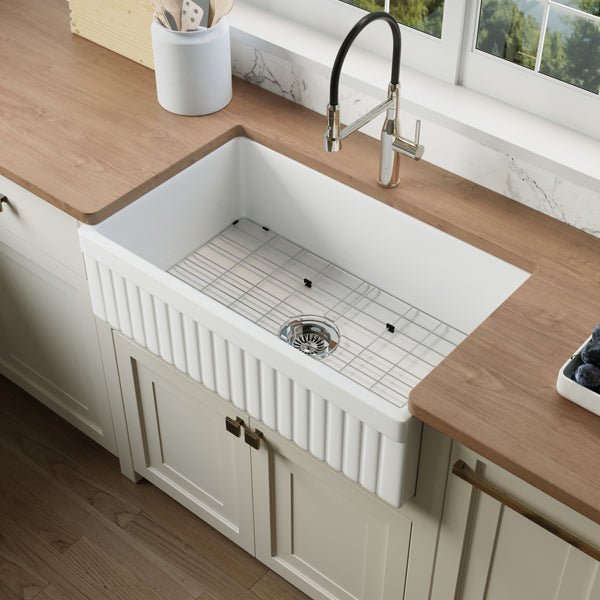
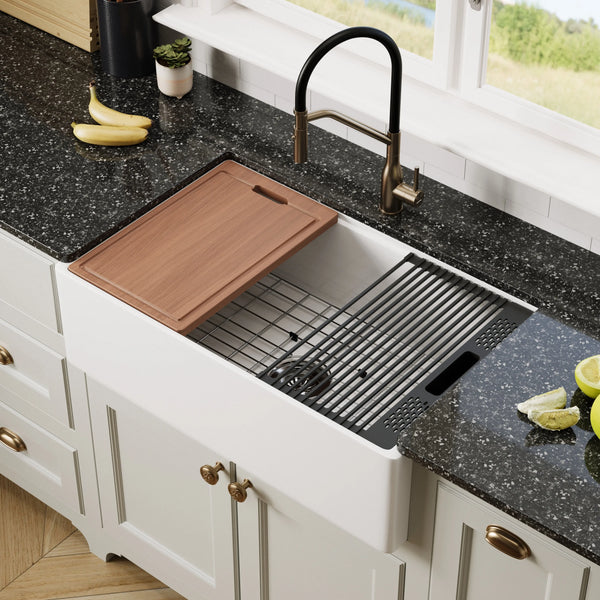
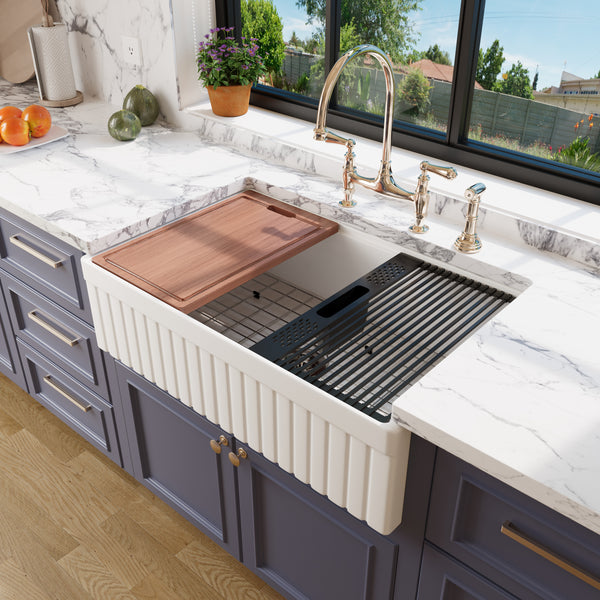
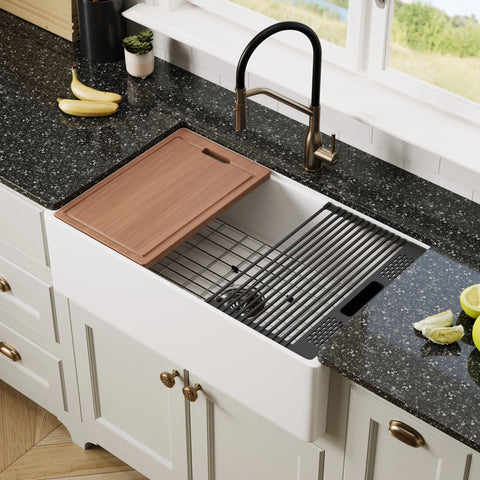
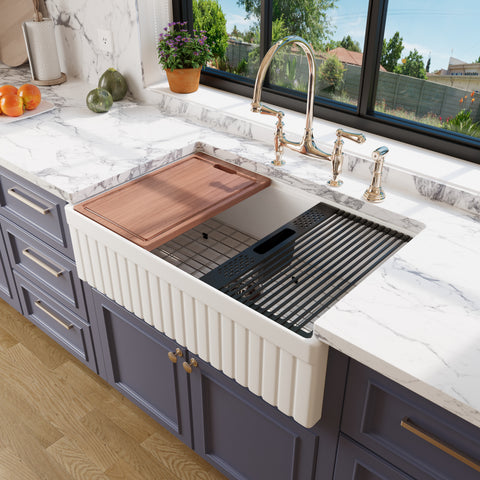
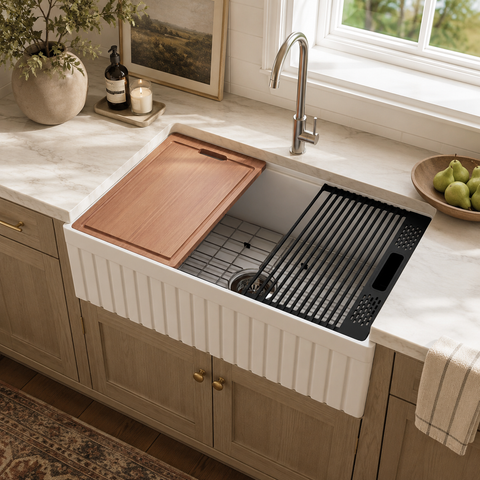
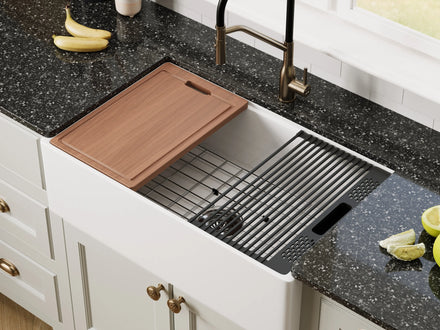
Choosing between a workstation sink and a standard sink comes down to where work actually happens in your kitchen. A workstation sink uses built-in ledges to support a cutting board, drying racks, colanders, and other fitted accessories above the basin. A standard kitchen sink keeps the opening clear and relies more on surrounding countertop space for food preparation.
If you have limited counter space and regularly work beside the faucet, a workstation sink can make the same footprint more functional. If you already use a large island, wash oversized cookware often, or want fewer parts to move and clean, a standard sink may fit daily life better.
The better kitchen design choice is not the sink with the longest accessory list. It is the one that removes more friction from the way you cook, wash, prep, and clean up.
What Is the Main Difference Between a Workstation Sink and a Standard Sink?
The main difference is how the space above the sink basin is used. Both designs still handle washing, rinsing, filling pots, and cleanup.
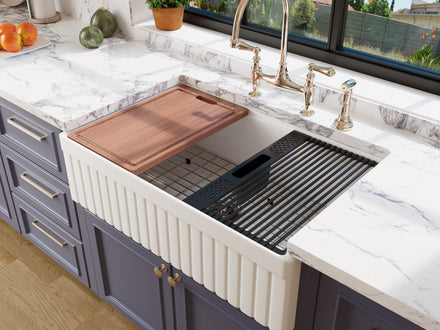
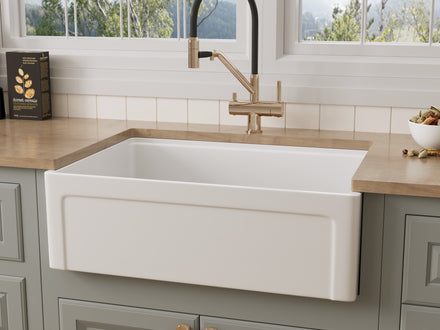
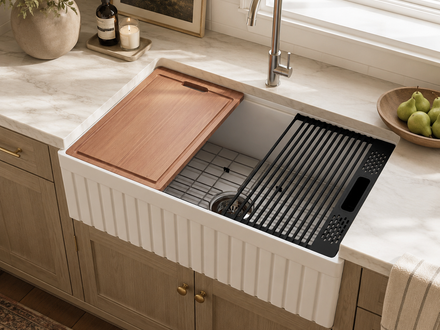
A workstation sink has built-in ledges that hold fitted boards, racks, or colanders over the basin. That allows part of the sink footprint to become temporary prep space. A standard sink generally leaves the opening clear and moves those tasks to the surrounding work surface.
Workstation functionality is separate from kitchen sink material and mounting style. Stainless steel, fireclay, and granite composite are materials, while undermount, drop in, and farmhouse style describe how a sink is installed or presented rather than whether it functions as a workstation.
Workstation Sink vs Standard Sink: Quick Comparison
| Feature | Workstation Sink | Standard Sink |
|---|---|---|
| Integrated ledge | Yes | Usually no |
| Prep surface | Uses space above the bowl | Relies more on countertop |
| Open-bowl access | Reduced while accessories are in place | Fully open |
| Accessories | Fitted pieces are central to the design | Usually optional or separate |
| Large cookware | May require sliding or removing accessories first | Immediate full-bowl access |
| Cleaning | Bowl plus ledges, boards, racks, and other pieces | Fewer components to maintain |
| Counter-space efficiency | Strong when preparation happens at the sink | Depends more on available counter space |
| Replacement accessories | Dimensions and ledge fit matter | Less sink-specific |
| Best for | Sink-centered meal prep and cleanup | Straightforward washing and rinsing |
| Daily setup | Accessories may need repositioning | Bowl stays open |
The main workstation sink benefits are better use of the area above the sink and a more concentrated kitchen workflow. The main workstation sink disadvantages are equally practical: more parts to clean and store, plus occasional loss of open-bowl access while accessories are in place.
Which Gives You More Prep Space?
A workstation sink usually gives you more usable prep space when uninterrupted countertop space is limited. It does not make the kitchen larger; it makes existing sink space work harder.
A fitted cutting board can sit over the sink, so chopping does not consume another section of counter space. Colanders can keep rinsed produce above the drain, while drying racks can hold smaller items without spreading water across the countertop. In a compact modern kitchen, that can be an efficient space saving solution because one footprint supports more than one task.

This advantage is strongest when limited counter space is the actual problem. A galley kitchen, condo kitchen, or remodel with short work surfaces may benefit from moving part of meal prep over the sink. The National Kitchen & Bath Association's Kitchen Planning Guidelines emphasize adequate landing and primary work areas around the sink, reinforcing why usable countertop space matters in kitchen planning.
A workstation sink adds less utility when a kitchen already has a generous island or long preparation surface. If the cutting board normally stays on the island and ingredients rarely move through the sink during prep, built-in ledges may not change your culinary routines much.
Best fit: choose a workstation sink when counter space is tight and preparation regularly happens at the sink. Choose a standard sink when the kitchen already provides plenty of dedicated working surface.
Which Is Better for Washing Large Pots?
A standard sink has a slight convenience advantage when unrestricted bowl access matters most.
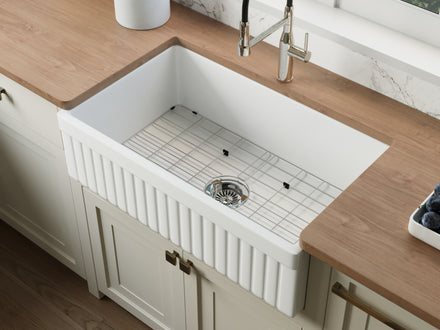
If two sinks have similar interior dimensions and depth, their basic capacity can be similar. The difference appears when a workstation sink has a cutting board, rack, or colander across the opening. A stockpot, roasting pan, or wide baking sheets may be easier to lower into an empty single bowl sink than into a workstation that is still set up for prep.
The limitation is temporary. Slide the cutting board or drying rack aside, or remove it, and the workstation sink regains full access. For homeowners who switch between food prep and cleanup, moving one accessory may be a minor step. If large cookware goes straight into the kitchen sink after cooking, a permanently open bowl can feel simpler.
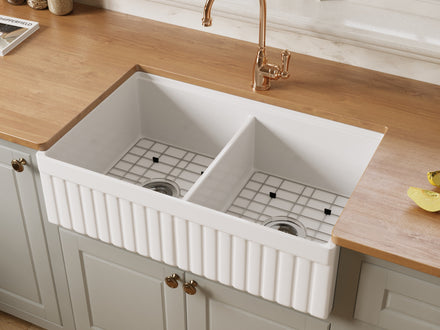
Bowl layout matters more than the workstation label alone. A roomy single bowl sink gives wide cookware uninterrupted space, while a double bowl creates separate washing zones but divides the available width. A large single bowl workstation can therefore handle cookware more easily than a smaller double bowl standard model.
Best fit: favor a standard sink if you want immediate full-bowl access all day. A workstation still works well for large cookware if moving the boards and racks first does not bother you.
Do Workstation Accessories Get in the Way?
They can, particularly when a task needs the entire sink opening. Whether that becomes inconvenient depends on how willing you are to change the workstation setup as the task changes.
During meal prep, built in accessories can make the sink more functional. A cutting board can span the bowl, colanders can handle rinsing, and drying racks can sit over the drain rather than occupying countertop space. Many accessories can slide along built in ledges, keeping water, scraps, and mess close to the sink.
During cleanup, the same accessories may need to move. Filling a stockpot, scrubbing baking sheets, reaching into a deep single bowl sink, or washing several bulky items is easier with the opening clear.
Accessory storage matters for that reason. If boards, racks, and colanders come off several times a day, a nearby drawer, vertical slot, or adjacent cabinets can keep the workflow efficient. Storing everything across the kitchen adds unnecessary movement.
Replacement fit matters too. Workstation boards, drying racks, and colanders are not automatically universal. Their dimensions need to match the ledge and sink interior, so confirm compatibility before assuming accessories made for another sink will fit.
Treat a workstation cutting board like any other food-contact board. The USDA's cutting-board guidance recommends using separate boards for fresh produce and bread versus raw meat, poultry, and seafood when practical to reduce cross-contamination.
In a narrow kitchen where a cutting board would otherwise occupy most of the available work surface, using the area above the sink can make a noticeable difference. If you prefer a kitchen sink that stays completely open between tasks, the same accessories may feel like extra equipment rather than added utility.
Which Is Easier to Clean?
A standard sink is usually simpler to clean because there are fewer components to manage.
Cleaning the basin itself depends more on its material and finish than on whether it has a workstation ledge. The added maintenance comes from the workstation features around that surface.
Along with the basin and drain, you may need to clean ledge edges, a cutting board, rack, colanders, a bottom grid, or other built in accessories. Boards should dry properly, and contact edges should stay clean so residue does not collect around them.
A simple single bowl sink has fewer pieces to remove, rinse, dry, and store. That gives the standard design a real low maintenance advantage.
If you already use boards, colanders, and a rack every day, integrating them into a workstation sink may add little work. If the goal is the simplest possible cleanup routine, the standard sink wins.
Which Is Better for a Small Kitchen?
A workstation sink is most useful in a small kitchen when countertop space—not base-cabinet width—is the main constraint.
Imagine a narrow galley where small appliances, the cooktop, and short countertops leave little uninterrupted work surface. A cutting board or rack above the sink can improve the kitchen's functionality without enlarging the countertop. In that situation, the workstation becomes a practical space saving solution.
But workstation features do not solve a cabinet-fit problem. A sink still needs cabinetry that can accommodate its dimensions, support requirements, plumbing, and under-sink clearance. A garbage disposal can affect that clearance as well.
Installation style can also change countertop cuts and cabinet requirements, so confirm the specifications for the actual model before ordering. If cabinet fit is the concern, NOZLOO's farmhouse sink cabinet size guide explains the measurements and planning considerations in more detail.
Best fit: choose a workstation sink for a small kitchen short on usable counter space. If cabinet width is the limiting factor, choose by physical dimensions first and workstation functionality second.
Which Is Better If You Cook Every Day?
Cooking frequency matters less than where your food prep happens.
You can cook every day and still get little extra utility from a workstation sink if most cutting and staging happens on a large island. In that kitchen, the sink may mainly handle rinsing, cookware, filling pots, and moving dishes toward the dishwasher. A clear single bowl sink can be highly functional for that routine.
A workstation becomes more useful when preparation is sink-centered. If you rinse vegetables, slide them to a cutting board, drain them in colanders, and leave washed items on drying racks without leaving the same zone, the workstation reduces movement and keeps more of the mess over the basin.
Frequent cooking alone is not a reason to buy more features. Ask three practical questions:
- Where does your cutting board normally sit?
- How often do you need the entire bowl open?
- Will the fitted accessories stay in use or spend most of their life in storage?
If the answers point back to the sink, a workstation is likely to earn its space. If preparation already works efficiently elsewhere, a standard sink may be the more sensible choice for that kitchen workflow.
Who Should Choose a Standard Sink?
A standard kitchen sink is likely the better choice if you:
- already have generous countertop or island space;
- want the bowl fully open throughout the day;
- frequently wash large pots, pans, or other oversized cookware;
- do most food preparation away from the sink;
- prefer fewer accessories to clean and store;
- are unlikely to use fitted workstation accessories regularly.
Simplicity is not a lack of functionality. A standard single bowl sink stays ready for large cookware, stacked dishes, or quick rinsing without requiring you to move anything first.
Kitchen style is a separate decision. Whether your remodel leans modern, transitional, or farmhouse style, choose the configuration for workflow first; materials, faucets, cabinetry, apron style, and other design features can be compared afterward.

Who Should Choose a Workstation Sink?
A workstation sink is likely the better choice if you:
- have limited uninterrupted counter space;
- regularly prepare food beside the sink;
- move through rinsing, cutting, draining, and drying in the same zone;
- expect the cutting board, rack, and colanders to stay in active use;
- want water and food scraps concentrated closer to the drain;
- value a flexible working surface above the basin.
The workstation is the stronger purchase only when the built-in ledges change how you actually cook. More accessories do not automatically mean better value. If the boards and racks are likely to spend most of their life in a cabinet, the added functionality is mostly theoretical.
For a deeper look at the ledge system itself rather than a comparison with a standard sink, see NOZLOO's Workstation Farmhouse Sinks: Are They Worth It?.
Workstation or Standard Sink: The Bottom Line
Choose a workstation sink when limited counter space is a daily constraint, food prep naturally happens around the sink, and fitted boards, colanders, and drying racks will become part of your normal workflow. Its real benefit is not the accessory count; it is using space above the sink for work that would otherwise consume the countertop.
Choose a standard sink when full bowl access, straightforward washing, and low maintenance matter more. If a large island or generous countertop already handles preparation efficiently, workstation functionality may solve a problem your kitchen does not have.
Neither configuration is automatically better. The best kitchen sink is the one that removes friction from the tasks you repeat every day.
Explore Fireclay Workstation Sinks
If the workstation layout fits the way you cook and clean, compare NOZLOO's Fireclay Workstation Sinks by size, bowl layout, apron style, and fitted accessory set.