Workstation Farmhouse Sinks: The Upgrades Buyers Actually Notice

If you are weighing a workstation farmhouse sink, the real question is simple: does the ledge actually change how you cook, or is it just a clever-sounding upcharge? Having built and shipped a lot of these, our honest answer is that it depends on how you prep. For people who cut, rinse, and stage food at the sink every day, the workstation ledge is one of the few kitchen upgrades you feel within the first week. For someone who mostly loads a dishwasher and moves on, it is a nice-to-have. This guide walks through what "workstation" really means, how it changes your counter flow, the style trade-offs, and how to pick one that fits the way you actually work.
What "workstation" actually means
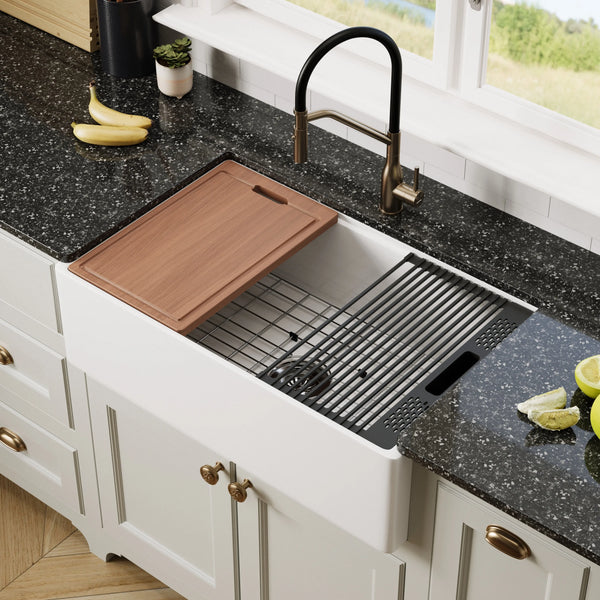
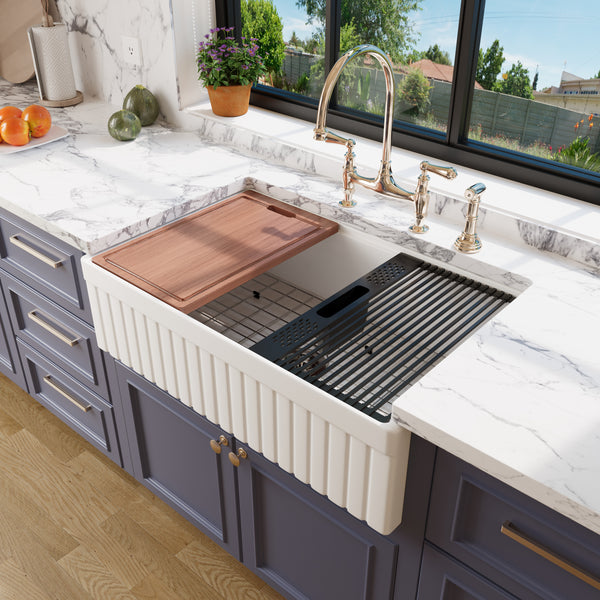
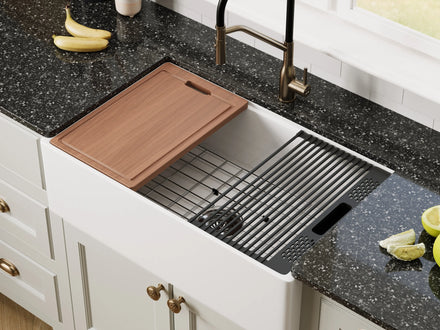
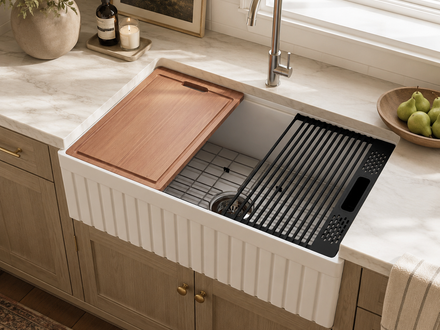
A workstation sink is a farmhouse sink with an integrated ledge or track molded into the upper rim of the bowl. That ledge lets accessories slide along the top of the sink instead of sitting inside it or taking up counter space. A typical kit includes a cutting board that spans the opening, a colander or strainer, a drying rack, and a bottom grid that protects the basin floor. Some setups add a small caddy or a roll-up mat.
For another design-led take on this same idea, Lord Decor's guide to making a kitchen sink zone work harder shows why ledges, drying space, and prep flow are becoming part of the buying conversation, not just accessory extras.
The key idea is that the sink becomes a small prep station with layers. You can rinse produce in a colander on the ledge, slide it aside, drop a cutting board over the bowl, chop, then sweep scraps straight into the basin below. Nothing competes for counter real estate because the work is happening over the sink, not next to it.
How it changes your daily prep flow
The benefit most people underestimate is reclaimed counter space. In a galley or apartment kitchen, the sink area is often the largest uninterrupted surface you have, and a workstation ledge effectively turns that surface into usable prep area on demand. You gain the footprint of the cutting board without losing the counter to it permanently.
The second benefit is a tighter rinse-cut-clear loop. Washing vegetables, slicing them, and clearing trimmings normally means walking between the sink, a board on the counter, and the trash. Over the bowl, those steps stack vertically. It sounds minor until you do it for a few weeks, then go back to a flat sink and notice how much shuffling you were doing.
It is worth being honest about the limits. The cutting board sits over the bowl, so you cannot run water and chop at the exact same spot at the same time; you slide the board to access the basin. And a workstation does not replace a large island for big holiday cooking. What it does well is make everyday, one-or-two-person prep faster and tidier.
Smooth vs fluted apron: a style choice, not a performance one
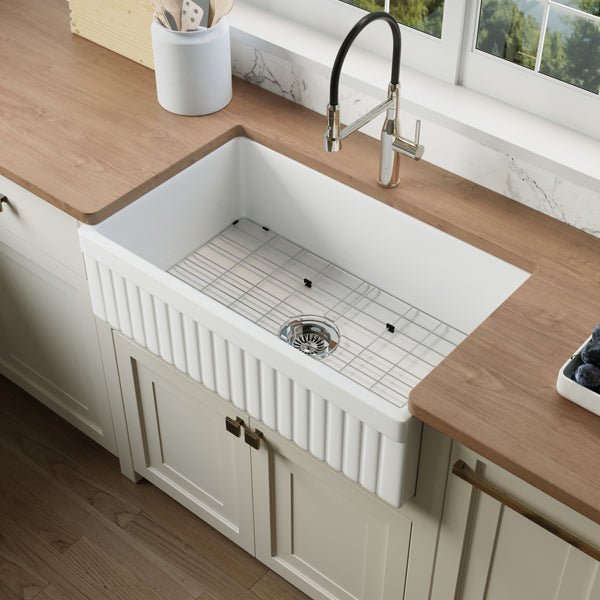
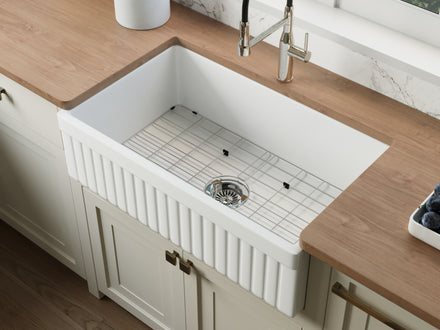
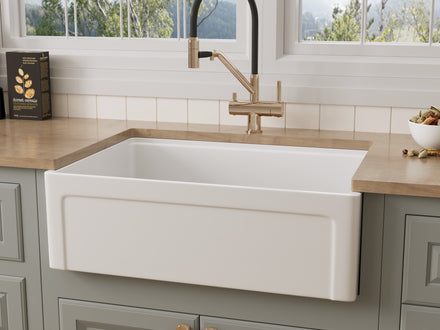
Workstation farmhouse sinks come with different apron fronts, and this is purely aesthetic rather than functional. A smooth, flat apron reads clean and modern and tends to suit minimalist or transitional kitchens; our 33-inch smooth-apron model with a workstation kit is a good example of that pared-back look. A fluted apron adds vertical texture and a more traditional, cottage-leaning character.
Some buyers also like a reversible apron, where one face is smooth and the other is detailed, so the same sink can lean modern or classic depending on which way it is installed. None of this affects how the workstation performs; the ledge and accessories work the same regardless of the front. Choose the apron that matches your cabinetry and hardware, not because one cleans better than the other.
Accessory quality and fit are where it lives or dies
A workstation is only as good as the parts that ride on it. The single most common disappointment we hear about cheaper kits is loose tolerances: a cutting board that bows in the middle, a colander that rattles, or accessories from a different brand that do not seat in the track. Because the ledge is a precise channel, accessories really should be designed for that exact sink. A board sized a few millimeters off will either jam or slide too freely.
Material matters too. Look for a solid, dense cutting board that will not warp after repeated washing, a colander in stainless or a rigid food-safe composite, and a bottom grid with feet so it lifts the basin floor and lets water drain underneath. If you want to go deeper on what each piece does and how to maintain it, our guide to farmhouse sink accessories breaks down the full ecosystem. The practical takeaway: buy the sink and its accessory set together so fit is guaranteed, rather than chasing universal parts later.

What open-house buyers and renters actually notice
People shopping a home rarely study the sink's spec sheet, but they do react to it. A farmhouse sink with a visible apron front is already a focal point that signals a considered kitchen, and a workstation ledge with a cutting board staged on it reads as "this kitchen is set up to cook in." Agents and stagers lean on these visual cues, and browsing design galleries like the kitchen design coverage on Houzz is an easy way to see how often an apron-front sink anchors a kitchen photo.
That perceived value carries into resale and rental appeal. A fireclay farmhouse sink in particular tends to outlast trend cycles, which is part of why it holds appeal years after install; we dig into that in our look at whether fireclay farmhouse sinks add resale value. For renters and short-term-stay hosts, the workstation accessories also photograph well and make a small kitchen feel more capable than its square footage suggests.
How to choose the right workstation sink
A few practical filters will narrow your options quickly.
- Size and cabinet base. A 30-inch sink fits a standard 33-inch base; a 33-inch sink usually wants a 36-inch base. Confirm your cabinet opening before anything else, because the apron and ledge leave little room to fudge.
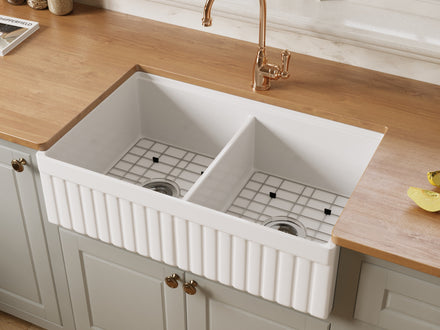
- Single vs double bowl. A single bowl gives you one wide, uninterrupted workstation surface and easily handles roasting pans. A double bowl lets you separate tasks, and a workstation track over a divided basin, like our 33-inch double-bowl farmhouse sink with a workstation kit, can be genuinely useful if you like washing on one side and prepping on the other.
- Ledge depth and tier count. Some sinks have a single ledge; others offer a stepped or two-tier track so a colander can sit at one height while a board spans another. More tiers mean more staging flexibility but slightly less bowl depth.
- Accessory ecosystem. Check what is included and what is available later. A sink with a full, matched accessory line is more future-proof than one with a board and nothing else.
- Material and longevity. The workstation is a long-term fixture, so the body matters. Fireclay is kiln-fired at very high heat into a dense, vitrified body that resists staining and scratching; if you want the full picture on durability, see our breakdown of how long fireclay farmhouse sinks last.
So, is it worth it?
For most people who genuinely prep at the sink, yes. The workstation ledge is one of the rare upgrades that pays you back daily in counter space and a smoother cook flow, and it adds a visible, memorable detail that helps a kitchen show well later. The honest caveat is that the value scales with how much you actually use it; if your cooking is mostly heat-and-eat, a standard farmhouse sink will serve you just as happily. If you are leaning toward yes, browse our fireclay farmhouse sink collection to compare ledge layouts, apron styles, and accessory sets, and pick the one that matches how you really cook.