Vintage Farmhouse Sinks: What to Check Before You Buy One (and When New Fireclay Makes More Sense)
A homeowner's checklist for buying an old or antique farmhouse sink, plus an honest look at when a new fireclay sink is the simpler choice.

In this guide View sections +
A vintage farmhouse sink usually means an old apron-front or drainboard sink pulled from a house, a barn, or a salvage yard. Most are cast iron coated with porcelain enamel, though fireclay, soapstone, and copper examples also turn up. Before you pay for one, check three things: the surface, the drain, and how it was meant to mount. Those three checks decide whether the sink fits your kitchen or becomes a long project.
What Are Old Farmhouse Sinks Made Of?
Old farmhouse sinks came in a few common materials, and each one ages in its own way. Knowing the material tells you what damage to look for and what repairs are realistic.
- Cast iron with porcelain enamel: this is the most common vintage sink, and the enamel is glass fused to the iron. Once a chip reaches bare metal, rust starts and slowly lifts the enamel around it.
- Fireclay: old fireclay sinks, including the British Belfast and Butler styles, have a glazed clay body that stays very stable. Check for crazing, a web of fine lines in the glaze, and for chips along the rim.
- Soapstone: these sinks are soft, heavy, and unglazed, so they scratch easily and darken with oil over time.
- Copper: the surface color keeps changing as patina builds, and thin sheets can dent or flex, so check the seams and drain.

What Are Old-Fashioned Farmhouse Sinks Called?
Sellers use a few names, and each one describes a shape rather than a brand. Period trade catalogs preserved in the Building Technology Heritage Library show many of these sink forms as they were sold.
- Drainboard sink: a sink with one or two ribbed drying boards cast as part of the same piece. It replaces a section of counter, so it needs its own support.
- High-back sink: the back edge rises into a built-in backsplash, often with faucet holes drilled through it. Your faucet mounts on the sink, not the counter, which changes your plumbing layout.
- Belfast and Butler sinks: British names for deep, rectangular fireclay sinks with a plain front. A Belfast sink typically has an overflow, while a Butler sink typically does not.
- Wall-hung sink on legs: the sink hangs from a wall bracket and rests on two front legs, with no cabinet below. Moving one into a base cabinet means building a support it never had.
If you are picturing a kitchen sink from the 1920s, think high-back or drainboard. Many hung on the wall or stood on legs, in white enameled cast iron with the plumbing in plain view.
A 10-Point Vintage Farmhouse Sink Inspection Checklist
Bring a flashlight, a level, and a tape measure, and check every item before money changes hands. Each check is quick, and each one can change what the sink costs you later.

- Crazing: look for a web of fine lines in the glaze or enamel, especially near the drain. Light crazing is mostly cosmetic, but deep crazing holds stains and is hard to clean.
- Chips: run your hand along the rim, the corners, and the drain opening, where chips hide. On fireclay a chip exposes clay that will not rust; on cast iron it invites rust.
- Rust bloom: on cast iron, look for orange or brown staining around any chip. Rust under the enamel tends to spread, so a small bloom today is often bigger later.
- Worn or refinished surface: a dull, chalky patch means the glaze or enamel has worn through. Reglazed or refinished sinks look new, but the new coating typically does not last as long as the original.
- Cracks and old repairs: turn the sink over and check the underside and the corners with your flashlight. Filler, mismatched color, or a hairline through the body means someone has repaired it already.
- Warp: lay a level across the rim in both directions and along the front. A rim that rocks or dips leaves gaps against your counter and stresses the sink once seated.
- Drain size and position: measure the drain opening and note where it sits in the bowl. Old drains are often a non-standard size, while the modern kitchen standard is 3½ in. Plan on a special strainer or a plumber's visit if the two do not match.
- Faucet holes, overflow, and backsplash: count the holes, measure their spacing, and note whether there is an overflow. Old sinks often have a faucet spacing that is hard to match today, so check your faucet plan first.
- Mounting: figure out whether the sink was wall-hung, set on legs, or dropped into a counter. Each one needs a different support, and none matches a modern base cabinet without some carpentry.
- Weight and handling: ask the seller for a weight, or at least a material, and plan the lift before you pay. Cast iron drainboard sinks can be very heavy, and a dropped sink is usually a broken one.
One more thing is worth knowing before the sink comes home. Older glazes and enamels sometimes contained lead, and the EPA lists lead-glazed pottery and porcelain among household lead sources. Skip the hardware-store swab kits, though. The Consumer Product Safety Commission does not recommend them for consumer products, because they are not reliable enough. If the age of a sink worries you, a certified lab is the way to get a real answer.
What It Takes to Make a Vintage Sink Usable
A vintage sink rarely drops into a modern kitchen as-is, so budget for the work around it. None of it is exotic, but nearly all of it is custom.
- A custom cabinet or support: an old sink has its own height, depth, and apron shape. A stock cabinet needs cutting, plus a built-in frame for the weight.
- A custom countertop cutout: vintage rims are rarely square or flat, so the fabricator templates from the actual sink.
- Drain and plumbing changes: a non-standard drain may need a custom strainer, and a garbage disposal may not fit at all.
- Faucet and backsplash work: a high-back sink carries its own faucet holes, so those holes limit your faucet choice.
- Refinishing: a professional reglaze makes a worn sink presentable, but treat it as a cosmetic layer, not a new fired glaze.
When a New Fireclay Sink Makes More Sense
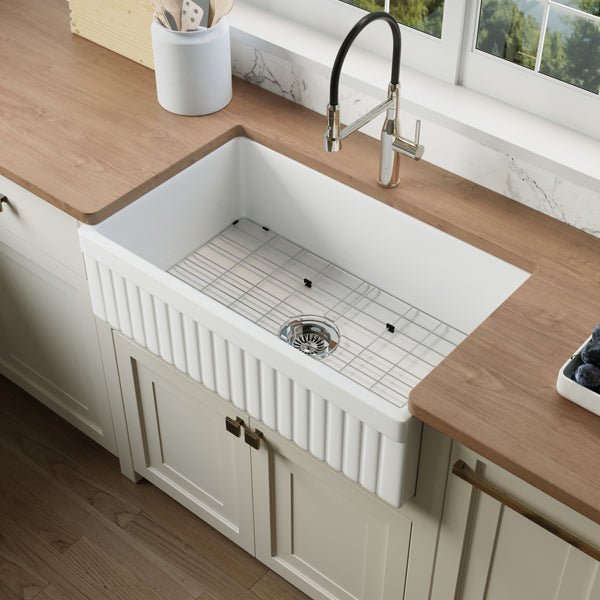
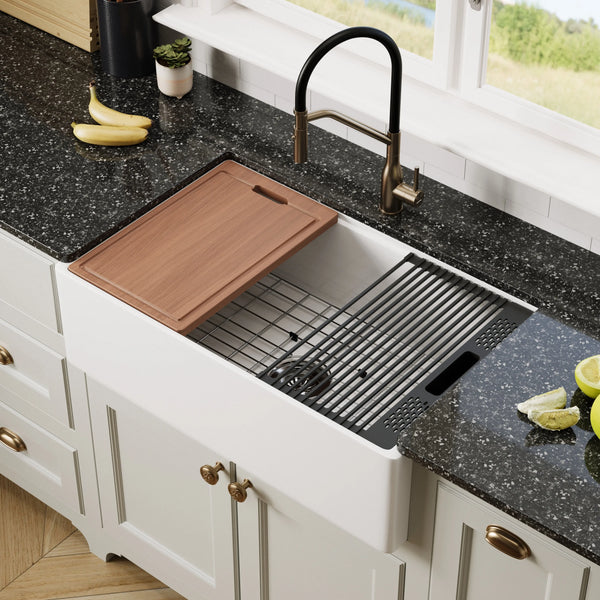
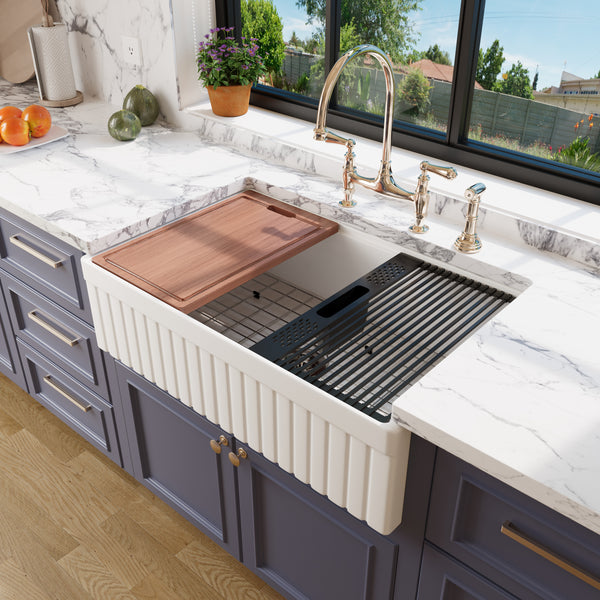
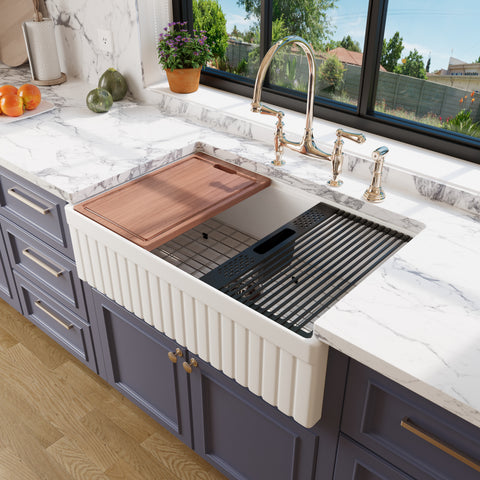
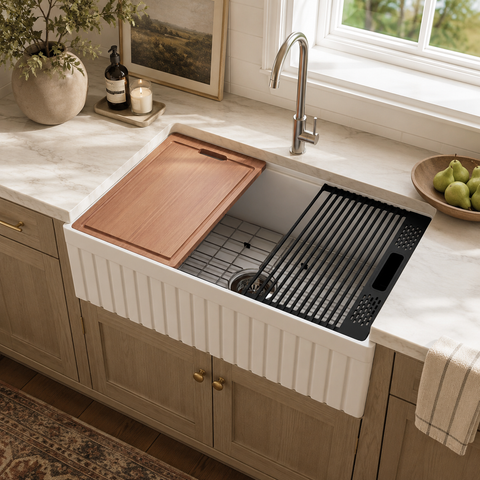
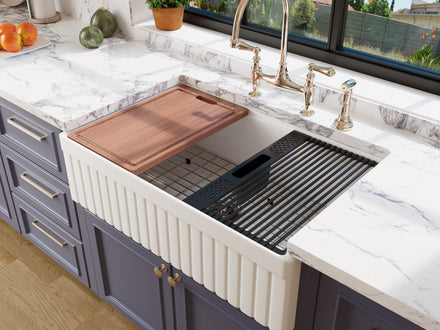
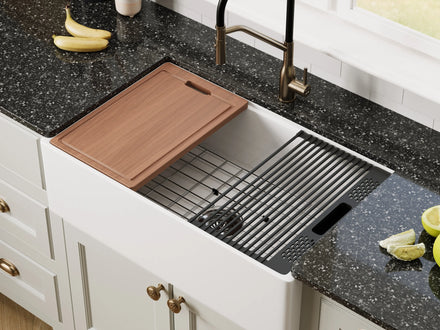
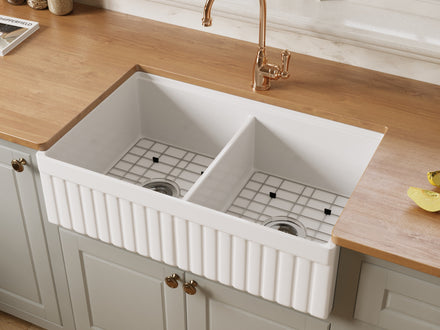
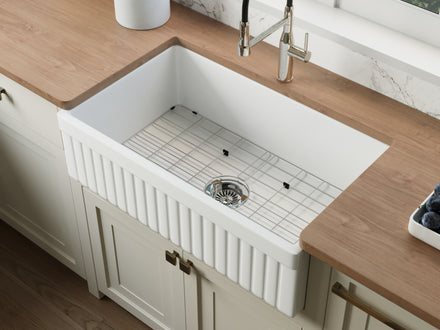
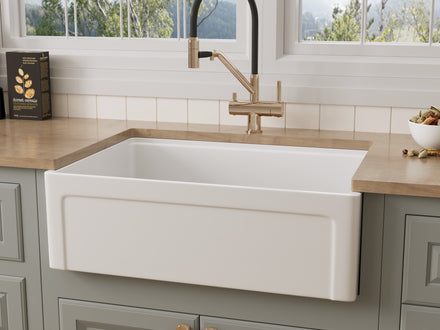
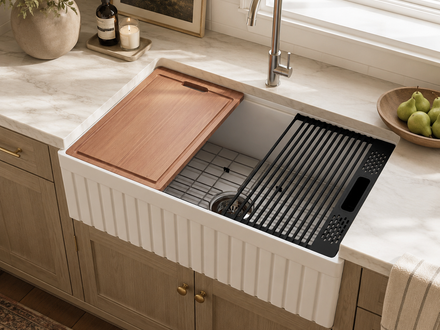
A new fireclay farmhouse sink gives you a similar deep, white, apron-front look with the fit questions already answered. That matters most when you are keeping a standard cabinet, hiring a counter fabricator, or planning a disposal.

| What changes | Vintage sink | New fireclay farmhouse sink |
|---|---|---|
| Drain | Often a non-standard size or position | 3½ in standard drain, disposal-ready |
| Mounting | Wall-hung, on legs, or dropped into a counter | Rests on a support frame inside the cabinet |
| Size | Custom cutout and cabinet work | 30 in fits a 33 in base; 33 in fits a 36 in base |
| Surface | Worn, chipped, or refinished | Glaze and body fused at about 2,200°F |
| Weight | Varies; cast iron can be very heavy | 100–115 lbs (45–52 kg), with a planned support |
| Coverage | Usually sold as-is | Limited Lifetime Warranty on the sink body |
NOZLOO sinks are white-glazed fireclay in 33×20×10 in or 30×20×10 in sizes, single bowl or double bowl. There are no faucet holes in the sink, so the faucet mounts in the counter behind it. The sink body carries a Limited Lifetime Warranty, and accessories carry a 1-year accessory warranty.
Each sink weighs 100–115 lbs (45–52 kg) empty, and a support frame in the cabinet carries that weight to the cabinet floor. The counter meets the rim as an undermount or flush edge, never as a drop-in. See the cabinet size guide for base cabinet pairing and the fireclay farmhouse sink collection for six models.
Neither path is wrong, and a rescued drainboard sink can outlast the cabinets around it. If you want very little custom work, a new fireclay sink is the simpler route to a similar look.

Frequently Asked Questions
What are old farmhouse sinks made of?
Many old farmhouse sinks are cast iron coated with porcelain enamel, which is glass fused to the metal. Fireclay sinks, including British Belfast and Butler styles, are glazed clay fired as one piece. Soapstone and copper sinks also turn up, though you will see them less often. A magnet sticks to cast iron and not to the others, which is a quick way to tell.
What did kitchen sinks look like in the 1920s?
Kitchen sinks from that era were typically white enameled cast iron with a high back and often a built-in drainboard. Many hung on the wall with the plumbing exposed, or stood on two front legs. Enclosed cabinets below the sink were less common then, which is why these sinks usually need a custom support today.
What are the drawbacks of a farmhouse sink?
Weight, cabinet work, and the exposed apron are the main drawbacks of any farmhouse sink. The cabinet needs a cut for the apron and a frame to carry the weight. The apron sits in the open, so it shows water spots and catches the odd knock. A vintage sink adds drain size and faucet fit, and our guide to fireclay sink problems covers the new-sink side.
Are farmhouse sinks still popular?
Yes, and the number of people hunting for vintage sinks is one sign of that. Deep single bowls and white apron fronts remain a common choice in both new builds and remodels. What has changed is the pairing, with cleaner cabinets and less rustic decor around the sink. A vintage sink and a new fireclay sink can both fit that direction.