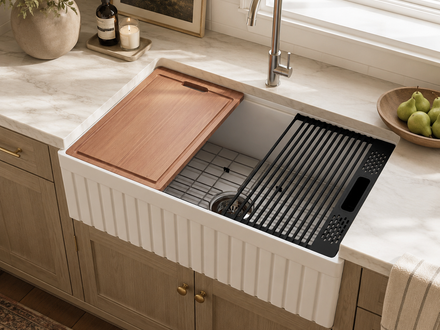
Fireclay Sink Pros and Cons — The Honest Truth Before You Buy

Quick answer: Fireclay sinks are a strong choice if you want a durable, low-maintenance farmhouse sink with a timeless white look. They resist scratches, chips, and stains, handle high heat, and stay bright white for years. The main downsides are heavy weight, higher cost than stainless steel, limited color options, and the fact that even quality fireclay can chip under hard, direct impact. Whether the pros outweigh the cons comes down to your budget, your cabinetry, and how long you plan to stay in your home.
- Pros: highly durable, non-porous and easy to clean, heat resistant, classic farmhouse look, deep basin for large pots.
- Cons: heavy (80–150+ lbs, needs reinforced cabinets), pricier ($500–$1,500+), limited to white/off-white, can chip under hard impact.
- Best fit: homeowners doing a remodel who want a lasting white farmhouse sink with proper cabinet support.
- Skip it if: you're on a tight budget, want the lowest-maintenance sink (stainless wins), or need bold colors.
We installed our first fireclay farmhouse sink about four years ago during a kitchen remodel that was already over budget. The sink was one of the pricier line items, and I'll admit — I had second thoughts standing in the showroom. Was this really better than a $300 stainless steel option?
Four years of daily abuse later, I have a pretty clear answer. But it's not a simple "yes" or "no," and that's exactly why I wanted to write this.
My short answer, four years in: for a remodel where you can support the weight and you want a white farmhouse sink that still looks new years later, it's worth it. For a rental, a tight budget, or if you need color options, it usually isn't. The rest of this guide is the why behind that call.
Keep reading for the full breakdown.
What is a fireclay sink, and what is it made of?
A fireclay sink is a kitchen sink shaped from clay, coated with glaze, and fired in a kiln until the body and glaze fuse into one dense piece. Fireclay is the material. Farmhouse, apron-front, single bowl, and double bowl are style and layout choices built around it.
What fireclay is
Fireclay is a type of clay that holds up under very high kiln temperatures. That property lets a sink body be fired hot enough to vitrify, which means the clay particles melt together into a glass-like solid.
How a fireclay sink is made
- Fine clay blended with minerals is formed into the sink body. On a NOZLOO sink, the walls are 1 inch (22 to 25 mm) thick.
- The dried body is coated with a white glaze.
- Body and glaze are fired together at about 2,200°F. At that heat they fuse into a single vitrified piece.
What that means at the sink
- The glaze is non-porous. Water, coffee, and food residue stay on the surface instead of soaking in, so mild dish soap, warm water, and a soft cloth handle most cleanup.
- The body is thick and dense. A NOZLOO 30- or 33-inch farmhouse model weighs 100 to 115 pounds (45 to 52 kg). It feels solid and permanent, and it needs a support frame inside the cabinet rather than resting on the countertop alone.
Fireclay is part of the ceramic family, but the words are not interchangeable in sink shopping. A porcelain sink can be solid porcelain or enamel over another base, while a fireclay sink is one fired-clay body with the glaze fused in the same firing. For a side-by-side look, read our guide to fireclay vs ceramic sink differences.
What are the fireclay sink pros and cons at a glance?
| Pros | Cons |
|---|---|
| Highly durable for daily kitchen use — resistant to scratches and most chips | Heavy — most models weigh 80–150+ lbs, requiring reinforced cabinetry |
| Non-porous surface makes stain cleanup simple | More expensive than stainless steel or composite options |
| Handles high temperatures better than most sink materials | Limited color variety (mostly white and off-white) |
| Classic farmhouse style that doesn't go out of fashion | Can chip under hard, direct impact |
| Deep basin with ample space for large pots and baking sheets | Apron-front style may require cabinet modification |
Now let's get into the details.
What makes fireclay different from other sink materials?
Before we dig into the pros and cons of fireclay sinks, it helps to understand what you're actually buying. Fireclay isn't just a fancy word for ceramic or porcelain — the manufacturing process is fundamentally different.
Fireclay sinks are molded from a dense clay blend and fired at extremely high temperatures (usually above 2,200°F). That intense heat fuses the clay and glaze into a single, unified body. Compare that to porcelain or porcelain enamel sinks, where a coating is applied over a base material like cast iron. The glaze on a fireclay sink isn't sitting on top — it's baked into the material itself.
That distinction matters more than most people realize. It's why fireclay behaves so differently from cast iron or porcelain sinks when you accidentally drop a heavy pot on it. If you want the full breakdown on the material science, we wrote a detailed piece on what makes fireclay different from other sink materials — it's worth reading if you're the research type.

What are the main advantages of a fireclay sink?
Durability That Actually Holds Up
Durability is the single biggest reason to go fireclay. Because the material is fired at such high temperatures, you get a sink that's highly resistant to chips, scratches, and cracks under normal kitchen use. I've banged cast iron pans, dropped dishes, and scraped pots across the basin more times than I can count. The surface has held up remarkably well in our daily use.
That said, "durable" doesn't mean indestructible — I'll get to that in the cons section. But compared to porcelain enamel over cast iron, where the coating can chip and expose the metal underneath, fireclay holds up noticeably better in a busy kitchen.
The Look: Timeless and Not Going Anywhere
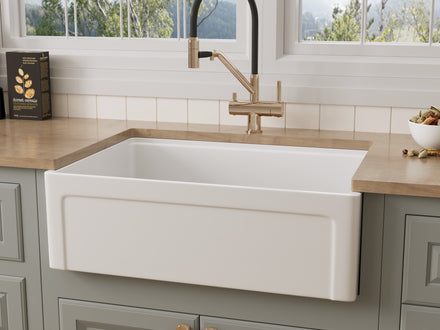
Here's something that doesn't get enough credit: fireclay sinks have a classic look that doesn't date itself. The thick, slightly rounded profile of a fireclay farmhouse sink has an aesthetic appeal that works in modern kitchens, traditional spaces, and everything in between.
The glossy finish catches light beautifully. And because the glaze is integral to the body, it tends to remain bright white (or off white, depending on what you choose) years down the road. A lot of people worry about white sinks looking dingy over time — with fireclay, that's rarely a problem if you're doing basic upkeep.
Whether you pair it with an unlacquered brass faucet or a modern pull-down faucet, the farmhouse style manages to feel current without chasing trends.
Non-Porous Means Easy Maintenance
Fireclay is a non-porous material, which is a bigger deal than it sounds. Non-porous means liquids — coffee, wine, tomato sauce — can't seep into the surface. Stains sit on top rather than soaking in, so a quick wipe usually takes care of it.
Day-to-day, keeping a fireclay sink clean is pretty straightforward. Warm water, a soft cloth, maybe a little baking soda for tougher stains. No special cleaners needed. That easy maintenance is one of the things I appreciate most — especially compared to some other materials that need regular sealing or careful chemical management.
We put together a full guide on how to keep your fireclay sink sparkling clean if you want the specifics on daily care and deep cleaning.
Heat Resistance You Can Count On
Because fireclay is fired at such high temperatures during manufacturing, the finished product handles heat well. You can run hot water straight from a kettle without the same heat sensitivity you'd see in some other sink materials — though using a bottom grid is still a smart safeguard if you regularly move hot pans off the stove.
That's a real advantage over some composite and acrylic options that can warp or discolor from repeated heat exposure.
Ample Space for Real Cooking
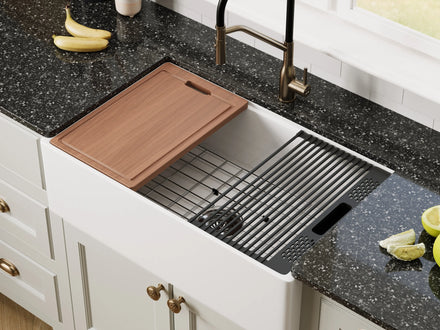
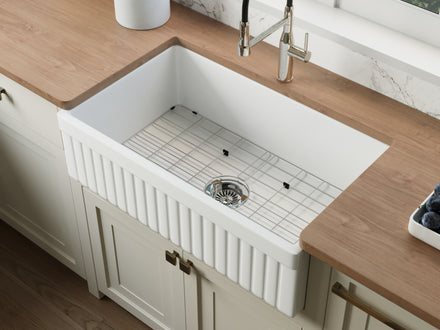
Most fireclay farmhouse sinks — especially the apron front style — offer a genuinely deep, wide basin. We're talking enough room for large pots, baking sheets, and those awkward cutting boards that never fit in a standard sink.
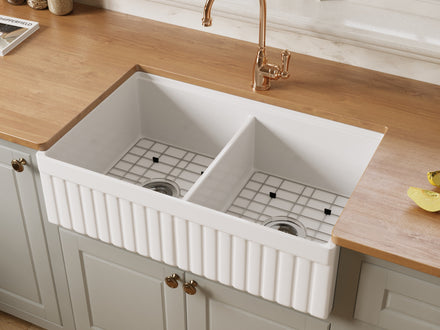
If you cook regularly, that ample space isn't a luxury — it's functional. Single-bowl fireclay sinks maximize usable space for large pots and baking sheets, while double-bowl options work better if you prefer separate wash and rinse zones.
What are the downsides nobody talks about with fireclay sinks?
Okay, here's where I stop pulling punches. Fireclay sinks have real downsides, and pretending they don't would make this guide useless.
The Weight Problem Is Real
A fireclay farmhouse sink can weigh anywhere from 80 to over 150 pounds depending on size and thickness. That's not a minor detail. Your cabinetry needs to be reinforced to support that kind of load, and installation is basically a two-person job minimum.
During our kitchen remodel, the contractor needed to build a custom support frame inside the base cabinet. That added time and cost we hadn't fully budgeted for. If you're retrofitting an existing kitchen — not doing a full remodel — make sure your cabinets can actually handle the weight before you order.
Price: Let's Not Dance Around It
Fireclay sinks are not budget friendly. A quality fireclay farmhouse sink typically runs $500 to $1,500+, depending on brand positioning. Mid-tier DTC brands start around $500; showroom brands like Rohl or Shaws can exceed $1,500. That's a significant gap.
Is the extra cost justified? I think so — if you value durability, aesthetics, and plan to stay in your home long enough to appreciate the longevity. If you're renovating a rental on a strict budget, stainless steel will serve you fine. But if the look matters to you, mid-tier DTC brands have made fireclay accessible around $500 — a real step up from a $300 stainless sink, and a very different order of magnitude than the $1,200 showroom premium.
Chipping: Less Common Than You Think, But Not Impossible
Here's one of the biggest concerns people have: do fireclay sinks chip? The honest answer is that quality fireclay sinks are much more resistant to chipping than porcelain-coated cast iron. But they're not chip-proof.
Drop a heavy ceramic dish from counter height directly onto the rim? Yeah, you might get a small chip. The good news is that small chips don't typically spread or affect the sink's functionality, and repair kits exist.
We wrote a whole piece on common fireclay sink problems and how to prevent them — definitely worth reading if chipping is one of your biggest concerns.
Limited Style Variety
Fireclay sinks mostly come in white or off white. If you're dreaming of a matte black or deep graphite sink, fireclay options are slim. Some manufacturers offer a few colors, but the selection doesn't compare to what you'll find in granite composite or stainless steel.
For the classic style and farmhouse aesthetic? Fireclay nails it. For bold, unconventional color choices? You'll probably need to look at other materials.
Potential for Surface Marks
While fireclay won't stain easily thanks to being non-porous, you might notice scuff marks from aluminum cookware or dark-bottomed pots and pans. These aren't actual scratches in the glaze — they're metal deposits sitting on the surface.
They come off easily with a gentle abrasive like Bar Keepers Friend. But if you've never seen it happen, it can look alarming the first time your brand-new white sink suddenly has gray streaks across it.


What Are the Pros and Cons of Fireclay Sinks?
The short version: fireclay's pros — durability, easy cleaning, heat resistance, and a timeless white farmhouse look that won't absorb stains or odors — tend to win for most people doing a remodel. Its cons — weight, higher cost than stainless, limited colors, and chip risk under hard impact — carry more weight for renters and tight budgets.
For most homeowners doing a kitchen remodel who want a farmhouse sink they won't have to replace in five years, the pros win. For renters or anyone on a strict budget, the cons win.
What Are the Downsides of Fireclay Sinks?
The downsides that come up most often — and how to manage each one:
Weight and installation complexity. You'll likely need reinforced cabinetry and professional help. This isn't a weekend DIY swap.
Cost. Expect to pay more than a comparable stainless steel sink — typically 1.5–2x for mid-tier fireclay, 3–5x for showroom-tier brands. The material, the manufacturing process, and the weight all contribute.
Chipping risk under extreme impact. It's uncommon with quality fireclay, but it can happen. A sink grid and careful handling go a long way toward prevention.
Color limitations. If white or off white doesn't fit your kitchen vision, fireclay probably isn't the right material for you.
These downsides are real, but they're also predictable and manageable — especially if you know about them before you buy.
What Is the Drawback of a Farmhouse Sink?
This one is worth separating from the material question. The farmhouse (apron front) style has its own set of trade-offs regardless of whether it's fireclay, cast iron, or stainless steel:
The apron front design means the front panel is exposed and sits flush with — or slightly forward of — your cabinetry. That requires either a custom cabinet, a sink-base modification, or a purpose-built opening. You can't just drop it into a standard countertop cutout.
The exposed front panel also takes more bumps. Kitchen chairs, kids, your own hip — the apron front sees contact that a standard undermount or drop-in sink would never get.
But here's my take: the aesthetic payoff and the extra workspace make it worth the trade-off for most kitchens. You just need to go in with your eyes open about installation requirements.
What Is the Least Maintenance Kitchen Sink?
If lowest maintenance is your only criteria, stainless steel is usually the easiest overall — it's light, forgiving, and almost impossible to damage structurally. You'll deal with water spots and scratches, but functionally it asks very little of you.
But if you want a white farmhouse look with relatively easy maintenance, fireclay is one of the strongest options in that category. The non-porous, stain-resistant surface means your daily routine is basically warm water and a cloth. No sealing, no special products, no worrying about rust. For a sink that looks this good, the easy cleaning is a genuine advantage.
How does fireclay compare to cast iron, porcelain, stainless steel, and granite composite?
Here's the quick side-by-side, then the nuances that matter:
| Material | Weight | Cost vs stainless | Heat resistance | Chip / wear risk | Colors | Look |
|---|---|---|---|---|---|---|
| Fireclay | Heavy (80–150+ lbs) | 1.5–5× | Excellent | Good — not chip-proof | White / off-white | Classic farmhouse |
| Cast iron | Heavy | ~2–4× | Good | Enamel can chip → exposed iron rusts | Several | Classic |
| Porcelain | Medium | Lower | Poor (can craze) | Scratches / chips more readily | White / some colors | Glossy |
| Stainless steel | Light | Baseline | Good | Won't chip, but scratches / water spots | Metallic only | Modern / utility |
| Granite composite | Heavy | Comparable–higher | Fair (heat-sensitive) | Good, but matte finish shows residue | Many colors | Modern / matte |
The two nuances worth remembering: with cast iron, durability depends on the enamel coating — once it chips, the exposed iron underneath can rust, which fireclay avoids because the glaze is part of the body itself. And granite composite wins on color variety but is more sensitive to extreme heat and can need more careful cleaning, where fireclay is more forgiving.
Stainless is a different product for a different priority: lighter, cheaper, and virtually unbreakable, but it won't give you the farmhouse look. And porcelain gives you a similar white, glossy finish to fireclay, just in a less dense, more chip-prone form.
Are fireclay sinks good, and who should buy one?
After four years of living with a fireclay sink, here's how I'd break it down.
Fireclay is a good fit if:
- You want a white or off-white farmhouse sink with timeless elegance
- You care about durability and long-term appearance
- You're already doing a kitchen remodel or new house build with proper cabinet support
- You want a sink material that's easy to keep clean without special products
Fireclay may not be the best fit if:
- You're on a tight budget and need a budget-friendly option
- You want the absolute lowest-maintenance sink possible (stainless steel wins there)
- You need more color flexibility than white or off white
- You're retrofitting an existing kitchen without the option to modify your cabinetry
If Fireclay Still Sounds Right
If you've decided the pros outweigh the cons, the next step is comparing depth, apron style, and included accessories — not just price. Those details matter more than most first-time buyers expect. Every review we publish — good or bad — is collected and verified by Judge.me; you can read all of them on our fireclay sink reviews page.
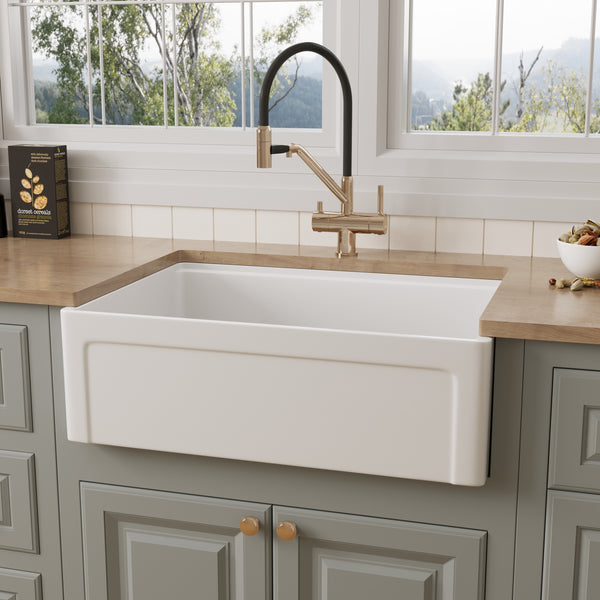
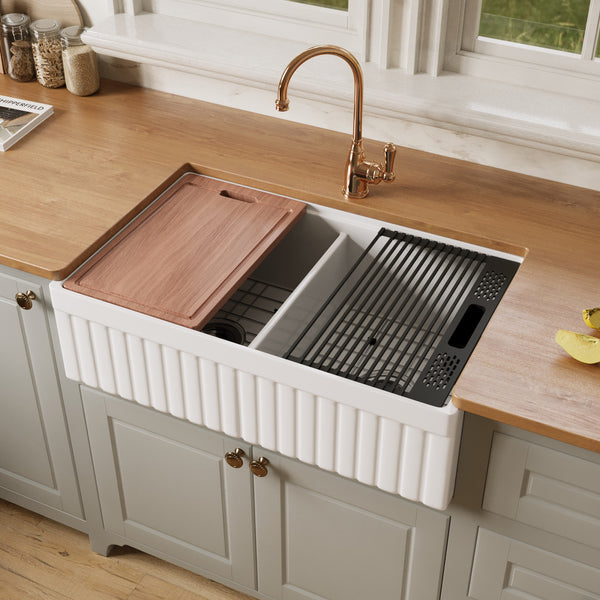
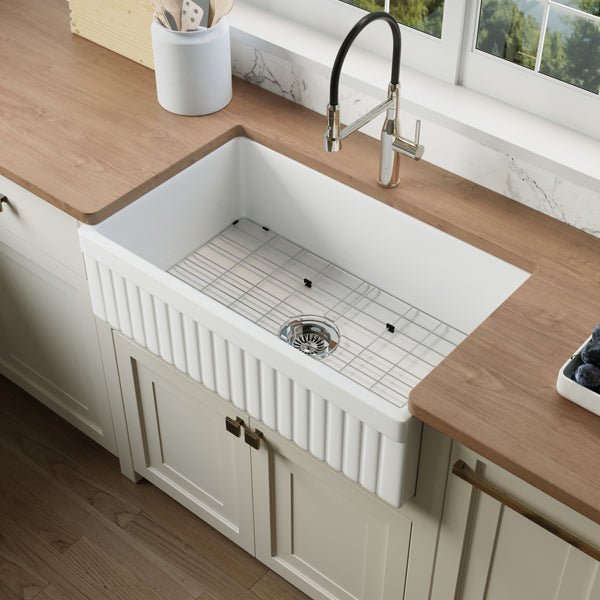
Our smooth apron fireclay farmhouse sink is our featured model and a good place to start — it's designed with the kind of thickness and glaze quality we've been talking about throughout this article. Every NOZLOO sink comes with a limited lifetime warranty, which says something about how much we trust the material.
Related guides: fireclay vs ceramic sinks
If those tradeoffs fit your kitchen, the 33-inch fireclay farmhouse sinks show single-bowl, double-bowl, and standard options side by side.