Fireclay vs Traditional Ceramic: What’s the Difference?

Fireclay and ceramic sinks sit next to each other in showrooms and look nearly identical — same white glossy finish, same smooth basin, same farmhouse appeal. And then one costs four times more than the other.
That price gap isn't random. It comes down to how each material is made, and that manufacturing difference affects everything: how it handles scratches, how it ages, how much work it takes to keep clean, and how long you can expect it to last.
If you're choosing between the two for a kitchen or bathroom remodel, the distinction matters more than most comparison articles let on. Here's what we've learned from living with both.
Fireclay vs Ceramic Sink at a Glance
| Fireclay | Standard Ceramic | |
|---|---|---|
| What it is | Clay + glaze fused at 1,600–2,200°F | Clay + glaze fired at 800–1,200°F |
| Surface | Non-porous, glaze fused into body | Glaze sits as a separate top layer |
| Scratch resistance | High | Moderate — glaze wears over time |
| Chip resistance | Good under normal use | Lower — edges and glaze chip more easily |
| Stain resistance | Strong — non-porous surface | Decent when new; degrades as glaze wears |
| Heat tolerance | High — born in extreme heat | Moderate — risk of crazing from thermal shock |
| Weight | Heavy (80–100 lbs typical) | Lighter, easier to handle |
| Lifespan (kitchen use) | Often 15–25+ years | Typically 5–10 years before visible wear |
| Price (sink only) | $600–$1,400+ | $80–$400 |
| Best for | Kitchen sinks, farmhouse style | Bathroom sinks, budget-friendly projects |
First: How Ceramic, Porcelain, Vitreous China, and Fireclay Relate to Each Other
This is where most of the confusion starts, so let's sort it out.
Ceramic is the broad category. Any sink made from clay and hardened by heat is technically ceramic. That includes everything below.
Porcelain is a specific type of ceramic — typically a finer clay body fired at moderate temperatures with a glaze applied on top. In the sink world, "porcelain" and "ceramic" are used almost interchangeably. When someone says "porcelain sink" in a store, they usually mean a standard ceramic sink with a glossy glaze coating. Some porcelain sinks also refer to a cast iron or steel base with a porcelain enamel coating — that's a different product entirely (closer to a cast iron sink).
Vitreous china is a step above standard porcelain. It uses a denser clay body and a thicker glaze, fired at higher temperatures. You'll see vitreous china most often in bathroom sinks and toilets. It's more durable than basic ceramic, but still not in the same class as fireclay.
Fireclay is at the top of the ceramic family. It uses a high-kaolin clay, shaped (often by hand), and fired at 1,600–2,200°F — roughly double the temperature of standard ceramic. At those temperatures, the clay and glaze fuse together into one unified piece. There's no separate "coating" to chip off. That's the fundamental difference.
So when you're comparing a "ceramic sink" to a "fireclay sink," you're really comparing a standard-grade product to a premium one within the same material family.
Where the Firing Temperature Actually Matters
The temperature difference sounds like a technical detail, but it drives every practical difference between these two sinks.
Standard ceramic is fired at 800–1,200°F. The glaze and clay body remain two distinct layers. The glaze gives you that smooth, glossy finish and initial stain protection — but it's essentially a coating sitting on top of a softer base. Over time, that coating can wear thin, scratch, or chip, exposing the porous clay underneath.
Fireclay is fired at 1,600°F or higher. The heat is intense enough to merge the glaze and clay into a single material. The surface isn't a layer on the sink — it is the sink. That's why fireclay holds up to daily use in ways standard ceramic doesn't.
This isn't marketing language. It's material science, and it's the reason fireclay sinks generally cost more and last longer.
Durability in a Real Kitchen
Fireclay
The fused construction makes fireclay resistant to the kind of wear a kitchen sink actually sees — dragging pots across the basin, dropping utensils, scrubbing stuck-on food. Under normal household use, the surface holds up well without showing marks.
Can fireclay chip? It can, though it takes a fairly significant impact — something heavy hitting the rim or edge at a bad angle. It's not common, but it's worth knowing. A quality brand will typically cover this under warranty.
Ceramic
Standard ceramic sinks are more vulnerable in a kitchen setting. The glaze chips more easily, especially on the edges where dishes and cookware make contact. Once a chip exposes the clay body underneath, that spot becomes a magnet for stains and moisture.
For lighter-duty use — bathroom sinks, powder rooms, a butler's pantry — ceramic holds up well enough. For a kitchen sink that's handling pots, pans, and cast iron cookware daily, the difference in durability becomes noticeable within a couple of years.
Stain Resistance
Fireclay's non-porous surface means liquids don't absorb. Coffee, wine, tomato sauce — they sit on top and wipe away. This stays true over the life of the sink because the surface doesn't degrade with use.
Ceramic starts out stain-resistant too, thanks to its glaze. The issue is longevity. As the glaze wears down from daily use and cleaning, the surface gradually becomes more porous. Stains that wiped off easily in year one start setting in by year three or four. It's a slow process, but it's the most common frustration we hear from homeowners who chose ceramic for their kitchen.
Heat Resistance
Fireclay was formed at extremely high temperatures, so household heat sources — hot pans, boiling water, steam — don't cause problems. You can drain pasta directly into a fireclay sink or set a hot skillet down without concern.
Ceramic is more sensitive to sudden temperature swings. Pouring boiling water into a cold ceramic sink — or going rapidly from hot to cold — can cause crazing, which looks like a web of hairline cracks in the glaze. Crazing is cosmetic at first, but over time those micro-cracks trap dirt and stains. Once it starts, it doesn't reverse.
For kitchen sinks specifically, where hot water and hot cookware are part of every meal, fireclay's heat tolerance is a meaningful advantage.
Daily Maintenance
Fireclay
Close to effortless. Soap, water, a soft cloth — that's the routine. The non-porous surface doesn't hold water spots the way some other materials do. No special cleaning products required. The one thing to avoid: harsh abrasive scrubbers, which could dull the glaze over time. But for day-to-day use, fireclay is about as low maintenance as a kitchen sink gets.
Ceramic
Similar routine when new — soap and water works fine. But as the glaze wears, maintenance creeps up. You may find yourself scrubbing harder to remove stains that used to wipe right off. Chips need touch-up repair to prevent moisture from getting into the clay body. Some lower-quality ceramic sinks may need periodic re-sealing.
The gap in maintenance effort between fireclay and ceramic is small on day one. It widens steadily with each year of use.
Style: How They Look in a Kitchen
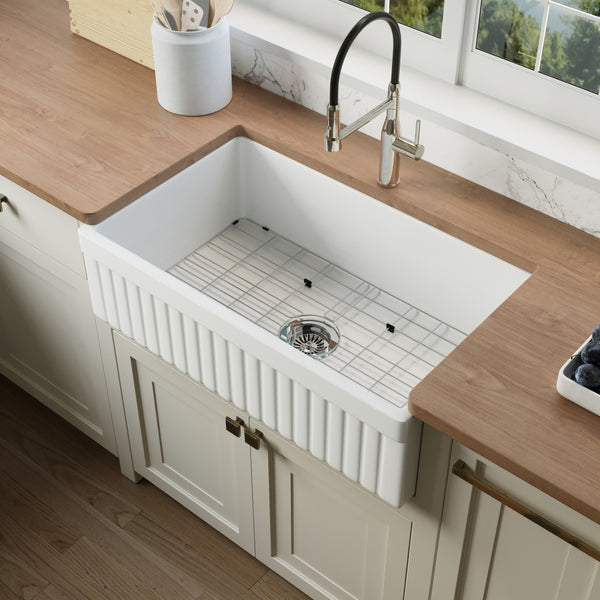
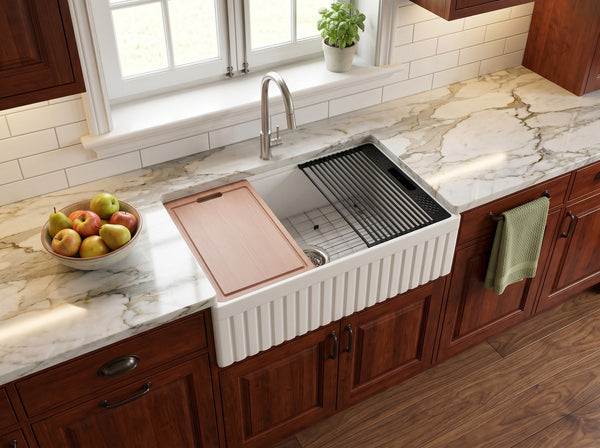
Both materials deliver that clean, white, glossy finish that defines the farmhouse aesthetic. From a few feet away, a ceramic farmhouse sink and a fireclay farmhouse sink can be hard to tell apart.
The differences are subtle but real. Fireclay tends to have a slightly warmer tone and a denser feel to the surface. Because many fireclay sinks are handcrafted rather than mold-pressed, there are small variations that give each piece its own character. Ceramic sinks look more uniform — clean and polished, but less distinctive.
For farmhouse and apron front styles, fireclay is the more traditional choice. The deep basin, exposed front panel, and warm white finish are what made farmhouse sinks popular in the first place — and fireclay is the material most closely associated with that look.
For modern kitchens, bathrooms, and secondary spaces, ceramic offers more variety. You'll find ceramic sinks in a wider range of colors, shapes, and sizes, including designs for bathroom vanities, bar sinks, and utility rooms.
Color is a real differentiator: fireclay is mostly available in white and off-white (with some black options), while ceramic comes in a broader palette.
Cost: What You're Actually Paying For
Standard ceramic sinks start around $80–$400. They're lighter, so installation is simpler and labor costs are lower.
Fireclay farmhouse sinks run $600–$1,400+. The higher price reflects the raw materials, the intensive firing process, and the weight (which adds to shipping and installation). A fireclay apron front sink may also require cabinet modifications or reinforcement to handle 80–100 pounds of sink.
Is the premium worth it? That depends entirely on where the sink is going and how long you plan to keep it.
For a kitchen you're investing in for the long haul, fireclay's durability means you're less likely to face a replacement cycle in 5–8 years. Factor in the cost of a second ceramic sink plus installation, and the lifetime numbers get closer than the sticker price suggests.
For a guest bathroom, a rental property, or a quick refresh on a tight budget — ceramic is the sensible call.
How Fireclay and Ceramic Compare to Other Sink Materials
Cast iron sinks have a similar look to fireclay — a porcelain enamel coating over a heavy iron base. They're extremely strong, but the enamel can chip, and if it does, the exposed iron rusts. Cast iron sinks are also heavier than fireclay (some weigh 150+ lbs), making installation more involved. If you're choosing between fireclay and cast iron, fireclay is generally easier to maintain.
Stainless steel sinks are the most common kitchen sink material in the U.S. — affordable, lightweight, and durable against impacts. The tradeoff is visible scratching and water spots. A very different aesthetic from either fireclay or ceramic.
Porcelain enamel over steel (sometimes marketed as "porcelain sinks") combines a metal base with a porcelain coating. Lighter and cheaper than fireclay or cast iron, but the enamel layer can chip and wear, similar to standard ceramic.
The Bottom Line
Choose fireclay if:
- You're putting this sink in a kitchen that gets daily use
- Stain resistance and low long-term maintenance matter to you
- You want the apron front farmhouse look in its most authentic form
- You're renovating a home you plan to keep for years
- You're comfortable paying more upfront to avoid replacing sooner
Choose ceramic if:
- The sink is for a bathroom, powder room, or secondary space
- Budget is the primary consideration
- You want more color and style variety
- The sink won't face heavy kitchen use
- You're doing a short-term update or outfitting a rental
Both are solid materials. The right choice depends on where the sink is going and how hard it's going to work.
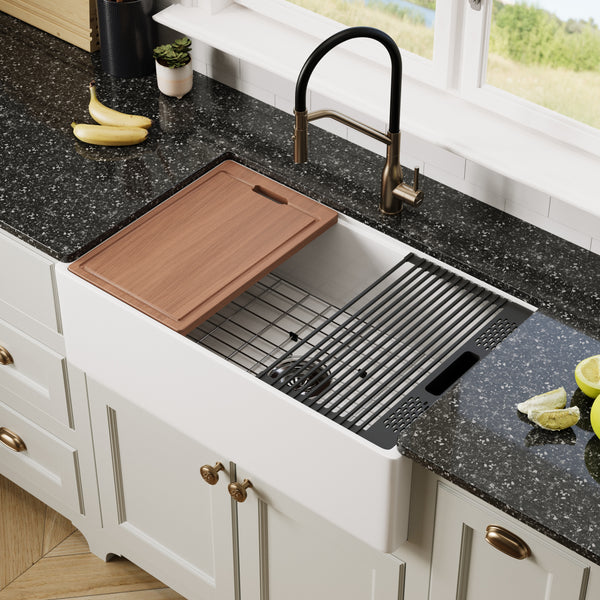
If you're leaning fireclay for a farmhouse kitchen, Nozloo's 33-inch fireclay collection is a good starting point — it covers the most popular size with options like the ribbed workstation model that balances modern detail with the classic farmhouse silhouette. Worth comparing before you commit.
FAQ: Fireclay vs Ceramic Sink
What's the actual difference between fireclay and ceramic?
Both are clay-based and kiln-fired, but fireclay is fired at roughly double the temperature (1,600–2,200°F vs 800–1,200°F). That extra heat fuses the glaze and clay into a single piece, making fireclay denser, harder, and more resistant to scratches, stains, and heat than standard ceramic.
Is a fireclay sink the same as a porcelain sink?
No. Porcelain (in the sink context) usually refers to a standard ceramic with a glazed surface, or sometimes a metal sink with a porcelain enamel coating. Fireclay is a higher-grade ceramic fired at much higher temperatures. They look similar when new, but perform quite differently over time.
Do ceramic sinks stain easily?
Not immediately — the glaze provides initial protection. But as the glaze wears from regular kitchen use, the surface becomes more porous and stains become harder to remove. This is less of an issue for bathroom sinks that see lighter use.
Can you put hot pans on a ceramic sink?
It's risky. Sudden temperature changes can cause crazing — fine cracks in the glaze that trap dirt over time. Fireclay handles hot pans and boiling water without this risk, thanks to its higher firing temperature.
How long does a fireclay sink last compared to ceramic?
In a kitchen setting, fireclay sinks commonly last 15–25 years or more with proper care. Standard ceramic kitchen sinks typically show noticeable wear — dulling, staining, minor chips — within 5–10 years of regular use.
Is a ceramic farmhouse sink worth it, or should I go fireclay?
For the farmhouse look in a working kitchen, fireclay is the stronger investment. Ceramic farmhouse sinks exist and cost less, but they're more susceptible to the wear patterns that come with daily kitchen use. If budget allows, fireclay gives you a better chance of that sink still looking good five or ten years from now.
About the Author: NOZLOO is a fireclay-only kitchen brand. That means our team spends every day on one product category — fireclay farmhouse sinks. We've talked to installers about cabinet cuts, watched the kiln fire at 2,200°F, and inspected sinks before they ship. When we write these guides, we're writing about the only thing we know deeply. Have a question we didn't cover? Reach us at info@nozloo.com.