Cheap vs Expensive Farmhouse Sinks: What Actually Makes One Last

We've talked to enough homeowners mid-remodel to know how this goes. Two farmhouse sinks are open in browser tabs — one for $189, the other for $579. Same color. Same size. Same apron front profile. The product photos look nearly identical. So the cheaper one seems like the obvious pick.
Then you check the spec sheets. The $189 version weighs about 35 lbs. The other weighs over 100 lbs. That weight gap tells you everything the photos can't. These sinks aren't made from the same material. Not even close.
In most cases, farmhouse sink prices vary because of material, construction method, and brand markup — not appearance. A coated steel shell and a kiln-fired clay body can look identical in a photo but perform very differently over ten years of daily use. If you're shopping right now, here's what we think you should know before your countertop gets cut and your options get a lot more permanent.
"Farmhouse" Is a Shape, Not a Material
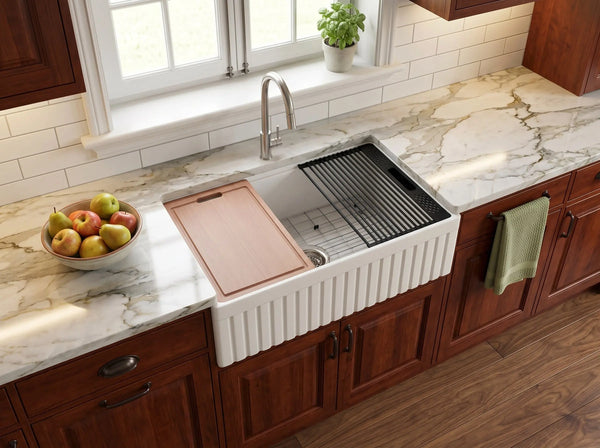
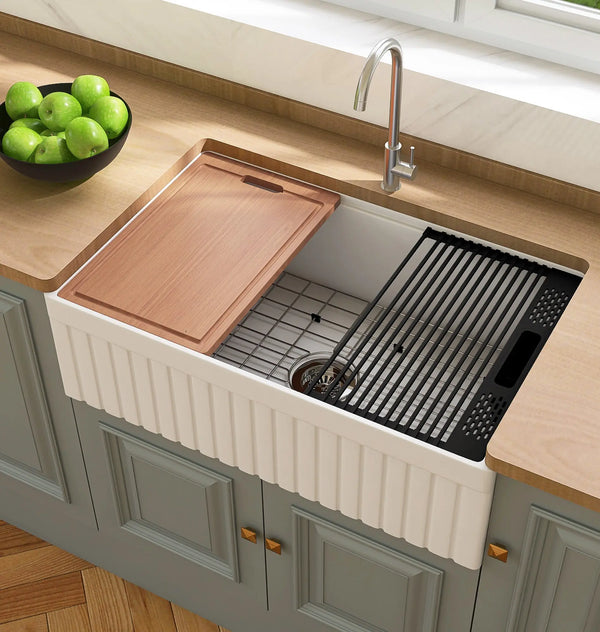
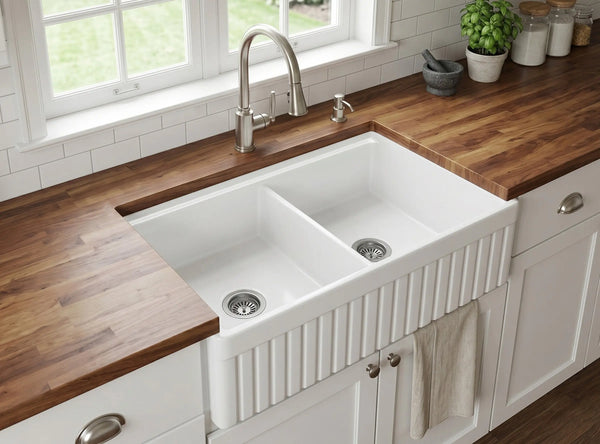
This trips up almost everyone. When you search for a "farmhouse sink" or "apron front sink," you're describing a design — that exposed front panel that sits flush with your cabinets. It says nothing about what the sink is made from.
A $180 farmhouse sink and a $900 farmhouse sink can have the exact same dimensions, the same color, even the same profile in a photo. The difference is invisible until you've been using it for a while. One holds up. The other doesn't. And by the time you find out which is which, your countertop is already cut and installed.
If durability is the goal, choose the material first and everything else second.
Why Prices Range from $150 to $1,500
Not all price differences are meaningful. Some reflect real material differences. Some reflect brand positioning. Understanding which is which saves you from both overpaying and underpaying.
The $150–$300 range: you're paying for the shape
At this price, you're almost certainly getting a coated product. The most common options:
Porcelain-coated steel. A steel shell with a thin porcelain layer sprayed on top. It looks white and clean out of the box. But that coating is thin. A cast iron skillet slips out of your hand, the enamel chips, and the steel underneath begins to rust once the surface is exposed.
Cast iron with enamel. Better than steel, but the same fundamental vulnerability. The enamel layer can crack over time — sometimes from thermal shock, like pouring boiling pasta water and then running cold water right after. Once cracked, the cast iron oxidizes, and you get yellowish-brown stains that don't come out easily.
Composite and acrylic blends. The lightest and cheapest option. These are essentially plastic mixed with stone powder or resin. They scratch more easily than clay-based materials and tend to show discoloration faster under heavy daily use. A hot pan placed directly on the surface may warp or leave a permanent mark, depending on the blend.
None of these are bad products in every situation. If you're renovating a rental or flipping a house on a tight timeline, they can make sense. But if you're building your own kitchen and planning to use it daily for the next decade, the material matters more than the shape.
The $450–$700 range: you're paying for the actual material
This is where you start seeing genuine fireclay. And the difference isn't subtle.
Fireclay is natural clay fired at extremely high temperatures — typically around 2,200°F. At that heat, the clay body and the glaze fuse together into a single, solid piece. There's no coating to chip off because there's no separation between layers. Material composition is one of the biggest factors in how long a kitchen sink holds up under daily use — This Old House covers the differences well — and fireclay's fused construction is a big part of why it outlasts coated alternatives.
The result is a sink that's non-porous, meaning the surface doesn't absorb liquids, stains, or odors. Coffee, red wine, turmeric — they wipe off because they never soak in. The glaze won't yellow over time because it's not a surface treatment. It's part of the structure.
You can also feel the difference. A genuine fireclay farmhouse sink typically weighs between 80 and 120 lbs for a 33-inch model. That weight is the clay itself — solid material, not a hollow shell with a pretty finish.
The price at this level reflects raw materials, kiln time (some firings take over 24 hours), and the significant rejection rate. Not every piece survives the kiln. Cracked or warped sinks get discarded, and that cost gets built into the ones that make it.
The $1,000–$1,500+ range: you're also paying for the brand
Above a thousand dollars, the fireclay itself isn't dramatically different. The firing temperatures are similar. The glaze chemistry is similar. What changes is everything around the product.
Brand recognition. Showroom placement. Distributor margins. Designer-network fees. The marketing budget behind magazine features and sponsored renovation shows.
We want to be fair — some of that has real value. An established brand often means a proven track record, dedicated customer support, and finishes refined over decades. If that peace of mind matters to you, the premium isn't wasted.
But it's worth knowing that a $1,200 fireclay sink and a $550 fireclay sink can come from factories with very similar kiln temperatures and glaze formulations. The extra $650 isn't always about what's in the box.
What Is the Best Material for a Farmhouse Sink?
For most homeowners remodeling a kitchen they plan to keep, fireclay is the strongest option. The fused glaze-and-clay construction means there's no separate coating to chip, crack, or wear through. It resists stains, doesn't absorb odors, and holds up against thermal shock better than enamel-over-metal alternatives.
Cast iron with enamel is a reasonable second choice if you prefer the weight and feel of iron and don't mind being careful with heavy cookware. Stainless steel works well if you're not set on the traditional white farmhouse look — it's durable and low-maintenance, but it's a different aesthetic entirely.
Composite and acrylic sinks are fine for light use or short-term situations, but they're not built for the same lifespan as clay or metal.
Are Cheap Farmhouse Sinks Worth Buying?
It depends on how long you need the sink to last. A $180 farmhouse sink can look great on day one. The issue is year three, year five — when the coating starts showing wear, chips appear around the drain, or stains set into the surface and won't come out.
If you're staging a flip or furnishing a rental where the sink won't see heavy personal use, a budget option can be a smart call. But if this is your kitchen and you're going to use it every day, the $150 you save upfront can easily turn into a $600 replacement down the line — plus the cost of a new countertop cut if the dimensions don't match.
The better question isn't "cheap or expensive" — it's whether the sink material can handle your actual daily use for the timeframe you're planning around.
What to Look for When Evaluating a Fireclay Farmhouse Sink
If you've decided fireclay is the right material, here's how to confirm you're getting the real thing and not a lookalike:
Check the listed firing temperature. Genuine fireclay should be fired at or above 2,200°F. If the product page doesn't mention firing temperature at all, that's worth questioning. Manufacturers who actually fire at those temperatures tend to be upfront about it.
Weigh it — or at least check the spec sheet. A 33-inch fireclay farmhouse sink should weigh somewhere around 80–120 lbs. If a "fireclay" sink of that size weighs 35–40 lbs, it's very likely not solid fireclay. It might be a composite with a fireclay-like finish, or the listing is being generous with terminology.
Look at the drain opening and underside. On a true fireclay piece, the glaze and clay body transition smoothly because they were fired together. On coated products, you can sometimes see a clear boundary where the coating ends and the base material begins.
Ask about the glaze. Non-porous means the surface doesn't absorb water or stains. A quick test if you're in a showroom: a water droplet on a genuine fireclay glaze will bead up and slide, not soak in. If the surface appears to darken or hold moisture, that's worth asking about before you buy.
5 Practical Things to Measure Before You Order
Even the best sink is useless if it doesn't fit. Here's the checklist we walk people through before they hit "add to cart":
1. Cabinet interior width. A 30-inch sink needs a 33-inch base cabinet. A 33-inch sink needs a 36-inch cabinet. Measure the inside width, not the outside — and double-check against the sink's spec sheet, not the marketing name.
2. Installation method. Are you doing undermount, flush mount, or a raised apron install? Each requires a different countertop cutout. Your countertop fabricator needs the sink's exact template before they cut. This is not something to figure out after.
3. Structural support. A fireclay sink full of water and dishes can exceed 200 lbs total. Standard base cabinets aren't always built for that. You may need to reinforce the cabinet floor with a plywood brace or add support rails underneath. Bring this up with your contractor before install day — not during.
4. Drain size. Standard kitchen drain openings are 3.5 inches. Confirm this matches your existing plumbing, or plan for a drain adapter if needed.
5. Accessories and compatibility. Some sinks come with a bottom grid, cutting board, or drying rack included. Others ship bare, and each accessory can run $50–$150 separately. Check what's in the box. Workstation-style sinks with built-in ledge rails for sliding accessories are worth considering if you cook often — they turn the sink into a prep station, not just a basin.
Start with the Material, Then Choose Everything Else
A kitchen renovation is a long commitment, and the sink is the one fixture you'll touch more than anything else in that room. Hands in it a dozen times a day, every day, for years.
If you're comparing options for a remodel, start with the material. Then move to fit, support, and finish. The color and style choices get a lot easier once you know you're working with something that won't degrade on you.
If you've decided durability matters more than just appearance, compare fireclay farmhouse sinks by size, weight, and workstation features before you commit. Or if you want to understand the material itself first, our guide on what fireclay actually is and how it's made is a good place to start.
Pick the material first. Everything else follows.
About the Author: NOZLOO is a fireclay-only kitchen brand. That means our team spends every day on one product category — fireclay farmhouse sinks. We've talked to installers about cabinet cuts, watched the kiln fire at 2,200°F, and inspected sinks before they ship. When we write these guides, we're writing about the only thing we know deeply. Have a question we didn't cover? Reach us at info@nozloo.com.