Fireclay vs Granite Composite Sink: The Difference Is the Surface

In this guide View sections +
Most homeowners compare fireclay and granite composite by asking one question:
Which one is stronger?
That matters, but it is not the only question.
A kitchen sink is touched, rinsed, wiped, splashed, and loaded with cookware every day. So the better question is: which finish do you want to live with?
A fireclay sink gives you a smooth glazed finish over kiln-fired clay. A granite composite sink gives you a matte stone-like finish made from crushed stone and resin. Both can work well, but they clean differently, age differently, and fit different kitchen styles.
This fireclay vs granite composite sink comparison looks past the usual pros and cons. The real difference is how each material handles daily cleaning, stains, water spots, scratches, heat, heavy pans, and long-term use.
The Simple Difference: Glazed Clay vs Stone Composite
Fireclay and granite composite are not two versions of the same sink.
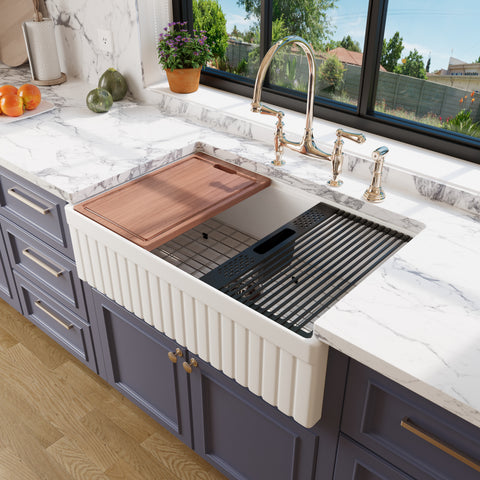
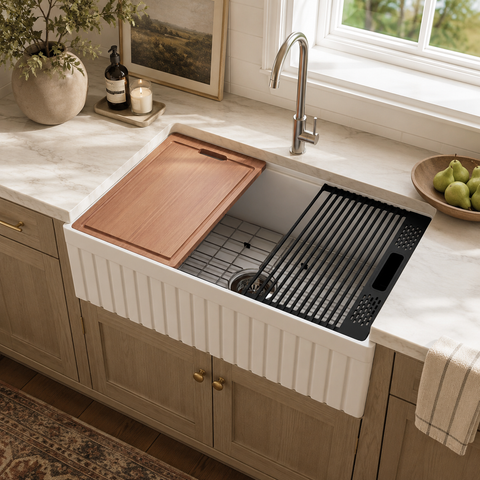
A fireclay sink is made from clay that is shaped, glazed, and fired at very high heat. The result is a dense sink body with a smooth, non-porous glaze. Fireclay is most often used for farmhouse sinks, especially white apron front designs.
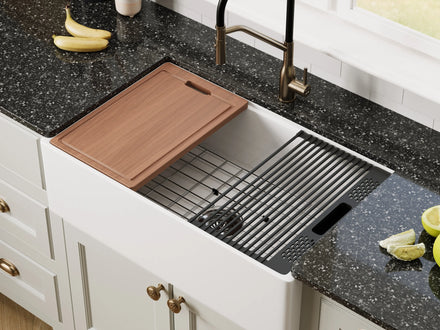
A granite composite sink is usually made from crushed stone mixed with resin. It has a matte, stone-like texture and often comes in darker colors like black, gray, brown, or beige. It is common in modern kitchens where the sink is meant to blend into the countertop.
So the basic choice is not only fireclay vs composite.
It is:
Smooth glazed finish vs matte textured finish.
That difference affects almost everything you notice after installation.
Why the Finish Matters More Than the Material Name
A sink can look great on installation day. The real test is what it looks like after six months of coffee, pasta sauce, hard water, baking trays, cast iron pans, and rushed weeknight cleanup.
That is where the finish starts to matter.
Fireclay has a smooth glazed surface. Food residue, liquids, and soap film have less texture to cling to. For most daily cleaning, a soft sponge and mild dish soap are enough.
Granite composite has a matte texture. That texture is part of the look. It can hide some light marks better than a glossy finish, but it can also hold residue differently. Hard water, soap film, and mineral deposits may be more visible, especially on darker colors.
That does not make granite composite a weak material. It simply means the matte finish needs a different cleaning routine than glazed fireclay.
Fireclay usually needs less effort for daily wipe-downs. Granite composite can also stay clean, but it tends to look better when it is rinsed and dried more consistently.
Fireclay vs Granite Composite Sink: Daily Use Comparison
| Daily Concern | Fireclay Sink | Granite Composite Sink |
|---|---|---|
| Surface feel | Smooth, glazed, non-porous | Matte, stone-like, lightly textured |
| Everyday cleaning | Easier to wipe clean | May need more rinsing and drying |
| Water spots | Usually less visible on white glaze | More visible on darker matte finishes |
| Food stains | Non-porous glaze helps resist staining | Stain resistance depends on color and care |
| Heavy cookware | Strong basin, but edges can chip from hard impact | Tough surface, but scuffs or dull areas can show |
| Heat | Strong heat resistance from kiln firing | Heat resistant, but care depends on the resin blend |
| Style | Classic farmhouse, apron front, white kitchens | Modern, matte, dark or stone-look kitchens |
| Long-term look | Clean glazed look when cared for properly | Can show haze or uneven finish if neglected |
| Good fit for | Homeowners who want a true farmhouse sink | Homeowners who want a modern matte sink |

Cleaning: Smooth Glaze vs Matte Texture
Cleaning is one of the clearest differences between the two materials.
A fireclay sink has a smooth glazed surface. Because the glaze is non-porous, everyday messes tend to sit on top instead of soaking in. Coffee, tomato sauce, wine, and food residue are easier to rinse away when cleaned soon after use.
That does not mean fireclay should be scrubbed with anything. Avoid steel wool, harsh scouring pads, and caustic cleaners. A soft sponge and mild dish soap are usually enough.
Granite composite can also be easy to clean, but the matte texture changes the routine. Food residue, soap film, and hard water minerals may cling to the finish more noticeably. Dark granite composite sinks can look clean from a distance but still show cloudy spots, white mineral marks, or uneven drying patterns.
If you want the easier wipe-down routine, fireclay has the advantage.
If you like a matte stone look and do not mind more regular rinsing and drying, granite composite can still be a practical choice.
Stains, Water Spots, and Surface Marks
A lot of sink comparisons talk about stain resistance as if it is a simple yes-or-no feature. It is not.
Stain resistance depends on the finish, the color, the water quality, and how quickly the sink is cleaned.
Fireclay’s non-porous glaze helps protect against everyday staining. A white fireclay sink may show temporary metal marks from pans or utensils, but those marks are often surface transfer rather than true scratches. They can usually be cleaned with the right non-abrasive method.
Granite composite is also designed to resist stains, but its matte finish can show other issues. Dark colors may show water spots and mineral deposits. Lighter composite colors may show food residue or discoloration more easily. Harsh cleaners can also make the finish look dull over time.
So the real question is not only “Which one stains?”
It is:
Which kind of mark bothers you more?
Fireclay may show surface transfer on a white glaze. Granite composite may show water spots, haze, or dullness on a matte finish.
Heat, Heavy Pans, and Edge Damage
Both fireclay and granite composite are made for kitchen use, but they respond to impact and heat in different ways.
Fireclay is kiln-fired at very high temperatures. That process creates a dense body and a strong glazed surface. It also helps fireclay resist heat and thermal shock in normal kitchen use.
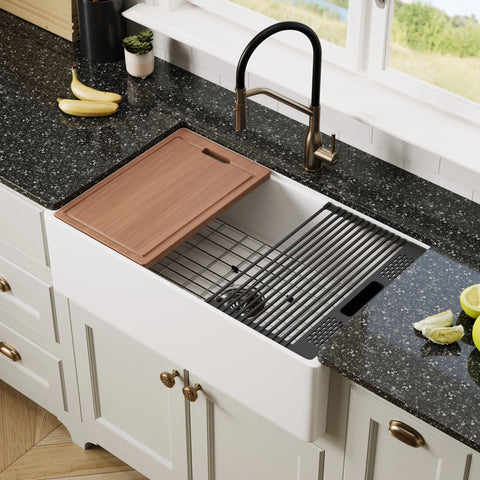
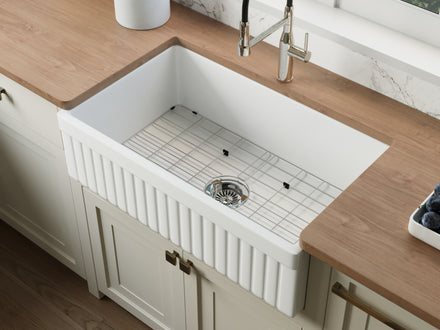
That said, fireclay is not impossible to damage. The basin is strong, but a hard blow from a heavy cast iron pan can chip an exposed edge. A stainless steel bottom grid helps protect the basin floor and keeps heavy cookware from sitting directly on the glaze.
Granite composite is also tough. It handles daily cookware well and resists many everyday scratches. Because it contains resin, heat care depends more on the specific manufacturer’s formula. Hot pans, harsh cleaning products, and repeated abrasion can affect the finish over time.
The practical rule is the same for both materials:
Do not treat the sink like a cutting board, a trivet, or a drop zone for heavy cookware.
Style: White Farmhouse Sink or Matte Stone Look?
Style may be the easiest part of the decision.
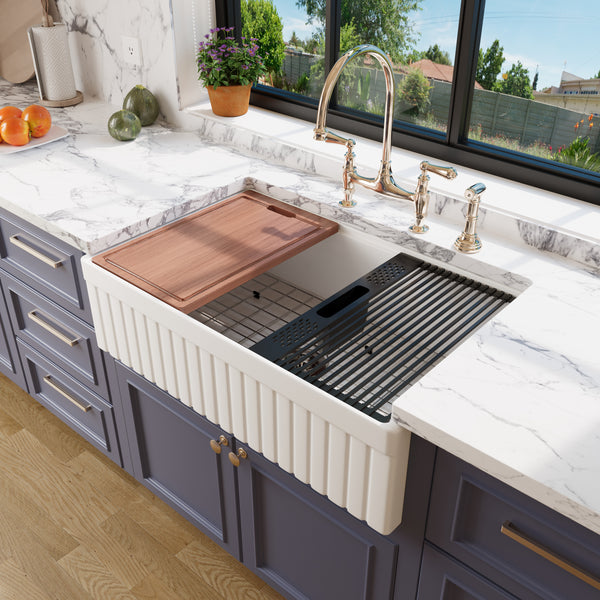
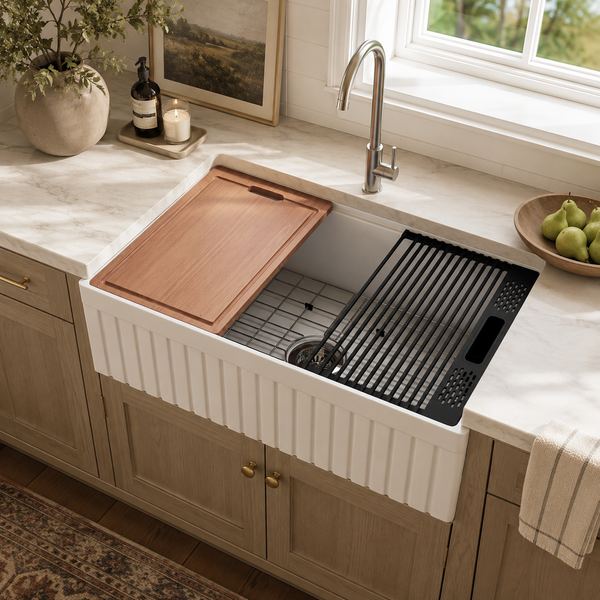
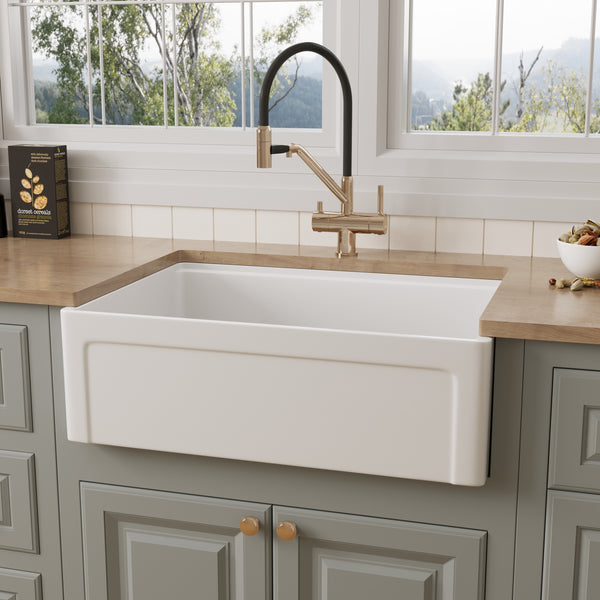
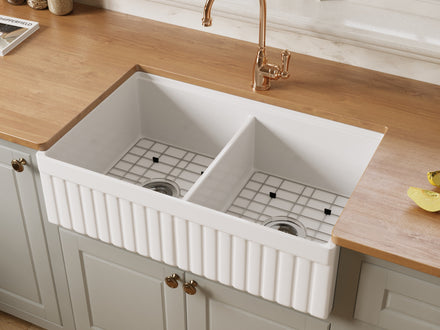
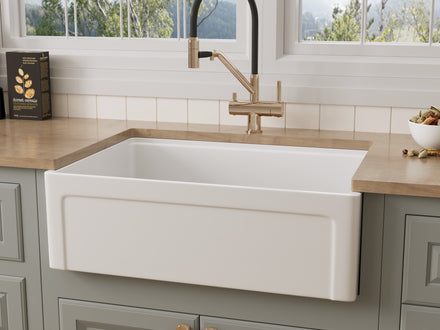
Fireclay is the natural fit if you want a farmhouse sink. The smooth white finish, deep basin, and apron front create a strong visual anchor in the kitchen. It works especially well with shaker cabinets, stone countertops, butcher block, warm wood, and classic cabinet colors.
Fireclay fits kitchens that are:
- Farmhouse
- Transitional
- Cottage
- Traditional
- Bright and open
- Built around an apron front sink
Granite composite moves in a different direction. Its matte finish often works better in modern kitchens, especially when paired with dark countertops, flat-panel cabinets, black fixtures, or stone-textured surfaces.
Granite composite fits kitchens that are:
- Modern
- Industrial
- Minimal
- Dark-toned
- Matte-finish focused
- Designed to make the sink blend in
Neither look is wrong.
But they do different jobs visually.
Fireclay usually makes the sink a feature. Granite composite often makes the sink part of the background.
Installation: Both Need Planning Before Countertops
Fireclay and granite composite sinks both need careful planning before installation.
Fireclay farmhouse sinks are heavy and usually need proper cabinet support. The apron front also affects cabinet modification and countertop planning. The sink should be on site before final countertop measurements whenever possible.
Granite composite sinks can also be heavy, depending on size and design. Some are drop-in. Some are undermount. Some are made in farmhouse styles. Each installation type has different requirements.
Before ordering either material, confirm:
- Outer sink dimensions
- Inner bowl dimensions
- Cabinet size
- Drain location
- Installation type
- Countertop cutout requirements
- Weight and support needs
- Whether the sink should be present for templating
This is not the part of a remodel to guess. A small measurement issue can become expensive once the countertop is cut.
Which Sink Should You Choose?
Choose fireclay if you want:
- A true farmhouse sink
- A white apron front design
- A smooth glazed finish
- Strong heat resistance
- Easy daily wipe-down cleaning
- A classic look that does not feel trend-based
- A sink that stands out as part of the kitchen design
Choose granite composite if you want:
- A matte stone-like finish
- A black, gray, brown, or beige sink
- A more modern kitchen style
- A sink that blends into the countertop
- More color flexibility
- A less traditional look than white fireclay
A simple way to decide:
Choose fireclay if you want the sink to be a clean farmhouse focal point. Choose granite composite if you want the sink to feel matte, modern, and more visually quiet.
If you are already leaning toward a fireclay farmhouse sink, the next step is choosing the right size, bowl layout, and apron front style.
The performance question is closer. Both materials can work well. Fireclay has the advantage if you value a smooth non-porous glaze, high-heat kiln-fired material, and a classic apron front look. Granite composite has the advantage if you want darker colors and matte stone-like styling.
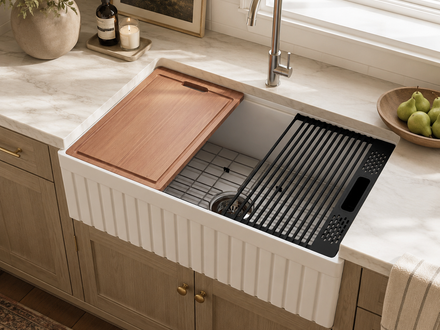
If the glazed surface decides it for you, the 33-inch fireclay farmhouse sinks show the white glaze in installed kitchens.
Final Takeaway: Fireclay vs Granite Composite Sink
The fireclay vs granite composite sink decision is really a finish decision.
Fireclay gives you a smooth glazed surface over kiln-fired clay. It is the better fit if you want a white farmhouse sink, an apron front design, and a surface that wipes clean easily.
Granite composite gives you a matte stone-like finish made from crushed stone and resin. It is the better fit if you want darker colors, a modern look, and a sink that blends into the countertop instead of becoming the focal point.
Both materials can work. The difference is how they feel, clean, mark, and age in daily use.
For homeowners who have already decided on fireclay, NOZLOO focuses only on genuine fireclay farmhouse sinks: kiln-fired at 2,200°F, finished with a non-porous glaze, and made for homeowners who want real fireclay without paying for brand markup.
The right sink is not just the one that looks good in a product photo. It is the one that still makes sense after years of cooking, rinsing, wiping, and daily use.
FAQs
Is fireclay better than granite composite?
Fireclay is better if you want a smooth white farmhouse sink, an apron front design, and a non-porous glazed surface that is easy to wipe clean. Granite composite is better if you want a darker matte finish, a stone-like look, and more color options.
Do fireclay sinks scratch more easily than granite composite sinks?
Fireclay sinks have a hard glazed surface that resists normal daily wear. Some gray marks from cookware may be surface transfer rather than true scratches. Granite composite also resists many everyday marks, but its matte finish can show scuffs, haze, or dull areas depending on care.
Do granite composite sinks stain?
Granite composite sinks are designed to resist stains, but they can still show water spots, soap film, mineral deposits, or residue. Darker composite sinks may show hard water marks more clearly, especially if they are not rinsed and dried regularly.
Is fireclay or granite composite easier to clean?
Fireclay is usually easier to wipe clean because it has a smooth non-porous glaze. Granite composite can also be manageable, but its matte texture may need more regular rinsing and drying to prevent haze or water spots.
Which sink material is better for a farmhouse kitchen?
Fireclay is usually the better fit for a farmhouse kitchen because it is commonly made with a white glazed surface and apron front design. Granite composite can work in some farmhouse-inspired kitchens, but it usually creates a more modern, matte look.
Related guides: fireclay vs ceramic sinks · fireclay vs stainless steel · fireclay vs cast iron and porcelain